Open Source and Robotics
Ganymede Track is on the 2nd floor of Jupiter NEXT · View floor plan
Open systems are transforming how we design and build technology, and this talk explores that evolution from two distinct but complementary vantage points. As Board President of the Open Source Hardware Association (OSHWA), I will share an update on the state of open source hardware in 2026, highlighting ongoing initiatives like OSHWA’s open hardware certification program and the critical pathways for creating open source medical devices.
Transitioning from physical foundations to the software that brings them to life, my perspective as developer advocate for the open source Robot Operating System (ROS) project will cover what ROS actually is, common architectural patterns for ROS to hardware interfaces, and the capabilities introduced in our recent ROS 2 Lyrical Luth release. Attendees will leave with a clear understanding of how these ecosystems interact, alongside actionable ways developers can get started working with the ROS project and how the broader hardware community can better support the future of open source technology.
About the Speaker
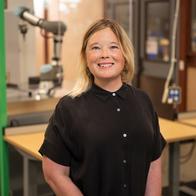
Katherine Scott is the developer advocate for the Robot Operating System (ROS) and Gazebo projects at Intrinsic, an Alphabet subsidiary. She is also a board member for the Open Source Hardware Association (OSHWA). Prior to working on the ROS project Katherine was the image analytics team lead at Planet Labs and 3Scan, and founder and lead software engineer for both Tempo Automation, and Sight Machine. Katherine holds a masters degree from Columbia University and electrical engineering and computer engineering undergraduate degrees from the University of Michigan.