Project update 6 of 7
Automotive Ethernet & Where to Find It (Tesla Example), New Funding Goal Reached, and Upcoming Price Increase
by Nils WAutomotive Ethernet is quietly transforming the data highways inside modern vehicles—and Tesla is leading the charge. Recently, we cracked open Tesla’s latest water-cooled, all-in-one ECU, which combines both the Infotainment (IVI) and Autopilot systems inside a single, dense aluminum enclosure.
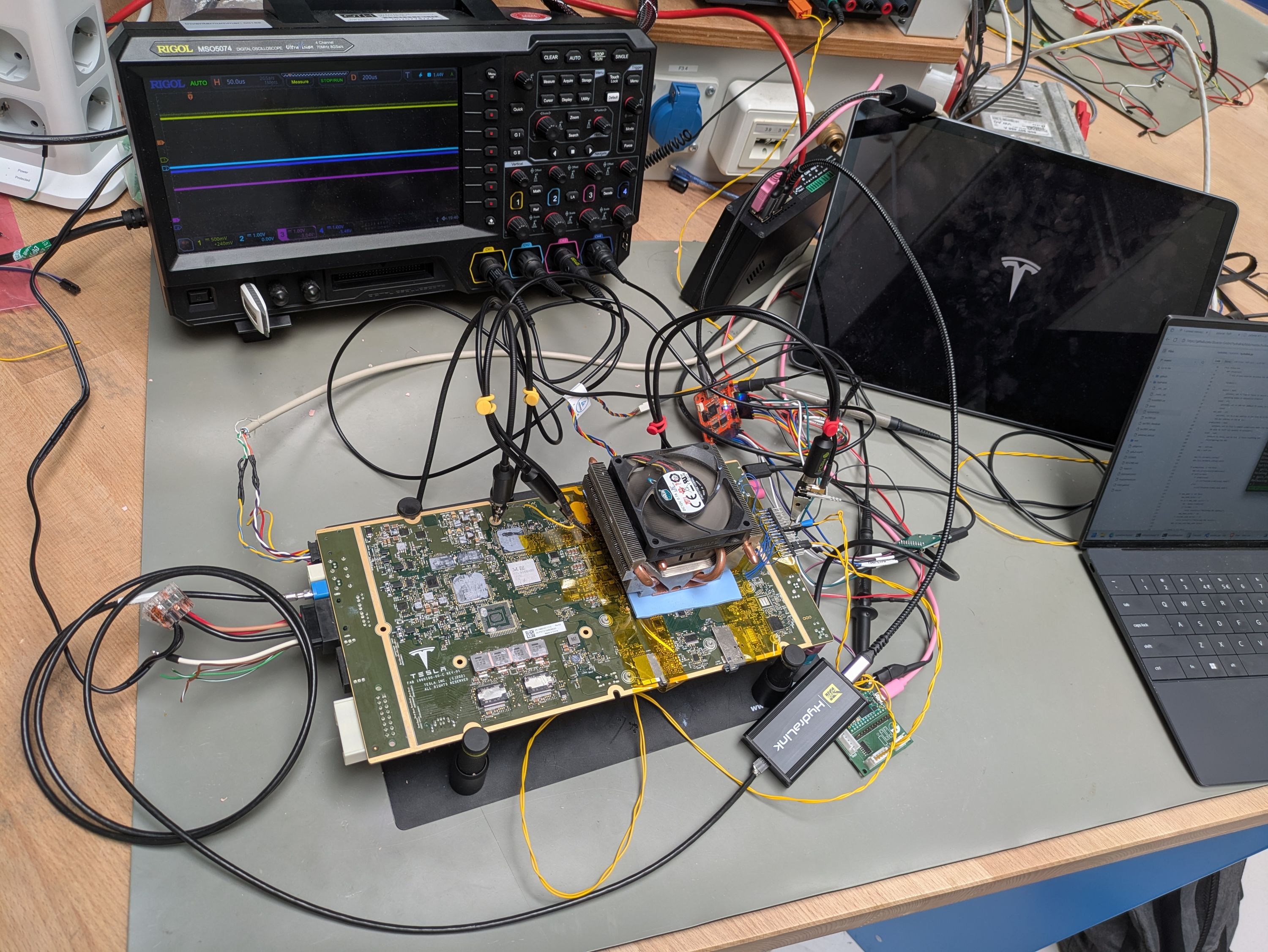
Inside, you’ll find two powerhouse PCBs—one running the IVI experience (think touchscreen UI, media, connectivity), the other dedicated to Autopilot, Tesla’s advanced driver-assistance “brain.” Both boards sit side by side, but the chunky water cooler that keeps them at peak performance also physically splits the electronics in half. Despite sharing a ground plane, the two systems are separated enough that Tesla engineers needed a robust, high-bandwidth data bridge between them. Their solution? Automotive Ethernet.
Why Is This So Interesting?
This link isn’t just a footnote in Tesla’s design—it’s likely a high-speed expressway for all kinds of mission-critical data. Instead of relying on legacy CAN or LIN buses, this is full-blown Ethernet—more than fast enough for real-time video streams, camera data, sensor fusion, or even over-the-air firmware updates.
Tesla’s decision shows how modern EVs are evolving. It’s not just about horsepower or battery range—these cars are computers on wheels, and the network inside is just as important as the drivetrain. Ethernet is now the nervous system for features like FSD (Full Self-Driving), live video, and entertainment.
Can We See What’s Inside?
Absolutely—and you don’t need a secret lab to do it. Here’s how you can “listen in”:
Connect Two HydraLinks
One to the IVI board, one to the Autopilot board. They’ll show up aseth1andeth2on your laptop.Bridge Them with Linux
Just a handful of commands:sudo apt-get install bridge-utils sudo brctl addbr tesla_bridge sudo brctl addif tesla_bridge eth1 sudo brctl addif tesla_bridge eth2 sudo ip link set tesla_bridge up
Capture the Data
Fire up your favorite tool. To quickly check traffic:sudo tcpdump -i tesla_bridge
Or, for a deep dive in Wireshark:
sudo tcpdump -i tesla_bridge -w capture.pcap
wireshark capture.pcap
For the Python crowd, Scapy works too:
from scapy.all import sniff
sniff(iface="tesla_bridge", count=100)
What Do We Find?
With the bridge in place, you’re not just capturing packets—you’re peering into the live data streams that keep Tesla’s brains in sync. You might see network boot chatter, camera feeds, sensor data, or even the digital handshakes that power Autopilot’s decision making.
It’s a glimpse into how modern cars are built: fast, connected, and always talking behind the scenes.
Modern vehicles are true networks on wheels, and Automotive Ethernet is the silent backbone making it possible. Sometimes, the most interesting stories aren’t in the press releases—they’re flying across the wire between the world’s most advanced ECUs.
HydraLink Campaign Funding Goal Reduced
For everyone following our work—and especially those interested in getting their hands on a HydraLink—here’s some important news about the Crowd Supply campaign. With about a week left, and after discussions with Crowd Supply, we’ve decided to lower the campaign funding goal from $10,000 to $6,000 to make sure the campaign is a definite success.
This lower goal means HydraLink will be produced even with a smaller initial batch—around 25 units—so early adopters won’t miss out. If you’ve been waiting to support the project, now is the time to secure your unit and help ensure the first production run happens.
This decision was made in close consultation with Crowd Supply. We can’t wait to see what the community builds and discovers with HydraLink!
Post-Campaign Price Increase
One last thing. The price of HydraLink will increase after the campaign ends. So, backing the campaign now is the best way to get one at the lowest possible price.