Project update 12 of 12
Field Report- Imaging the Hydrogen Line of the Milky Way
by Dr. JFrustrated with telescope-obscuring clouds and snow in Pompey, New York, I turned to radio astronomy to augment live streaming activities on my YouTube astronomy channel. To my knowledge, this is the only channel that streams LIVE in 4K resolution from multiple telescopes at multiple wavelengths.
Example Data Acquisition Streams:
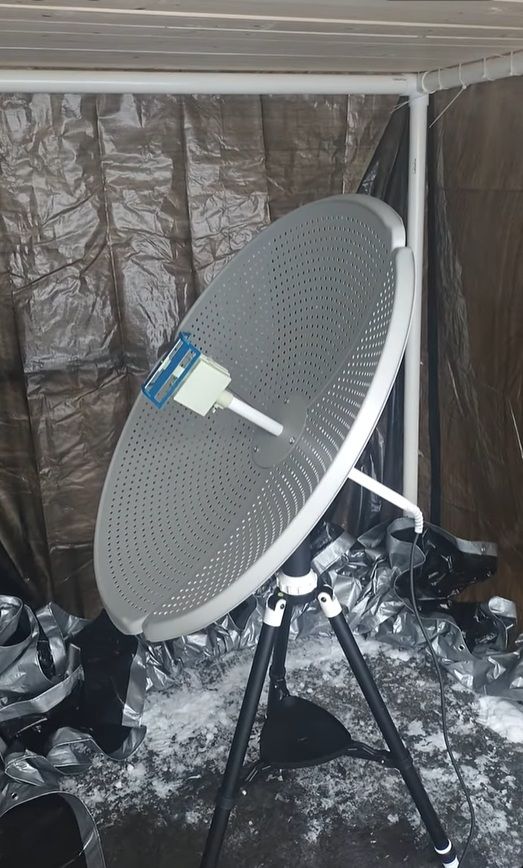
While radio astronomers conduct drift imaging of the hydrogen line in the Milky Way with a fixed radio telescope pointing to the zenith and letting the Milky Way drift overhead, the lightweight Discovery Dish from Crowd Supply presented an opportunity to scan the Milky Way from the Sagittarius A center to Cygnus to the Orion arm in which the Pompey Observatory and, for that matter, our solar system resides. I mounted the Discovery Dish with a 1.42 GHz feed and Low Noise Amplifier (LNA) onto a Skywatcher AZ-GTi mount, enclosed the entire setup inside a homemade 5’x5’x5’ cube made of 1.5-inch PVC pipes and a tarp. This setup allows operation in rain and snow, clouds and sun.
With technical help from Alex Pettit of the Society of Radio Astronomers (SARA) and John Pinto, a Northern Florida astronomer, we wrote the equations necessary for the dish to track the galactic plane in this Milky Way at the exact speed in which it intersects the Meridian. This allowed uniform travel from Right Ascension RA = 17 hours (Sagittarius A) to RA = 9 hours (Orion) over a 16-hour session.
Javascript code for driving the Skywatcher AZ-GTi along the galactic plane of the Milky Way.
// C:\Windows\SysWOW64\cmd .exe for win32 command prompt
// cd C:\1star\ascom
// cscript GalacticPlaneRA-test.js to execute this file
// start > ASCOM Platform > Profile Explorer to get ActiveXObject

var T = new ActiveXObject("ASCOM.SynScanMobile.Telescope"); // Change for your driver's ID
// T.SetupDialog(); // Comment this out once you set COM port, etc.
T.Connected = true;

var const27 = Math.PI*27.128027/180;
var sleepms = 300000;

var starti = 170; // RA = 17h
var endi = 321; // RA = 8h

for (var i = starti; i < endi ; i++)
{

var RA = (i/10) % 24;

var L = 32.9319-180*(Math.atan(1/(Math.sin(const27)*Math.tan ((RA - 192.8598/15) * Math.PI /12 ))))/Math.PI;
if (i > 248) { L = L + 180 };

var radL = Math.PI*(L-32.9319)/180;

var Dec = (180/Math.PI)Math.asin((Math.cos(const27))(Math.sin(radL)));

WScript.StdOut.WriteLine( L + " " + RA + " " + Dec);

T.SlewToCoordinates(RA,Dec);
T.Tracking = false;

WScript.StdOut.WriteLine("RA, Dec = " + T.RightAscension + ", " + T.Declination);
WScript.StdOut.WriteLine(" ");

WScript.Sleep(sleepms);
}
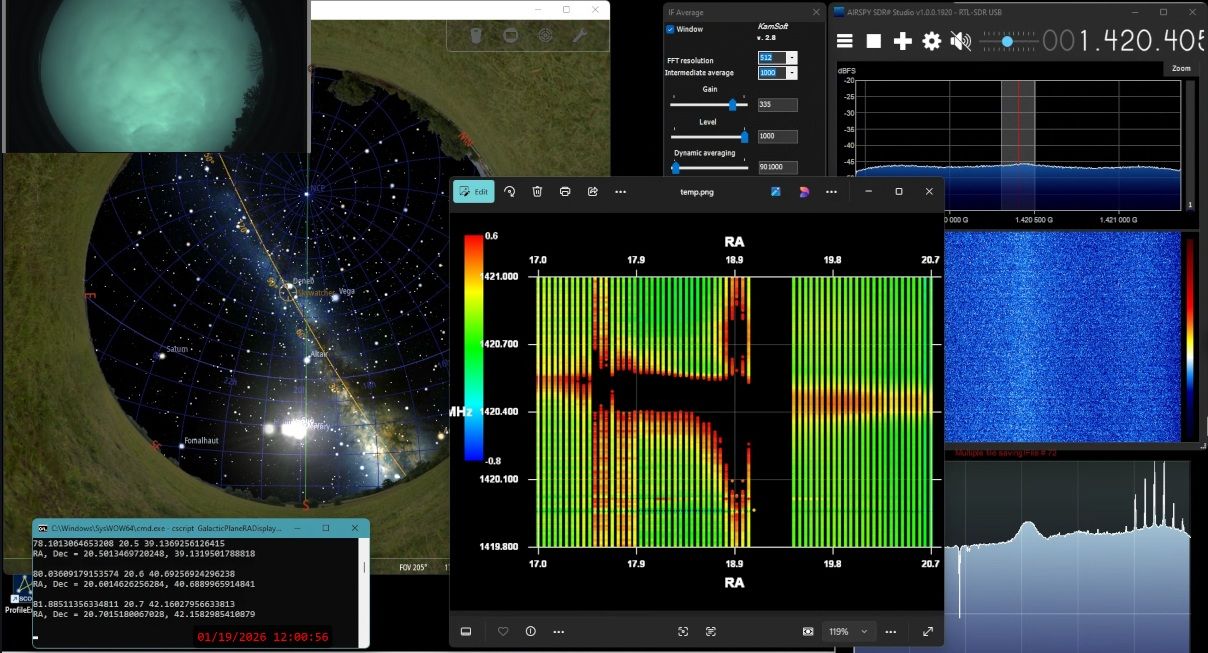
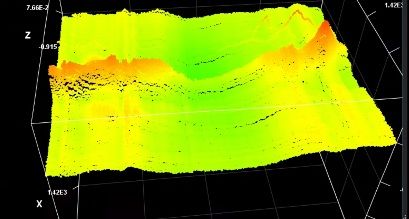
We used AI to help write the above ASCOM Javascript program that moves the mount through Stellarium and we used the Windows batch program to automate data processing from the Software-Defined Radio (RTL-SDR Blog v4) for a colorful rendition of the Milky Way at 21cm.
Dr. Kamal Jabbour, Astronomer