Project update 7 of 7
Manufacturing Progress and Community Updates
by KrakenRF IncOnce again, thanks to all the backers of Discovery Drive! In this update, we want to provide some manufacturing updates and show a few community videos that feature the Discovery Drive.
After a few weeks of delay while we awaited payment, we’ve now received the funds from the crowdfunding campaign, and manufacturing is officially underway. As mentioned in previous updates, we’ve already had several parts on order, so we’ve hit manufacturing with a running start.
Manufacturing In Progress
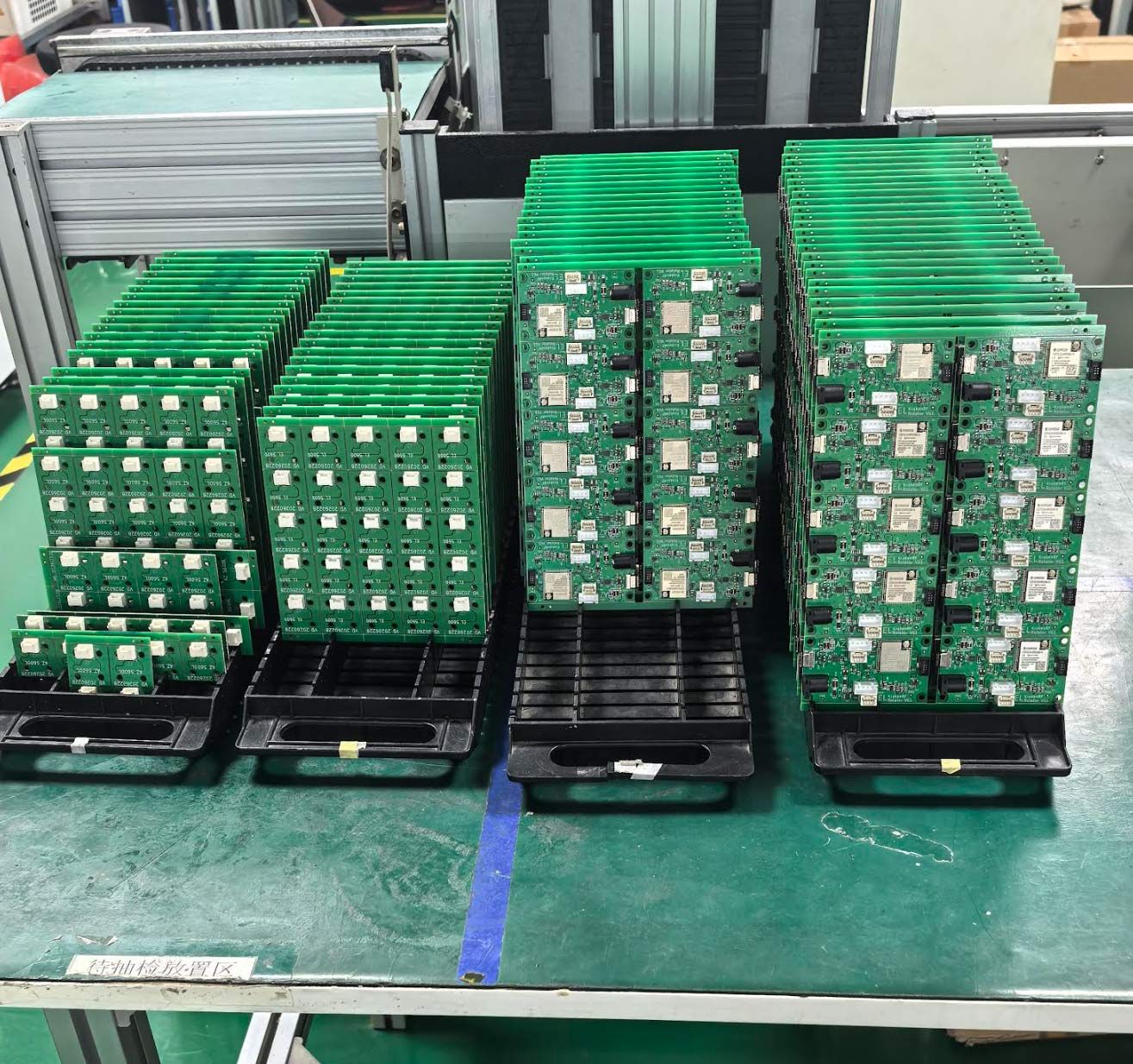
Below is an image of Discovery Drive controller and sensor boards that have been manufactured. They are currently undergoing the QC process now.
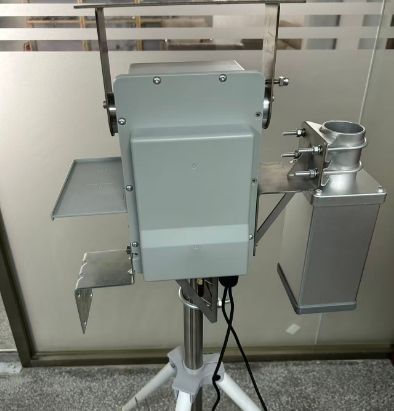
Our final molds for the Discovery Drive enclosure have also just been completed, and we’re close to mass-producing them after some final checks. The image below shows what the Discovery Drive looks like with the (upcoming) optional side pod attachment that you can use to mast-mount computing, reception, and powered devices like a Raspberry Pi, an RTL-SDR dongle, and a PoE splitter if desired.
Community Updates
We previously sent out a few early prototype sample units to reviewers, and Gabe from the saveitforparts channel has been using it regularly in his latest experiments. Below are some videos he’s recently released.
Seeing signals with the Discovery Dish and Discovery Drive
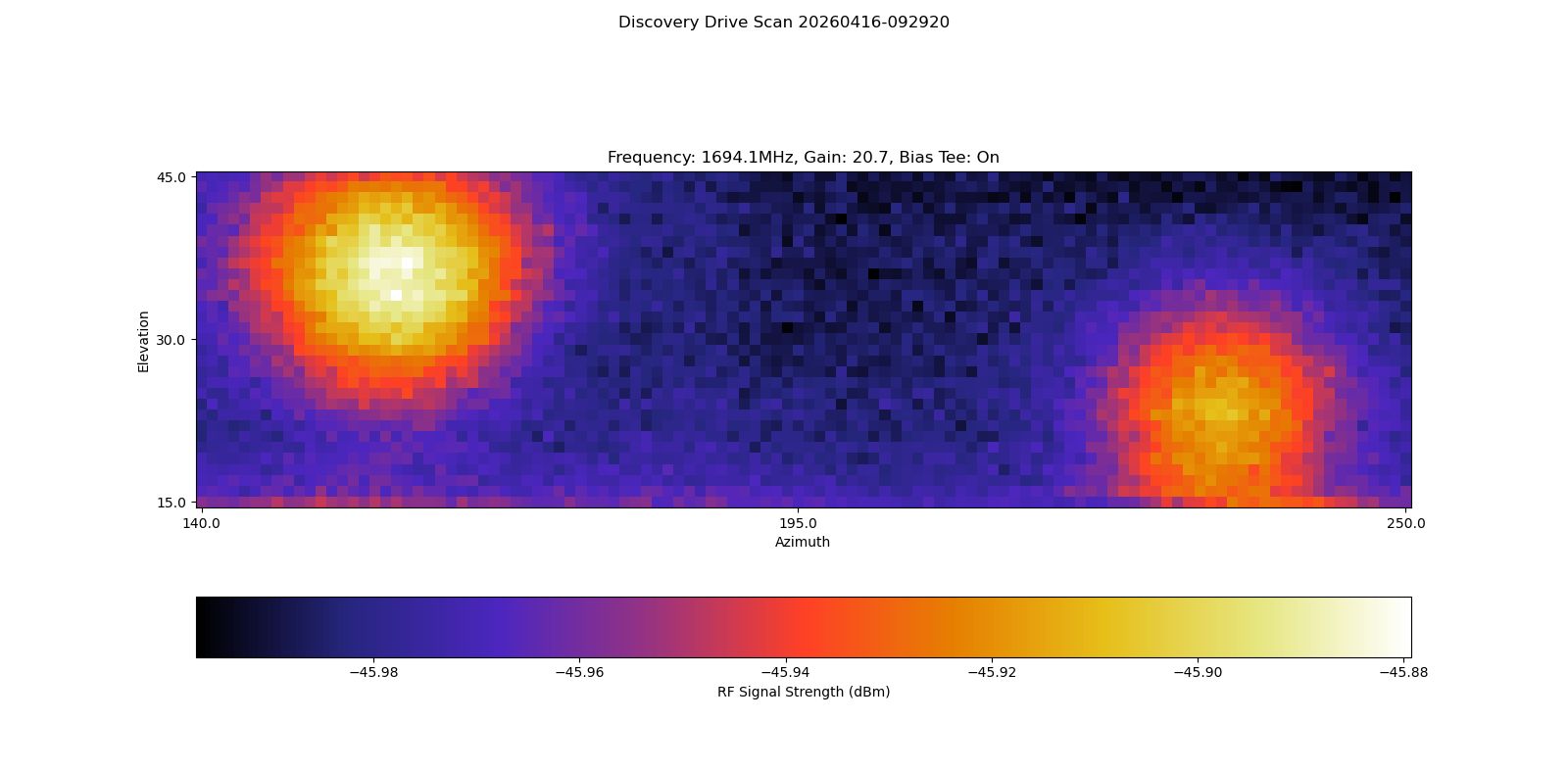
In one recent video, Gabe uses the Discovery Drive and Discovery Dish with L-Band feed to create a visual map of RF activity in the sky. He created a custom script that he has released as open source on GitHub, that sweeps the Discovery Drive across the sky, recording a power reading each time. The end result is a heatmap that shows where satellites are in the sky, based on their RF transmissions.
Finding the US Nuclear Detection System in Space
In a second video, Gabe again uses the Discovery Drive and Discovery Dish to accidentally discover signals coming from the GPS-based US nuclear detection system.
While scanning the GPS L3 frequency around 1381 MHz with his RTL-SDR, Discovery Dish, 1420 MHz Hydrogen line Discovery Dish feed, and Discovery Drive, Gabe caught short intermittent data bursts instead of the usual navigation signals. It turns out L3 is used by the GPS constellation for nuclear detonation detection, as the satellites double as arms-control sensors. When one detects a possible event, it relays the message across the network, the only time this frequency sees activity.