Project update 2 of 8
Design Deep Dive #1 - 37% Funded & Engineering for 55 V MAX Input
by Sparsh BhonwalHey everyone,
First things first: our campaign is over 35% funded. We want to extend our sincere gratitude to everyone who has backed us and shared our mission so far.
Moving forward, this update is the first in a series detailing the specific design elements of the USB VSense. We’ll be taking an in-depth look into our design choices, the challenges we faced, and how we overcame them. In this update, we are focusing on the 55V MAX input voltage of the USB VSense.
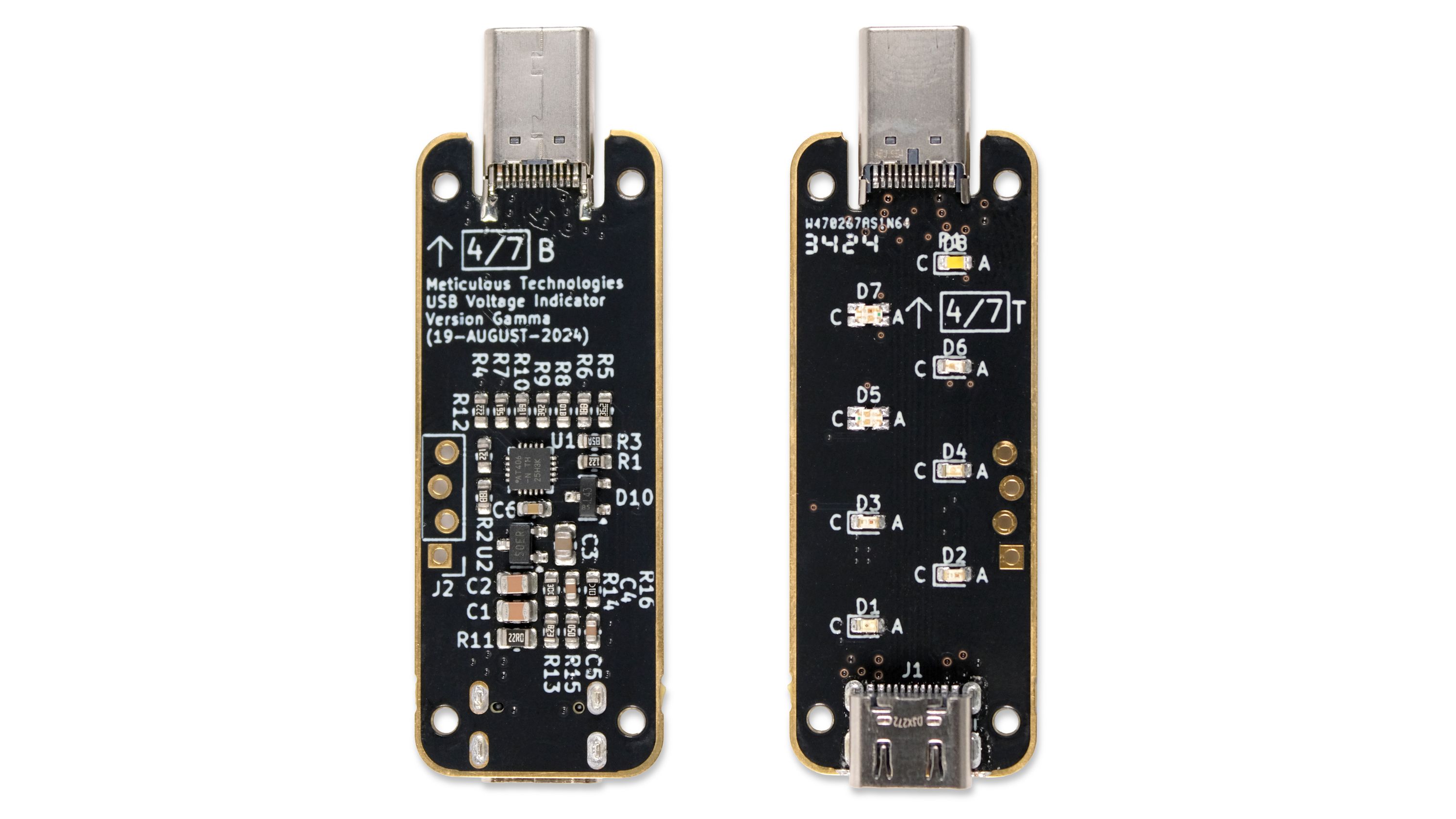
Why 55 V? Future-Proofing for 240 W Power
The USB landscape is changing. With the introduction of USB PD 3.1 Extended Power Range (EPR), the maximum voltage has officially moved from 20V to 48V. This shift is what allows USB-C to transmit up to 240W of power.
While 48V is the standard, a professional-grade diagnostic tool must account for real-world variables. By designing the USB VSense with a 55V MAX operating input, we provide a critical safety buffer for almost anything a device like this might encounter in the real world. This allows you to confidently test any USB voltage source—including non-compliant chargers or DIY power banks that might spike beyond their ratings—without the fear of destroying your equipment.
How We Achieved It: The Engineering Breakdown
To ensure the USB VSense survives high voltage levels in such a compact form factor, these were the major challenges and design considerations that were paid special attention to:
LDO Selection for Wide-Range Operation
Finding a regulator that can handle high voltage is common, but finding one that functions across the entire USB spectrum (starting at 4.5V) while fitting within a 1.6mm vertical gap was a significant design challenge. We selected an automotive-grade LDO from Microchip that features an absolute maximum input voltage of 70V. This provides a massive safety ceiling against transients while maintaining a low dropout voltage for reliable operation at the 4.5V floor. The low-profile package was essential to making the stacked PCB design physically possible.
IPC-2221 Compliance
To safely handle 55 V, we designed the PCB layout in strict accordance with IPC-2221 standards. By adhering to these specific creepage and clearance distances, we ensure long-term electrical isolation and prevent arcing, even when operating at the top end of the EPR specification.
EPR-Rated Connectors
Supporting 240W (48V / 5A) requires a physical interface designed for these higher potentials. We used JAE USB Type-C connectors specifically rated for the 48V EPR standard to ensure safety and durability under full load.
Dual-Range ADC for Required Precision
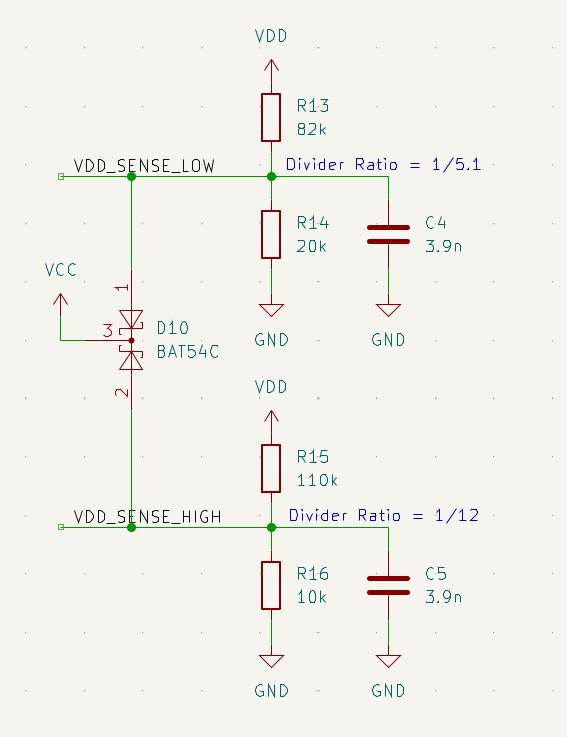
To meet our resolution requirements across the entire voltage spectrum, we utilized two separate ADC pins on the ATtiny406, each connected to a voltage divider with a different ratio—one for lower voltages and one for higher ranges. This created a secondary challenge: protecting the lower-range ADC pin from exceeding its absolute maximum voltage when connected to high-voltage EPR sources. To solve this, we tied both ADC pins to VCC using Schottky diodes to clamp overvoltage. We even went a step further in our safety analysis, calculating the injection current on the ADC pins to ensure the MCU remains protected even in the event of a diode failure.
Damping Inductive Spikes
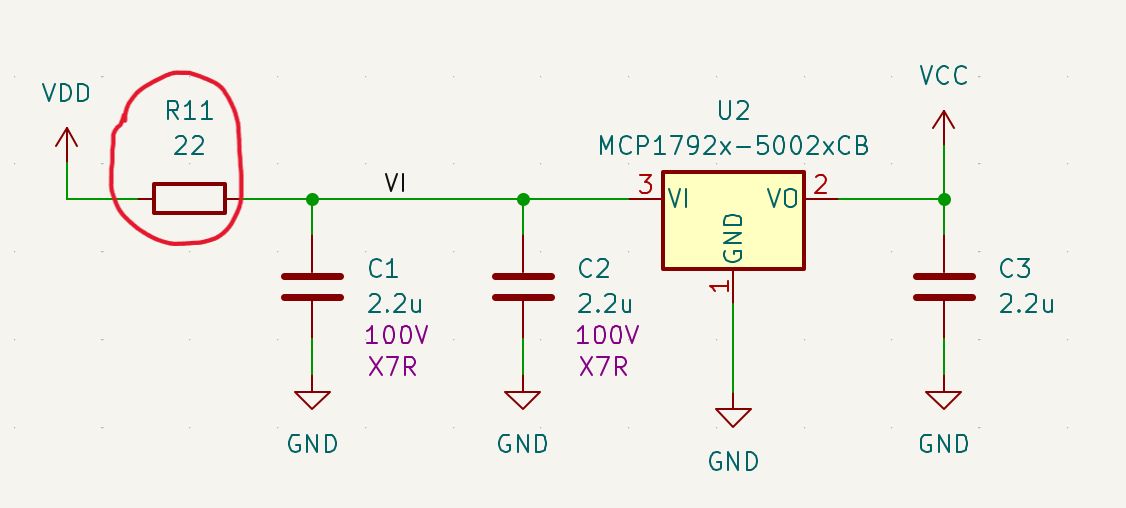
Long cables carry parasitic inductance, which can cause voltage spikes far exceeding 70V during hot-plugging. Since the internal circuitry of the USB VSense draws less than 6mA, we were able to implement a simple RC damping network at the input. By placing a small resistor between two stages of input capacitance, we effectively snub these inductive spikes and dampen any ringing. This adds a critical layer of protection that ensures the LDO never sees a transient above its absolute maximum rating.
Engineering for the Real World
These design choices reflect our commitment to building a tool that survives unpredictable, real-world environments. By solving these edge-case challenges now, we can ensure the USB VSense is a reliable, professional-grade instrument you can trust for years to come.
Share the Journey
We are proud of our progress so far, but we need your help to keep the momentum going. If you know an engineer or maker who would value this level of hardware rigor, please share our campaign with them. Every share brings us one step closer to making this project a reality.
Onward,
Team Meticulous Technologies