Replacing the Touch Controller
The original design used the ESP32-S3’s built-in capacitive touch peripherals for the three touch zones of the Google Home Mini. Before moving to production, it became clear this wasn’t a reliable path forward. There is a documented, confirmed, and permanently closed bug in the ESP32-S3 touch peripheral, acknowledged by both Espressif and the IDF issue tracker. Under certain conditions, touch events are missed or falsely triggered, with no available workaround and no fix on the roadmap. That kind of unpredictability isn’t acceptable in a device you interact with daily.
The solution: the ESP32-S3 touch pins are replaced by a dedicated MPR121 capacitive touch controller. The MPR121 communicates over I²C, is natively supported by ESPHome, and features built-in auto-calibration. The Mini’s original touch electrodes connect directly, and the chip handles the rest. It’s reliable, deterministic, and adds zero additional CPU overhead. The ESPHome firmware is being updated alongside this hardware change. To be clear: nothing will change about the physical touch experience. The original Google Home Mini touch surfaces and electrodes are used exactly as before.
Additional Test Points
A few test points have been added for users who want to use the board outside of the original Mini enclosure, for example, as a standalone voice assistant in a custom case.
+5V and GND pads: provide a clean power input path without the original power daughterboard and FPC connection
MUTE TP: allows the mute function to be triggered externally, replacing the switch that lives on the original daughterboard
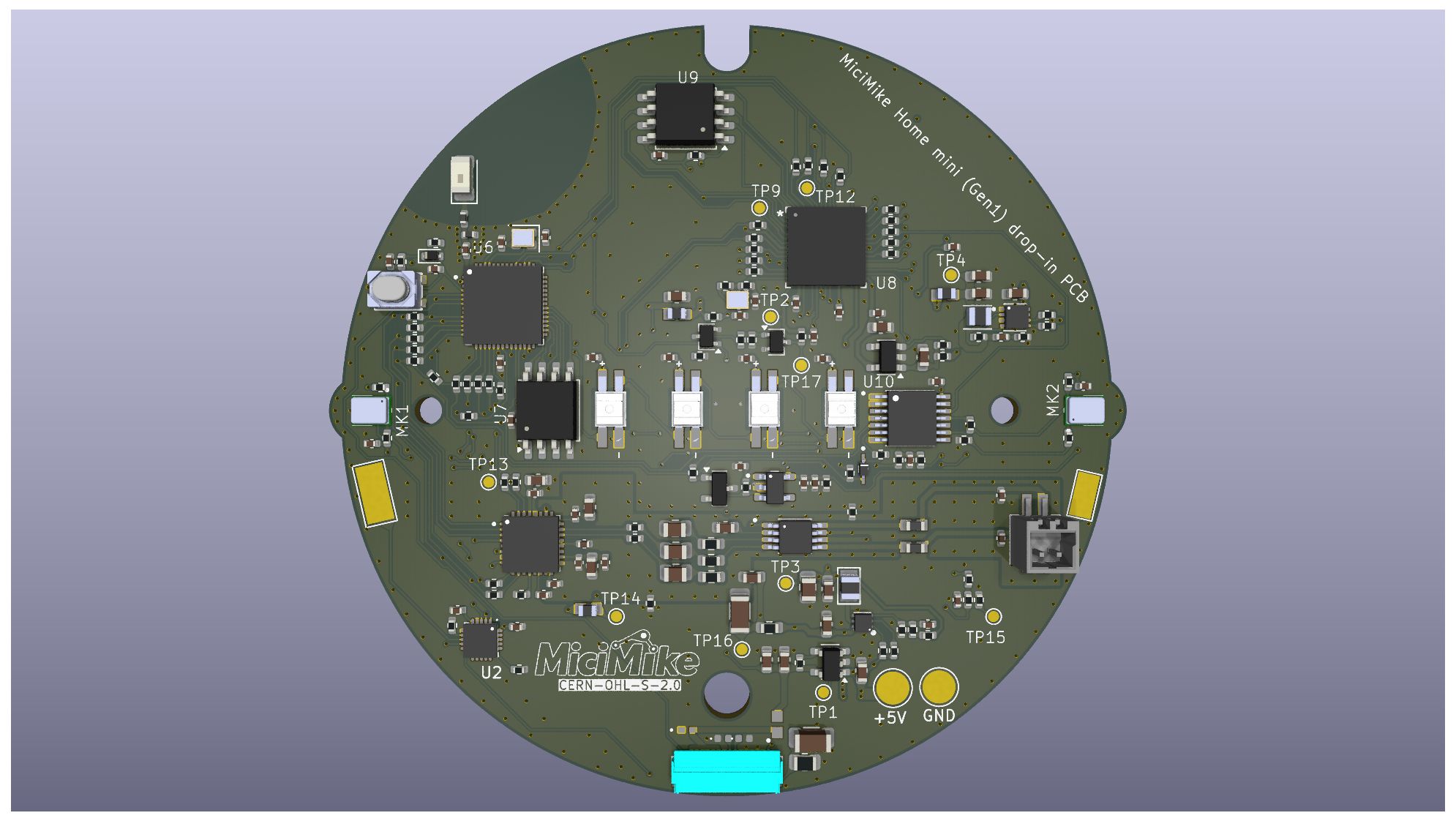
Full documentation for these will be published in our GitHub repository.
Validation
With these changes in place, the updated PCB has started the validation process, and test units are in production. I’ll share the results once it’s ready.
If you haven’t already, reserve your MiciMike today!