Lucie here, let’s cut to the chase: Apologies, I’m a bit late with the electronics. The motherboard took more revisions than expected—I recently completed version 4.
SuperSpeed Delayed
Version 4 motherboard PCBs arrived at the beginning of last week, Greta did the pick and place yesterday, and I immediately took a break from writing this article to start the bring-up. Schematics wise, there are not many changes to Version 3, but there are many little improvements and fixes across the board. The biggest topic in this revision is USB 3.0 SuperSpeed performance and the performance and signal integrity of high speed differential connections in general. I also used the chance to redo and improve a lot of the power layout, and to add more ESD protection to things like I2C lines that connect to the battery packs.
I went down this path because I had to validate our camera kit for the laptop and struggled with getting the high resolution modes to work. I concluded that this was the result of signal integrity issues on the Reform Next motherboard, and debugging this quickly led to my discovery that I hadn’t selected the correct 6-layer stackup for these boards. I mistakenly assumed that the default stackup at JLC had a "thick" core in the middle that separates layers 3 and 4, which had the bulk of the high speed differential pairs (my plan was for their ground references to be layers 2 and 5, respectively). Instead, the stackup had a thin core in the center and the inner layers were further from their ground planes than I had thought.
The obvious lesson is to really look into and understand the stackup and make sure to use an impedance calculator to determine the correct width and spacing of the differential traces. Also, it’s a much safer bet to just route differential pairs on the outside layers, and use inner layers for power rails and low speed signals. That’s what I did when almost completely re-routing the motherboard for version 4.
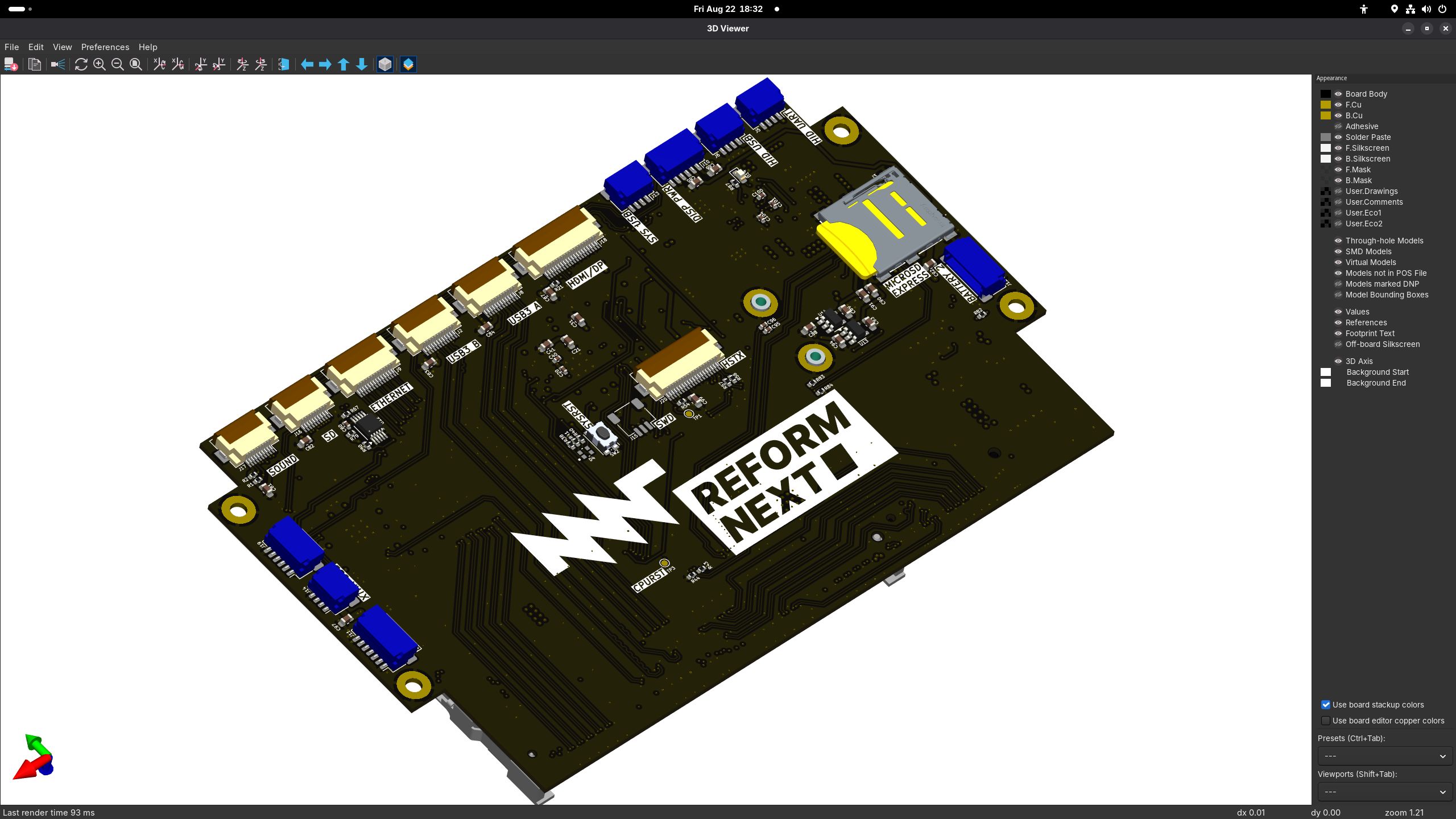
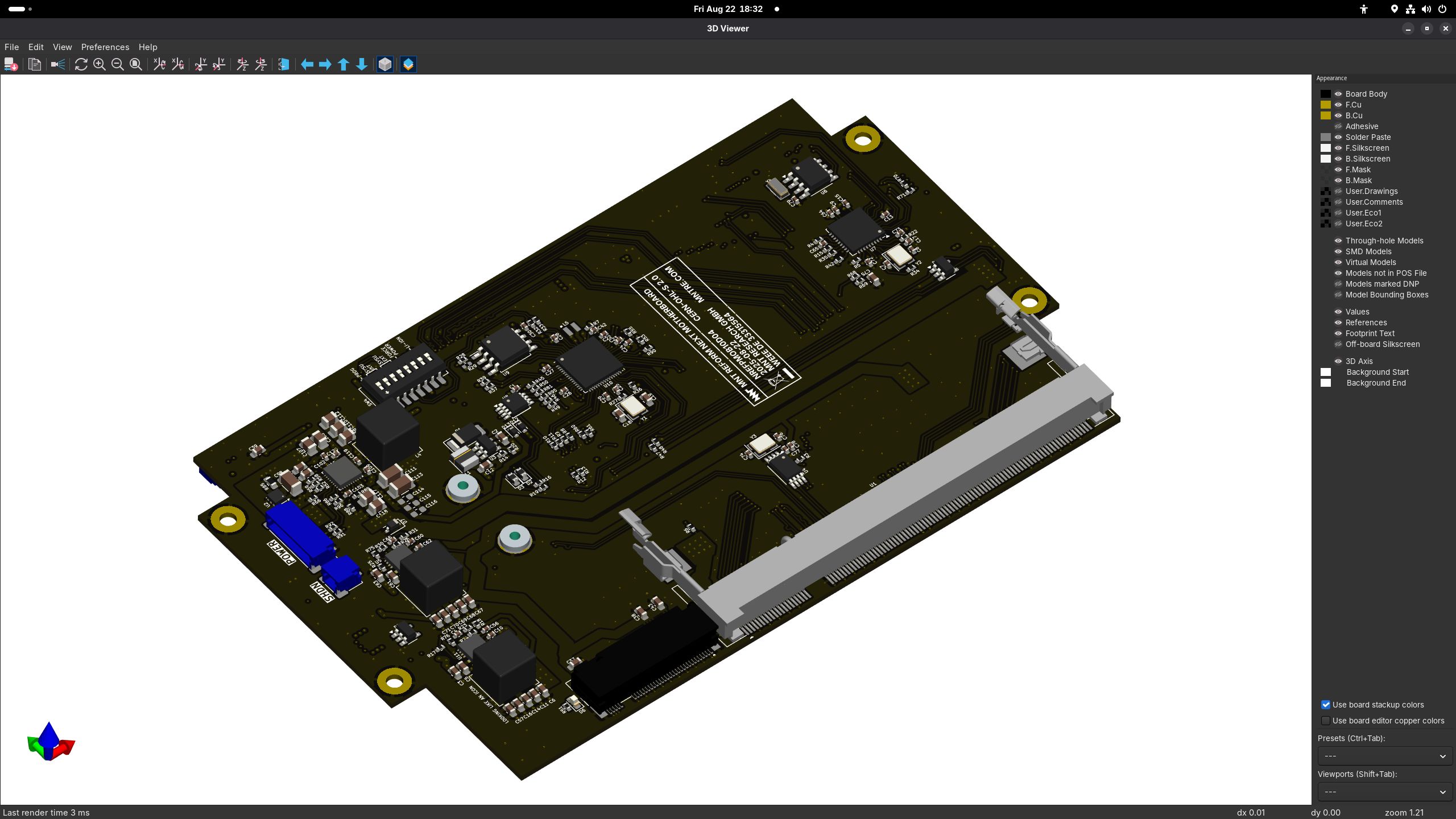
Luckily, the theories were correct and the improved stackup and routing made the USB 3.0 SuperSpeed signalling on the connector for the internal camera work.
Display Tech Flexed
Because of our multitude of past and future platforms and processors, including the upcoming Qualcomm QCS6490/8550 modules, there are now at least 3 ways to drive the internal 12.5 inch display of the Reform Next (and the compatible ones of Classic MNT Reform). One of these ways is driving the display directly, without any converters, by (embedded) DisplayPort. Recently, RK3588 mainline drivers gained support for DisplayPort, which can be multiplexed on HDMI lines of the RK3588, but I didn’t have the capacities to fully test it yet. If it works, we can get rid of the HDMI or DSI to eDP converter tile in MNT Reform Next and save some power use and electronics. But also to make sure my design doesn’t prevent supporting various configurations like routing DisplayPort over USB-C in the future, I had to carefully check all options and make small changes to the Next’s PCBs to make sure it can work out.
Battery Packs Refined
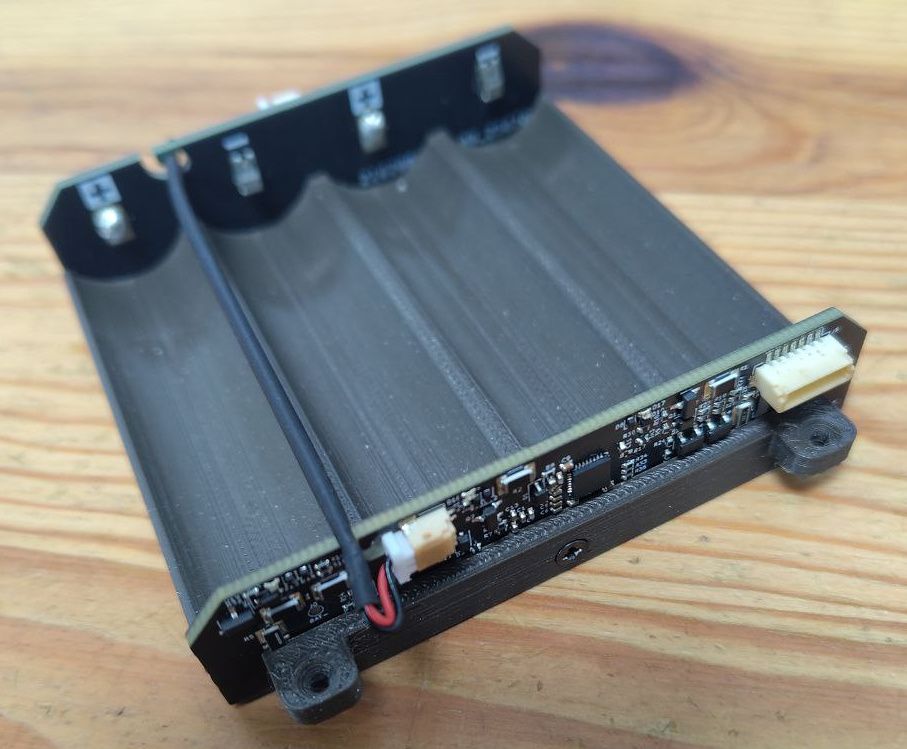
I extensively tested the MNT Reform Next prototype(s) on train/field trips like going to Gulaschprogrammiernacht in June as well as at home, and wasn’t entirely happy with our previous way of mounting the battery cells. In the end, we decided to remove the built-in aluminum structures for holding individual battery cells from the enclosure design, and Greta designed a 3D-printable battery pack holder that holds the electronics and the cells together and is mountable to the enclosure with screws. This more modular design allows for easier improvements and alternative pack geometries in the future. I also merged in some updates that Elen made to the battery pack electronics, like a red warning LED for each cell that lights up when you accidentally plug the cell in the wrong way.
Enclosure Parts Completed
The aluminum enclosure parts, designed by Ana Dantas, have gone through several revisions and refinements. The main body that houses the motherboard, keyboard and ports can be considered completed. Ana also revised the biggest CNC part so that it can be manufactured without any undercuts, making it easier to replicate in the spirit of Open Hardware.
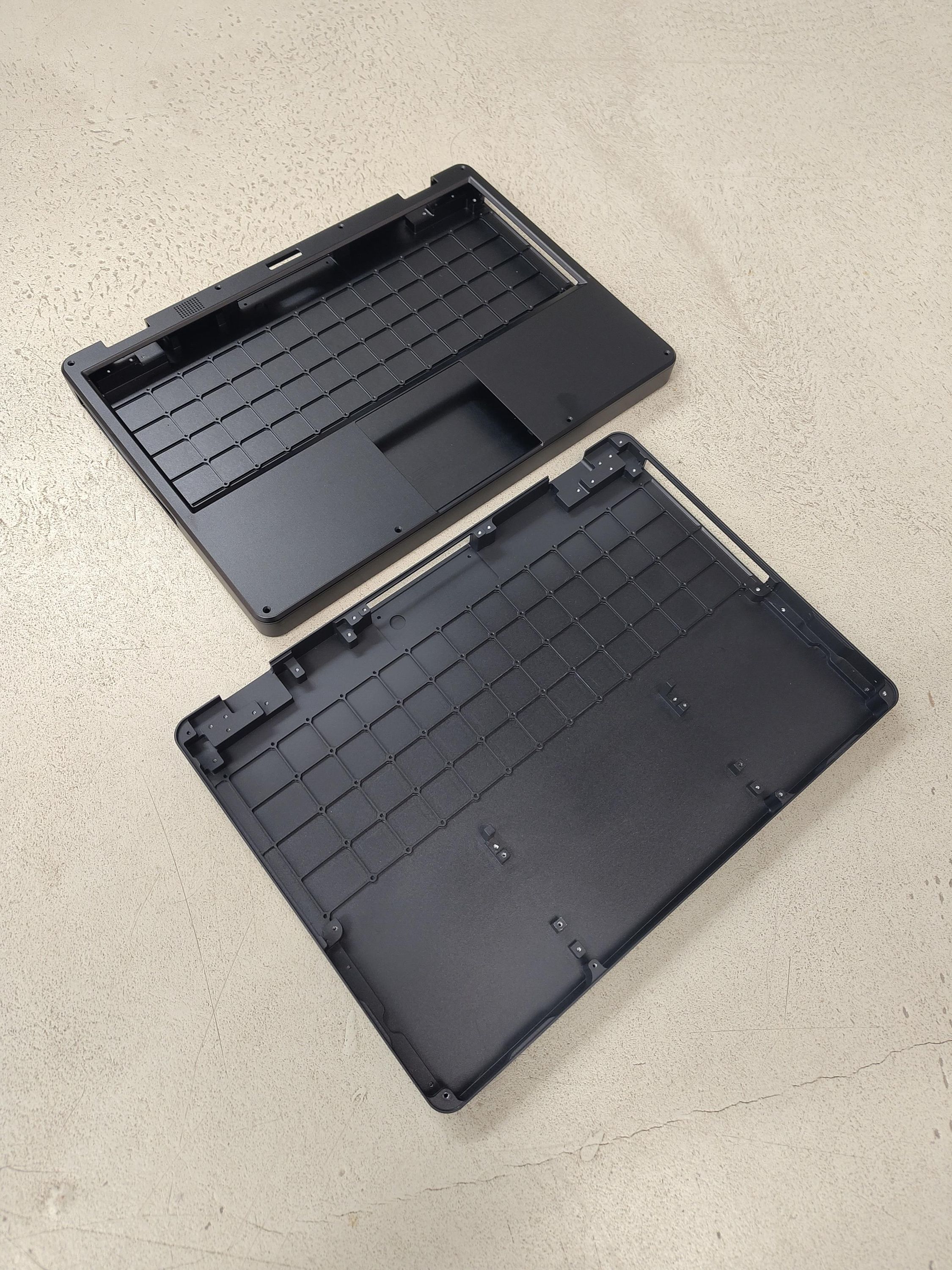
We’re making some last minute changes to the aluminum screen enclosure parts to carve out more space for the camera module and especially future camera upgrades, or other sensors or indicators that people might want to integrate above the display.
Multitouch Trackpad Finalized
While the mouse emulation of the trackpad that we featured in our last update was pretty good, my end goal was to implement the Precision Touchpad standard for USB HID trackpads so we can have native multi-touch gesture support under Linux, and I’m happy to say it was totally worth it. Scrolling, Pinch-to-zoom and 3-finger swipe to switch workspaces work great under GNOME and web browsers, for example.
After some back and forth, I settled on Kailh’s PG1316 ultra thin mechanical switches for the 3 buttons of the trackpad, and changed the layout so that the left and right buttons are bigger than the center button, which is more ergonomic in practice than all buttons being the same size (you don’t have to overstretch your thumb when your index finger is further away on the trackpad surface). I’m very happy with these switches and also the robust feeling of their standard, minimalist Kailh keycaps that come in three colors (black, white and transparent). Check out this video to see them in action!
Critical Parts Stocked (Processors, Displays, Keyboards)
We secured the most critical components, the RK3588 processor/memory modules from Firefly, right when we received the campaign funds earlier this year. These are in our stock and just waiting to be put into laptops. Having learned from supply chain troubles with Pocket Reform, we also started sourcing display panels as early as possible. The first 100 are already in stock, and a second batch of 200 should arrive soon.
The keyboards are backwards compatible with MNT Reform, and as such we already have stock of them and are constantly making new batches of them.
Sleeve Fabric Altered
Because sourcing Piñatex became really unreliable this year, we had to find a new vegan leather supplier for our range of sleeves, including the one for MNT Reform Next. We’re happy to announce that, after sampling several options, we’ve settled on Desserto. Desserto® is a product line of the Mexican company Adriano di Marti, and their vegan leathers are made from cactus fibers and bio-polymers.
Greta made the final sleeve prototype:
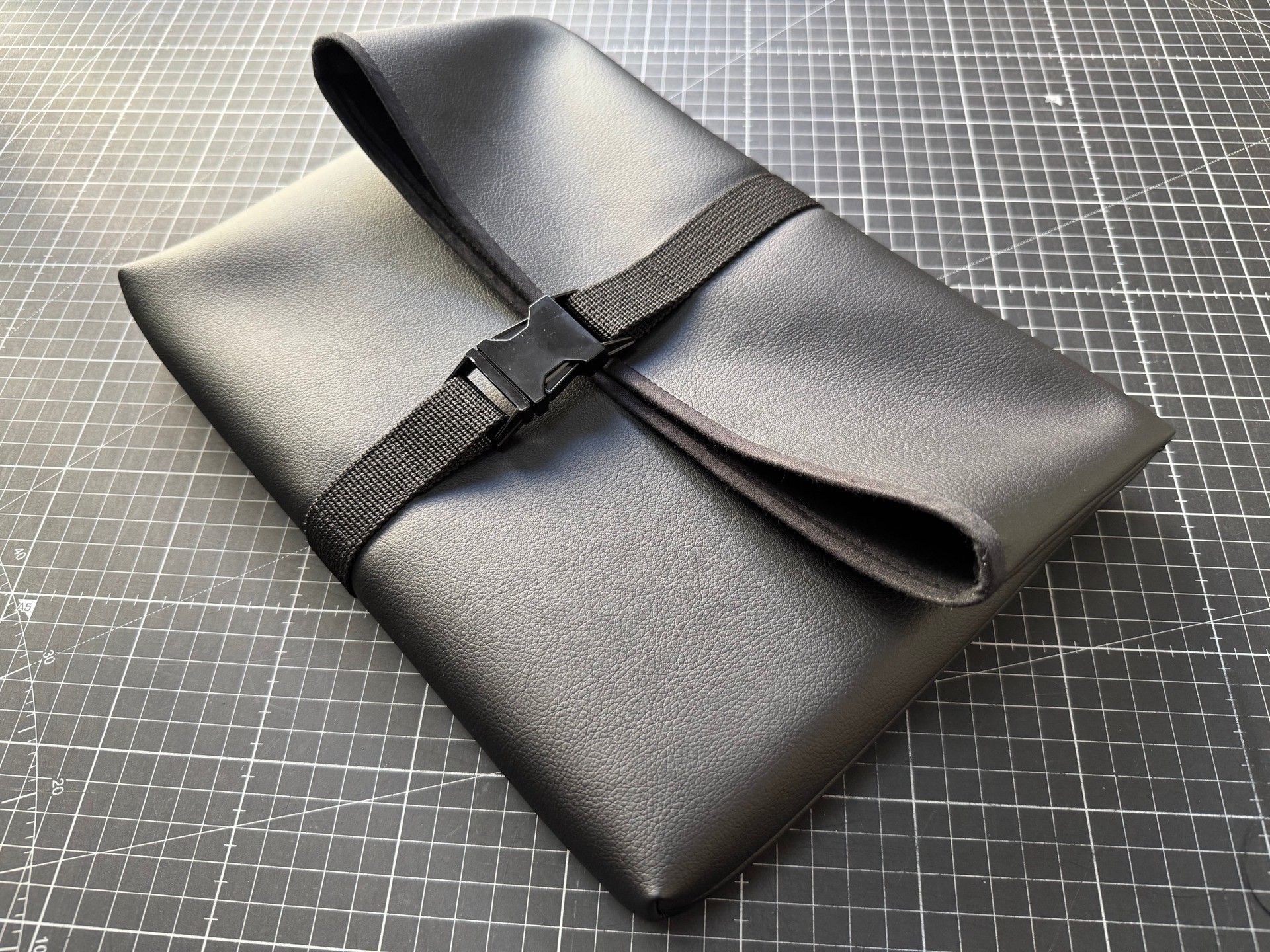
This will (most likely) be manufactured by a local company that we are currently in conversation with.
Supporter Shirts Printed
All the t-shirts for backers of the Supporter Pack arrived last week, and they turned out great. This version of the t-shirt features a 4-color screenprint that was designed by me this time, based on many small MNT/Reform related design elements made over the years by Anri. I also incorporated "pixel Tina" by Greta, the Fediverse asterism, and the Y2K MNT logo riff I designed last year for this very campaign.
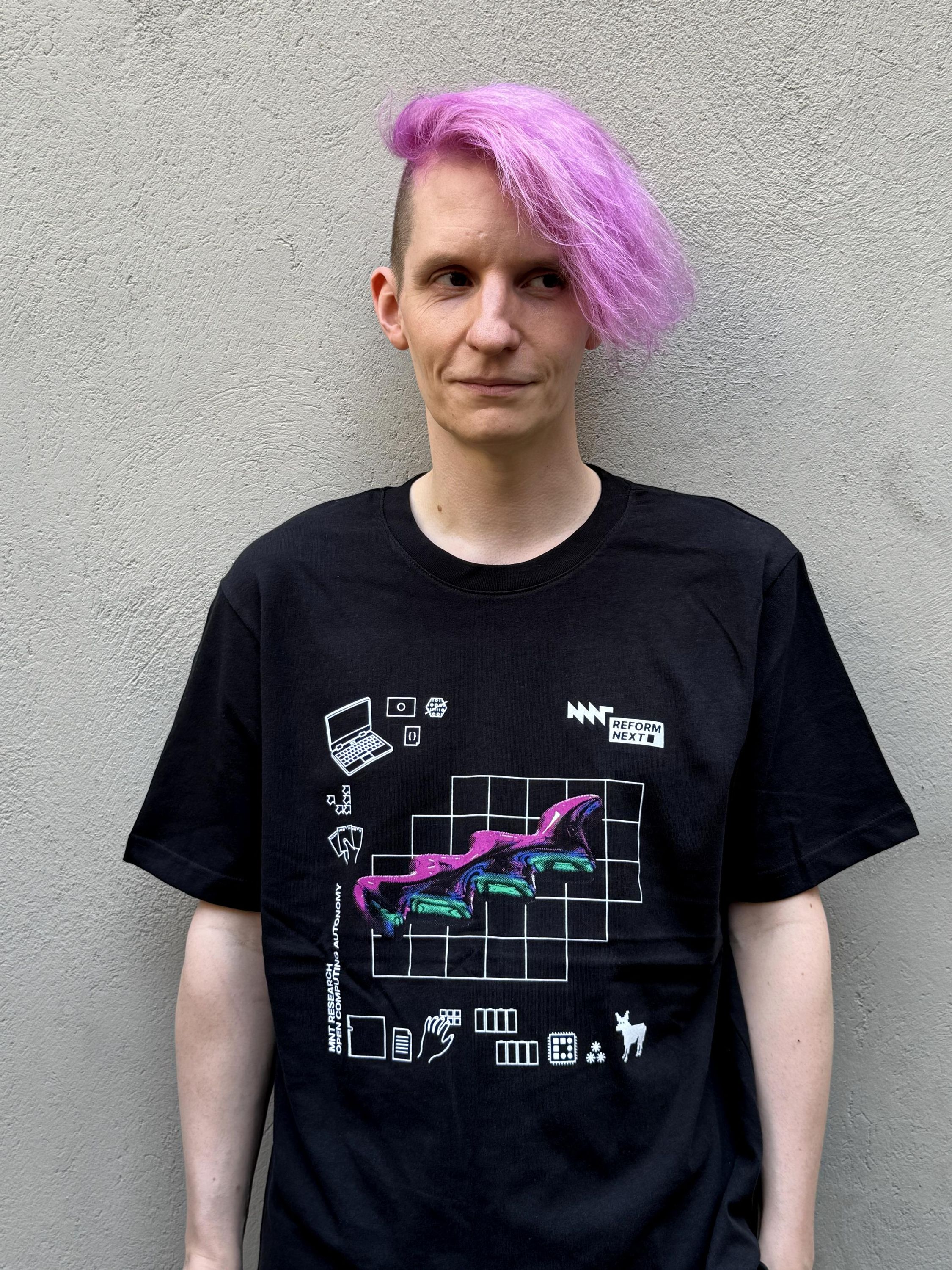
We’ve shipped all of the tees and they should be heading to you soon!
Ix Ethernet Adapted
All the Ix plug to RJ-45 jack adapters, made by Sinbon, are here and we’ll ship them to Crowd Supply ASAP.
Optimist Timeline Updated
The timeline hinges mostly on the validation of motherboard version D-4, which I’ll start working on immediately. Hopefully it’ll all be fine, and we can proceed to lab testing for CE emissions compliance.
Learning from past experience, we want to slowly ramp up and start production with smaller batches than we did on the Pocket Reform campaign (where we went directly with a 750x batch of everything). This will increase some BOM costs at first, but will let us ship to the first backers earlier and react to any problems quicker and in a more flexible way.
Rough timeline idea:
Now: D-4 motherboard validation, polishing of internal cabling
End of September: CE lab test
End of September: Custom cabling buy
End of September/early October: First batch aluminum case parts ordered
October: Buy of first small batches of motherboard and supporting PCBs
December: Assembly and QA of first backer devices
January: Likely ship date for first units
Thank you for bearing with us! I (or Anri) will write another update once the first batch ships.
For more frequent updates on MNT developments (including MNT Reform Next), you can read our monthly News updates and follow us on the Fediverse.