Project update 9 of 11
Field Report - Building the Game Bub from Scratch
by Crowd Supply, What's Ken Making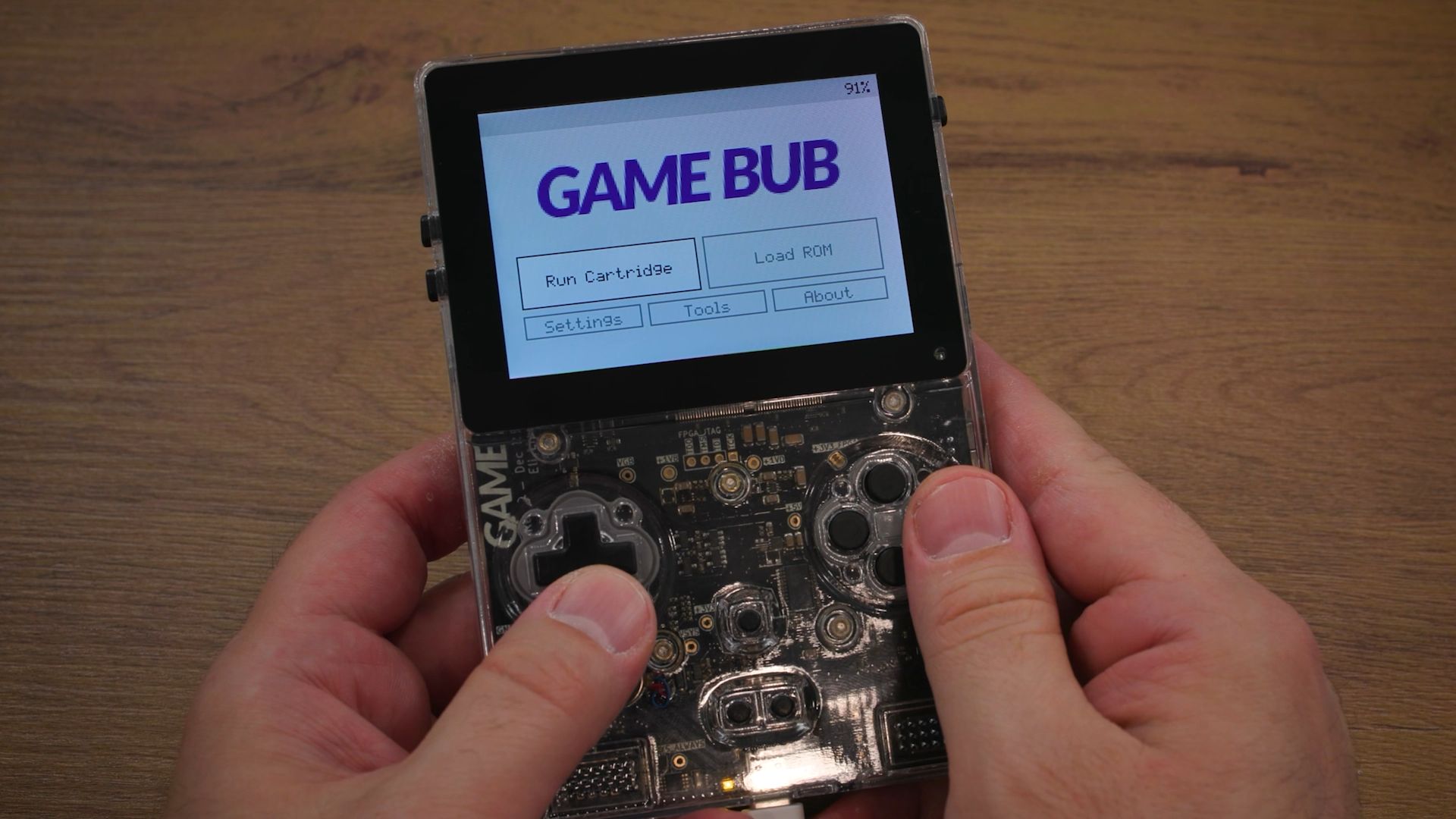
I run a YouTube channel called What’s Ken Making, where I build open-source hardware projects and do deep dives into retro computing. A big part of what I do is showing people they shouldn’t be afraid of a soldering iron, that with the right tools and a bit of patience, you can build some really impressive things at home.
I’ve been following the FPGA gaming scene for a while, and the community has been wanting an open-source handheld for a long time. When I came across the Game Bub, it hit on everything I was looking for. The Game Bub is open source, indie-developed, and a great device for classic gaming. I knew I had to build one. At the time I started, the horizontal version from the Crowd Supply campaign hadn’t been open-sourced yet, so I went with the earlier vertical design that its designer, Eli, had already published.
I sat down expecting a two–three hour build session. After spreading on the solder paste and counting out the first 50 or so capacitors, I realized I was going to be at my workbench for a while. The board has over 300 components, with 271 of them being 0402 passives, and the FPGA is in a fine-pitch BGA package. The first build took around seven hours to assemble, plus a couple more to troubleshoot.
Honestly, I was confident about most of it. The parts I was most concerned about were some of the smaller ICs and the BGA chip. Reflowing a BGA isn’t that difficult, but you can’t visually confirm that the joints look good, so there’s always that uncertainty. To my surprise, the BGA was fine – the actual problems turned out to be bridged pins and a few tombstoned capacitors on some of the smaller parts.
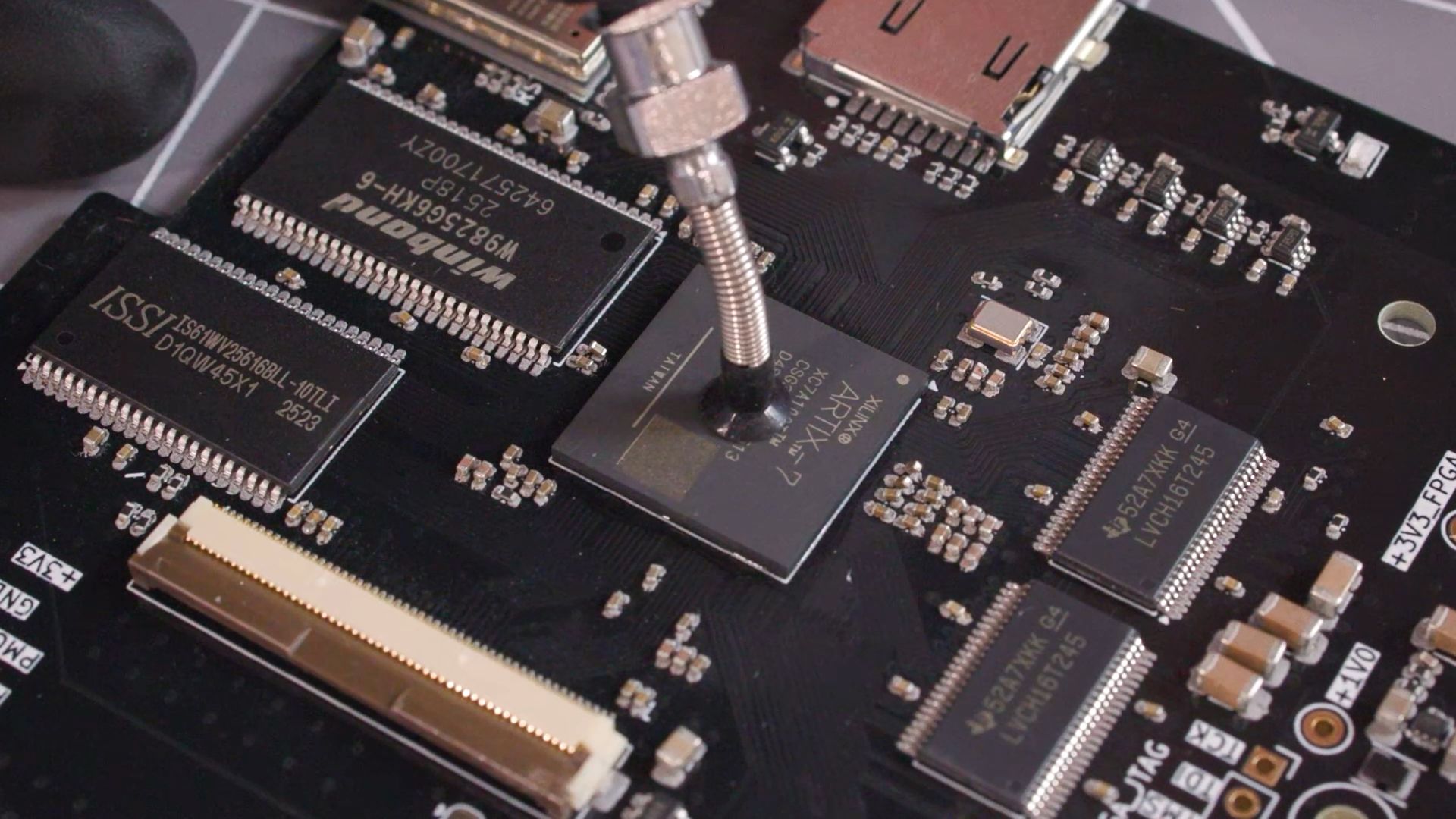
When I first plugged it in, the LED came on and my computer recognized the ESP32, which was a good sign. But the connection kept dropping. After some digging, I found a ground short on the 3.3 volt rail. From past experience, I knew it would likely be one of the smaller ICs, so I ended up pulling them off one by one until the short went away. It turned out to be the DAC.
Once everything was working, I was pleasantly surprised by how much the Game Bub felt like a finished product. The transparent 3D-printed resin enclosure really brought it all together, and it just felt great in my hands. I tested it with Game Boy, Game Boy Color, and Game Boy Advance games, both from cartridges and ROMs loaded off the microSD card. Everything ran smoothly. I was especially impressed with how Game Boy Advance games looked, I actually think they look better on the Game Bub than on other FPGA handhelds I’ve used. The battery life was also quite good; Eli did a great job with the power management design.
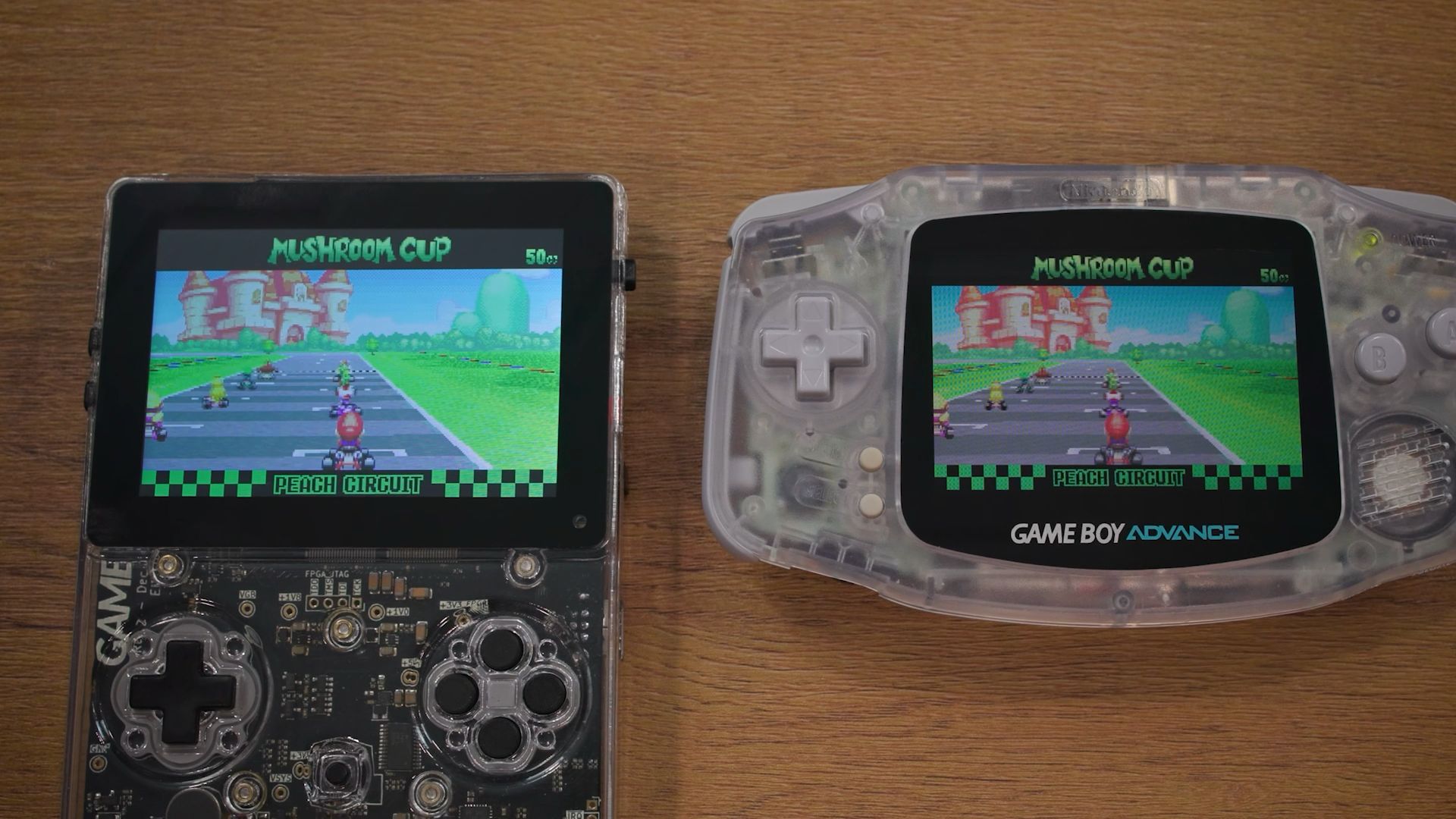
What excites me most about the Game Bub is what it does for the community. The FPGA inside is roughly twice as capable as the one in the Analogue Pocket, and Eli’s cores only use a fraction of that capacity. I’m hoping this will spark a wave of developers building and porting cores to the platform and would expect to see systems that other FPGA handhelds simply can’t run.
And beyond the Game Bub itself, I think it’s a testament to what’s possible for independent hardware developers today. The tools available now are lightyears ahead of even just a few years ago. Anyone with enough time and patience can fire up KiCad for free, design their own hardware, and have boards made for just a couple of dollars. With FPGAs being widespread and affordable, you can make your own custom chips from home. It’s quite incredible, and the Game Bub is a great example of what one person can accomplish with those tools.
I documented the entire build process in a video on my channel, from the component-level hardware walkthrough through the full assembly and testing:
Interested in buying your own prebuilt Game Bub? Head on over to our project page!