I’m writing this post on the plane back from Shenzhen, China, where I was visiting Elecrow, the contract manufacturer producing Game Bub.
While there was no hard requirement for me to physically go to the factory, given the complexity of Game Bub and the tight timelines, I thought it would be a good idea to make sure everything went smoothly with minimal back and forth. Plus, I got to take a lot of interesting pictures!
There, I was finally able to meet the project manager I’ve been working with, Roy, in person. Roy has been coordinating suppliers, part purchases, samples, shipments, and scheduling over the last several months to bring Game Bub to life. He gave me a tour of their office, warehouses, and manufacturing lines, and then we got to work!
First, I had to debug a problem with the Dock that was preventing us from proceeding with full assembly of all the circuit boards (PCBA). The trip immediately proved its value, because I was able to quickly identify the problem as a software issue, fix it, and unblock production.
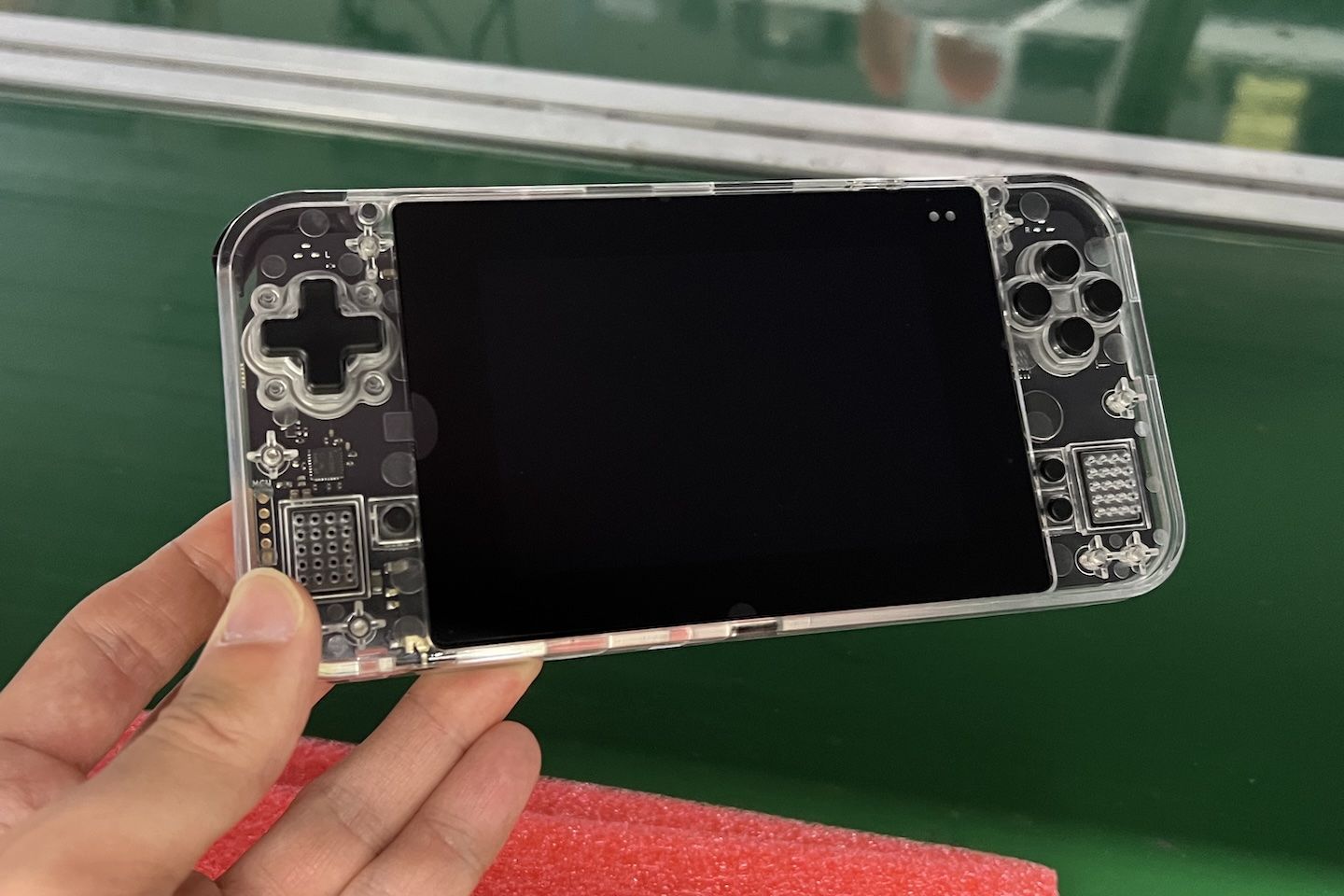
I also inspected and approved the final plastic components, packaging samples, labels for products and boxes, and the printed documentation.
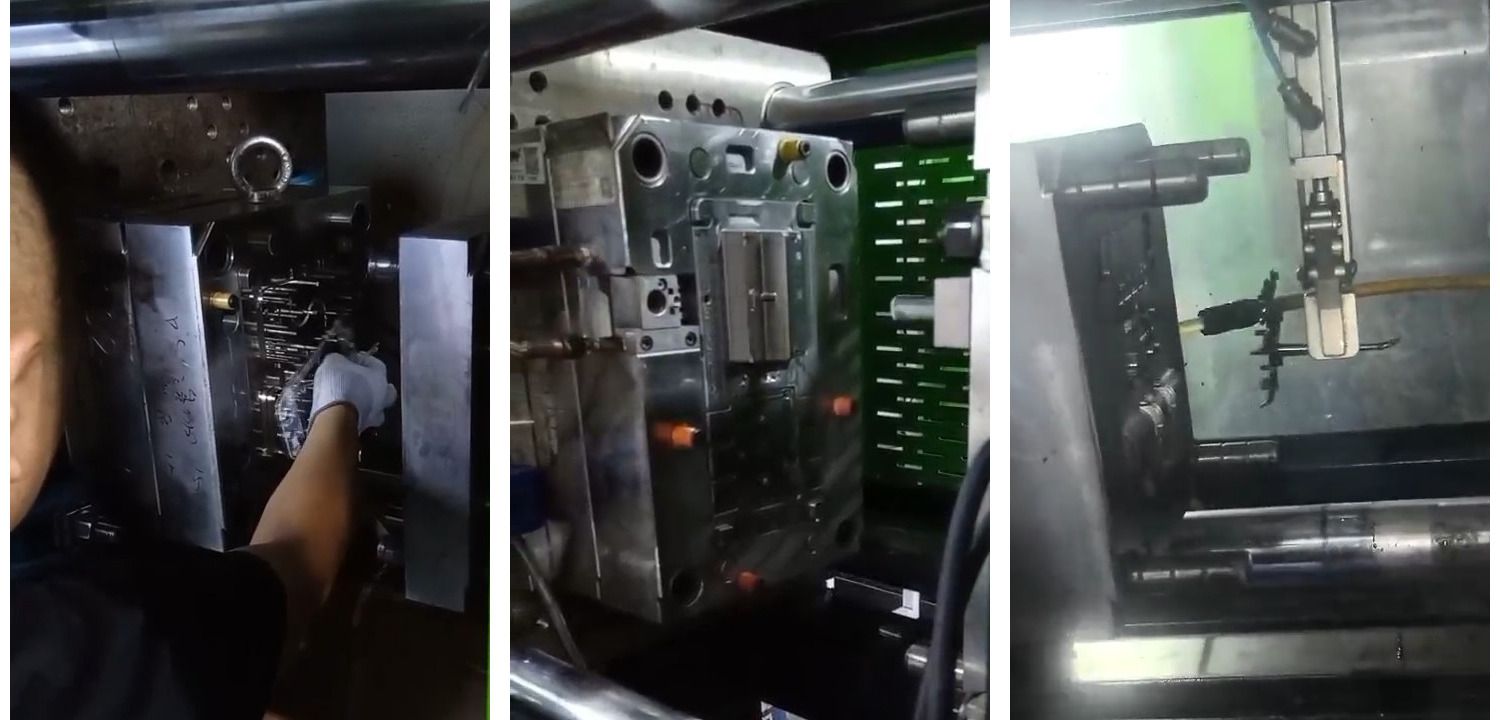
The plastic injection molding happens at a factory in Dongguan, which is next to Shenzhen. I didn’t visit the factory myself, but I asked the supplier for some photos of the process:
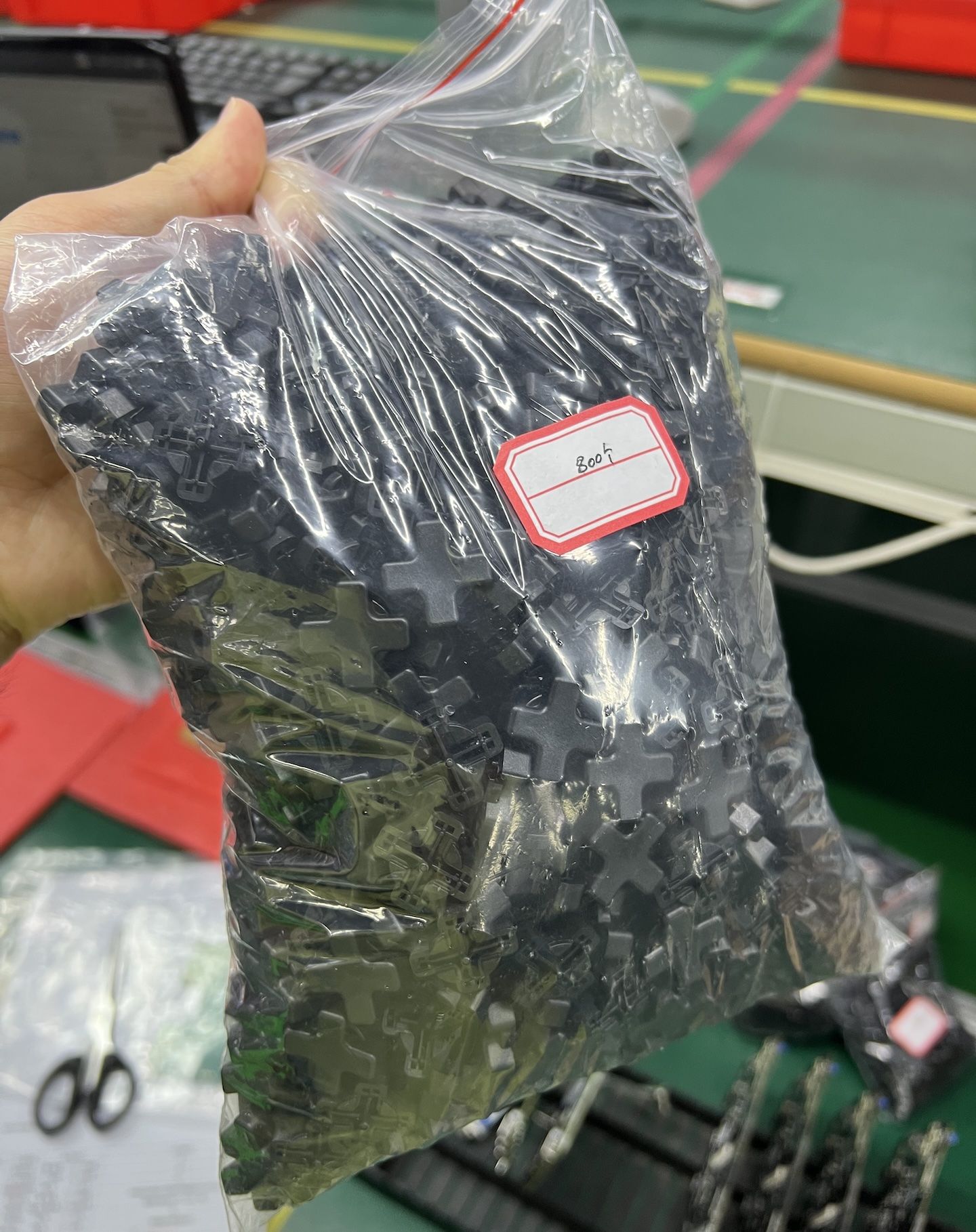
It was really cool to see all the bags and boxes of parts: this is the first time I’ve really gotten to appreciate the scale of this production run!
Finalizing the SOP (Standard Operating Procedure)
The most important part of the trip was finalizing the SOP, the standard operating procedure: the final, detailed, step-by-step description of how to assemble, test, and package Game Bub. Every step is laid out in detail with no ambiguity, to allow an assembly line of workers to efficiently produce thousands of identical devices.
This process started several months ago, when I assembled an early Game Bub sample, took pictures, and wrote up a description of everything I did. Elecrow then followed this procedure themselves to produce their own samples, and we checked that they matched in functionality.
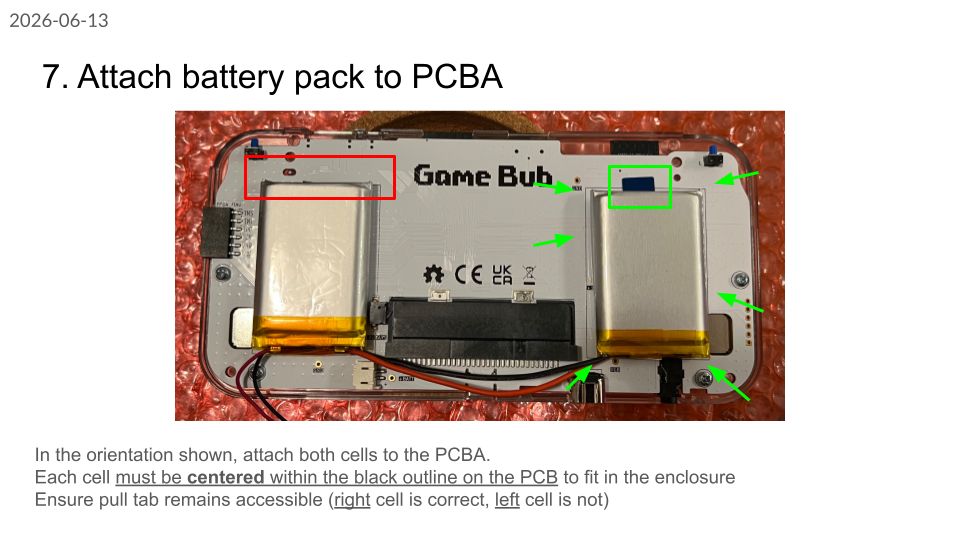
Then, shortly before I arrived, Elecrow’s manufacturing engineers rewrote my guide into a series of steps, each one designed to be handled by one person on the assembly line. I sat down with some of the engineers as they went through a trial assembly (with me looking over their shoulder) to make sure the procedure worked properly and matched the intended design.
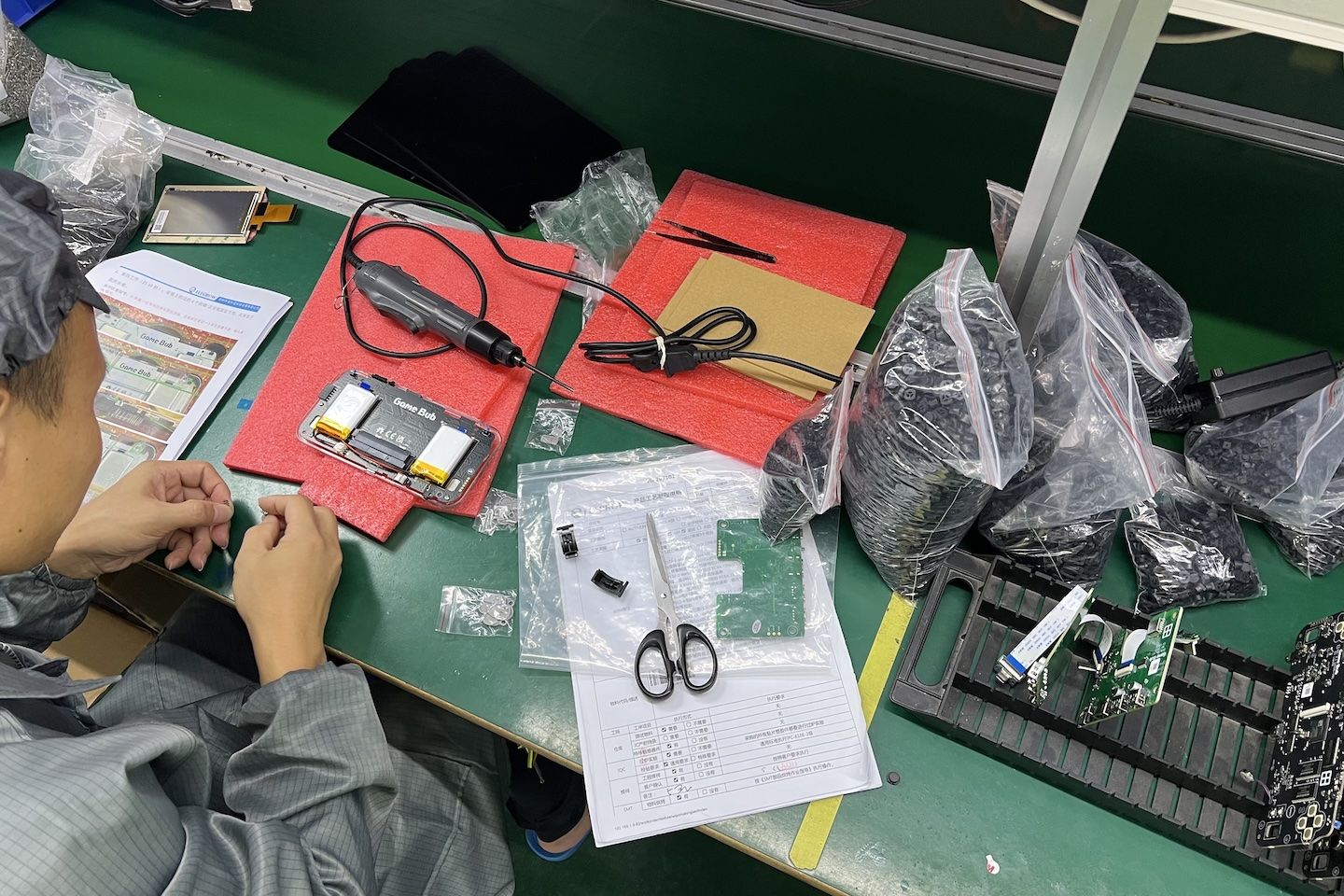
A few examples of final changes:
- "tighten screws completely, so that the shell stays together properly" became "tighten screws with the electric screwdriver set to setting X"
- Adding a step to glue in the Dock LED light pipe. They're supposed to be press-fit, but some of them are a little too loose.
- Flagging that it's easy to accidentally put the Power button where the Start/Select/Home buttons should go
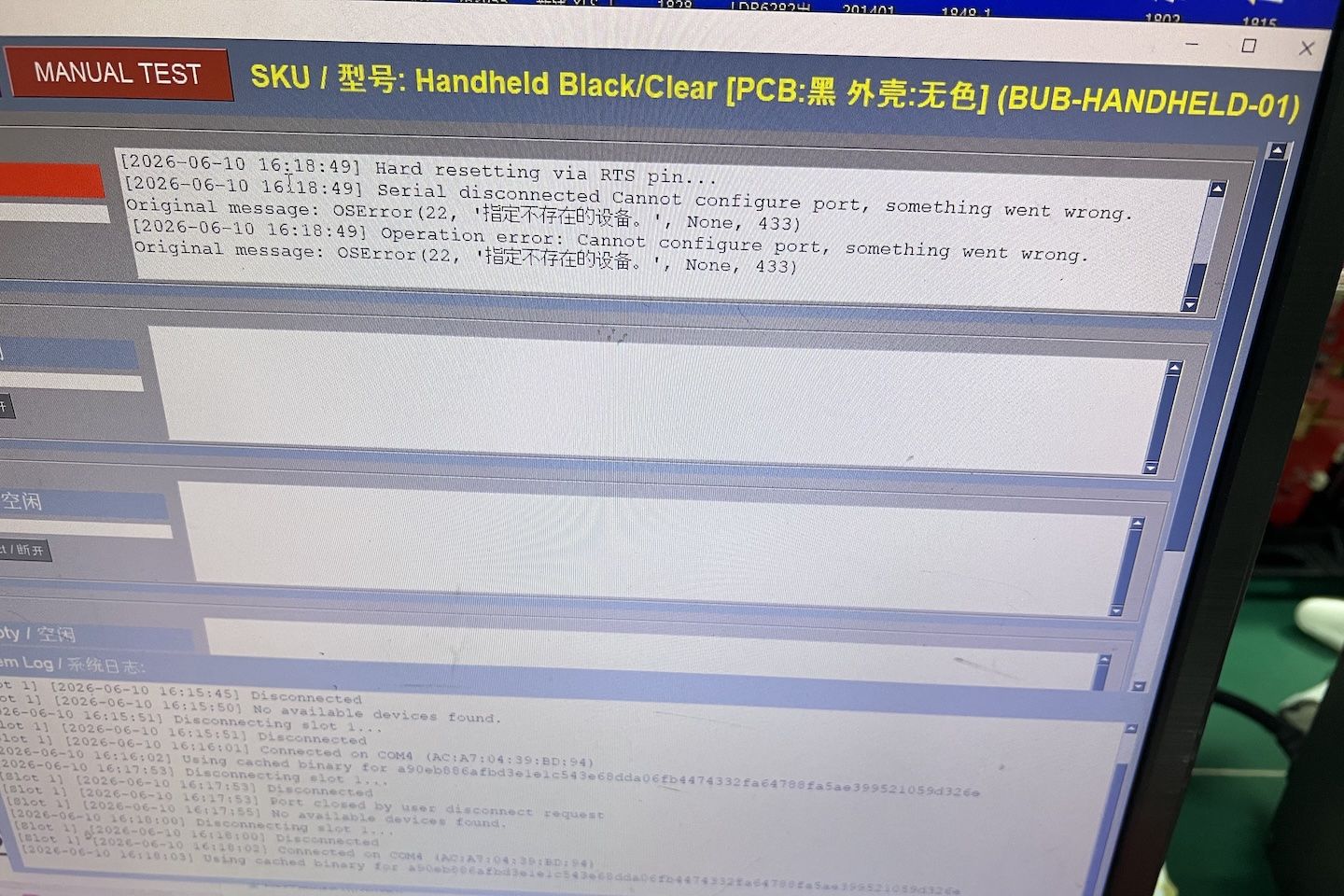
Then we ran through the flashing and testing procedure. I wrote a small GUI to help with this process, and collect logs to help with remote debugging if there were any issues. Unfortunately, I had to spend the bulk of the time here resolving problems stemming from differences between macOS (which I develop on) and Windows (which the factory uses at test stations). I blame Windows :)
What’s next?
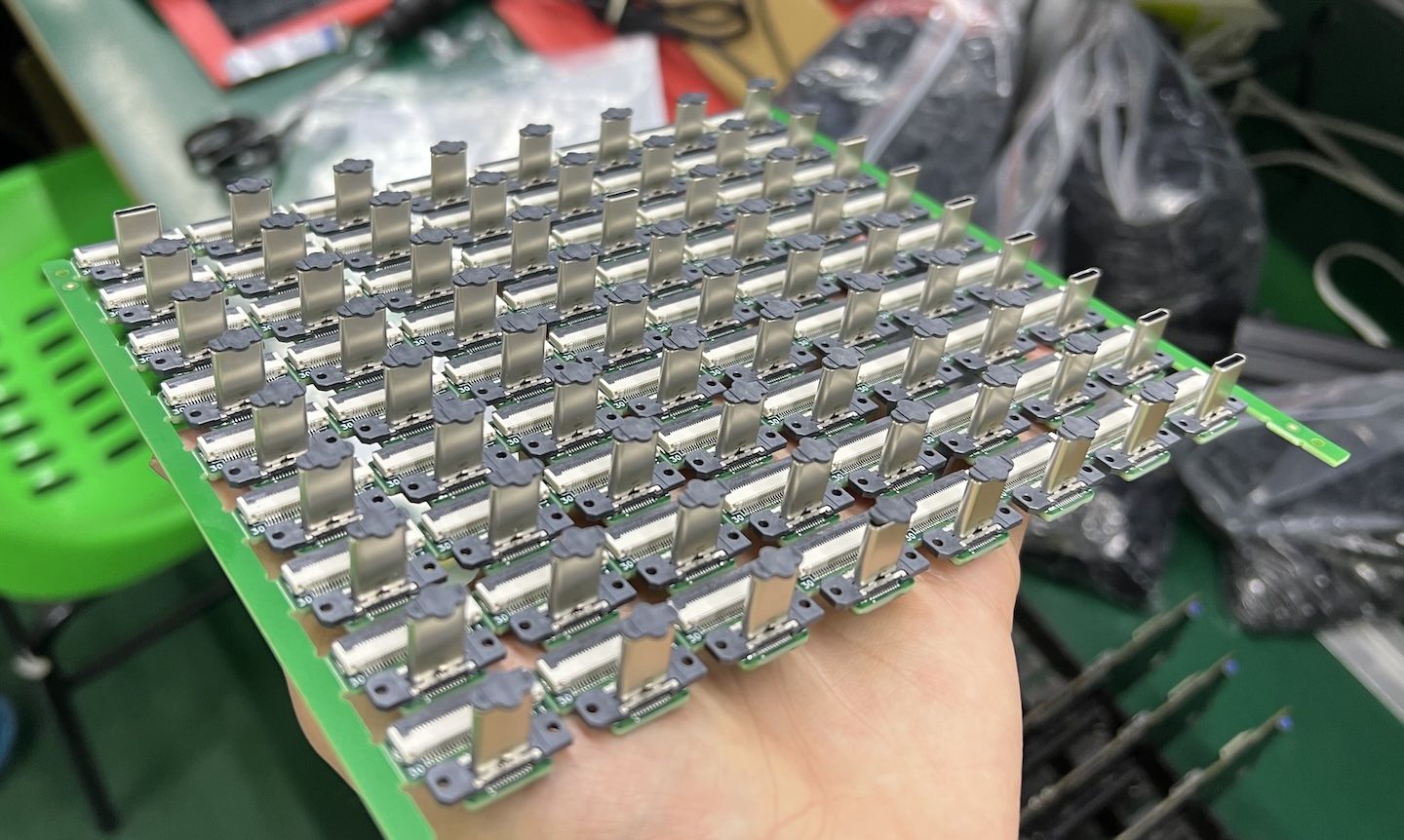
All of the PCBA (circuit boards) for all the Handhelds and Docks are all completed. As I write this, Elecrow is flashing, assembling, and testing each Dock. When the full assembly line is set up, they can produce more than a hundred units an hour, so the whole assembly process takes only a day or two. Then add in another day or two for testing and packaging.
Elecrow is also flashing and testing the Handheld boards. Unfortunately, final assembly can’t start just yet, because we’re still waiting for the full shipment of displays. By the time I left China, the supplier had only been able to deliver 100 pieces (of ~1300 total), because their supplier missed a critical shipment of LCD driver chips. The ongoing AI chip frenzy is affecting every chip, not just high-performance GPUs and memory, because the raw silicon wafers are all being bought up at a premium to produce more RAM and GPUs. However, the LCD supplier has told us that they should be receiving the remaining chips shortly, and they expect to be able to deliver the rest of the shipment next week.
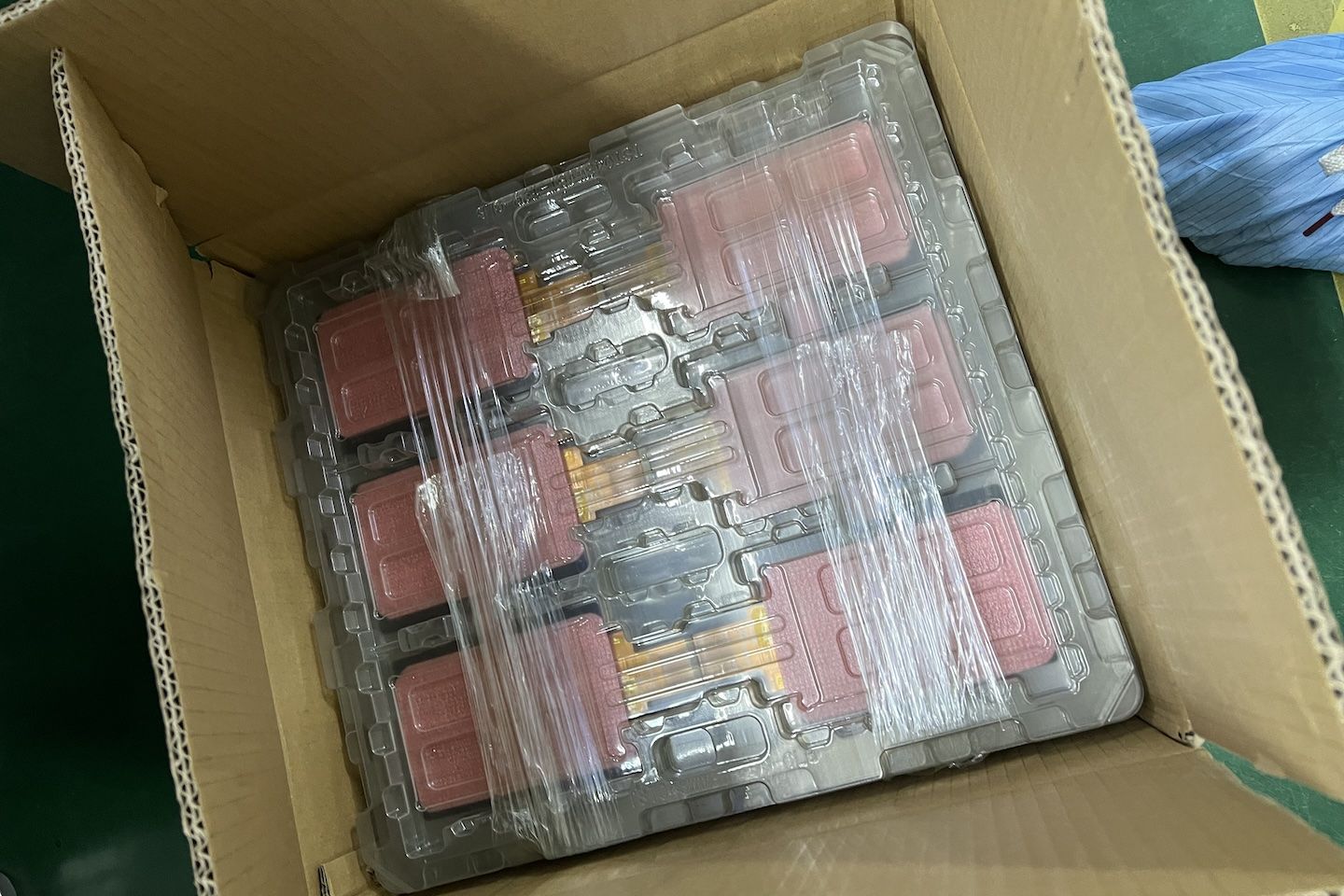
The Handheld assembly will start as soon as the remaining displays arrive, and it’ll take a couple days to finish assembling and testing.
At that point, Elecrow will box all the devices up and pack them for shipping according to Mouser’s requirements. Once we get final shipping approval from our contacts at Crowd Supply, they’ll be sent off to their warehouse in Texas, and soon after, to all of you!
You should expect to receive another update soon when everything is boxed up and ready for shipping to Mouser.