Project update 22 of 22
ManT1S Introduction & Baader Planetarium Showcase
by Patrick VIn this update I want to share some exciting news about the growing family of wired networking boards that we produce here at Silicognition LLC, and I also show an example of a customer putting the wESP32 to good use in some very special equipment!
ManT1S Board
We created the wESP32 7 years ago to provide an easy-to-use core board that provides power, wired networking and a well-supported ESP32 microcontroller, allowing you to focus on your application. And many of you made some amazing things with it—see another example below!
But technology doesn’t stand still, and in 2019, IEEE ratified several so-called Single Pair Ethernet (SPE) standards in IEEE Std 802.3cg-2019. One of these is 10BASE-T1S, or "T1S" in short.
These standards were specifically designed for industrial, automotive and IoT use, to provide easy and low cost ways to build distributed, networked systems in high-noise environments. Since that nicely matches our area of focus here at Silicognition, when chips that implement this technology started to become available, the time was ripe for a new entry in our networked products family: the ManT1S.
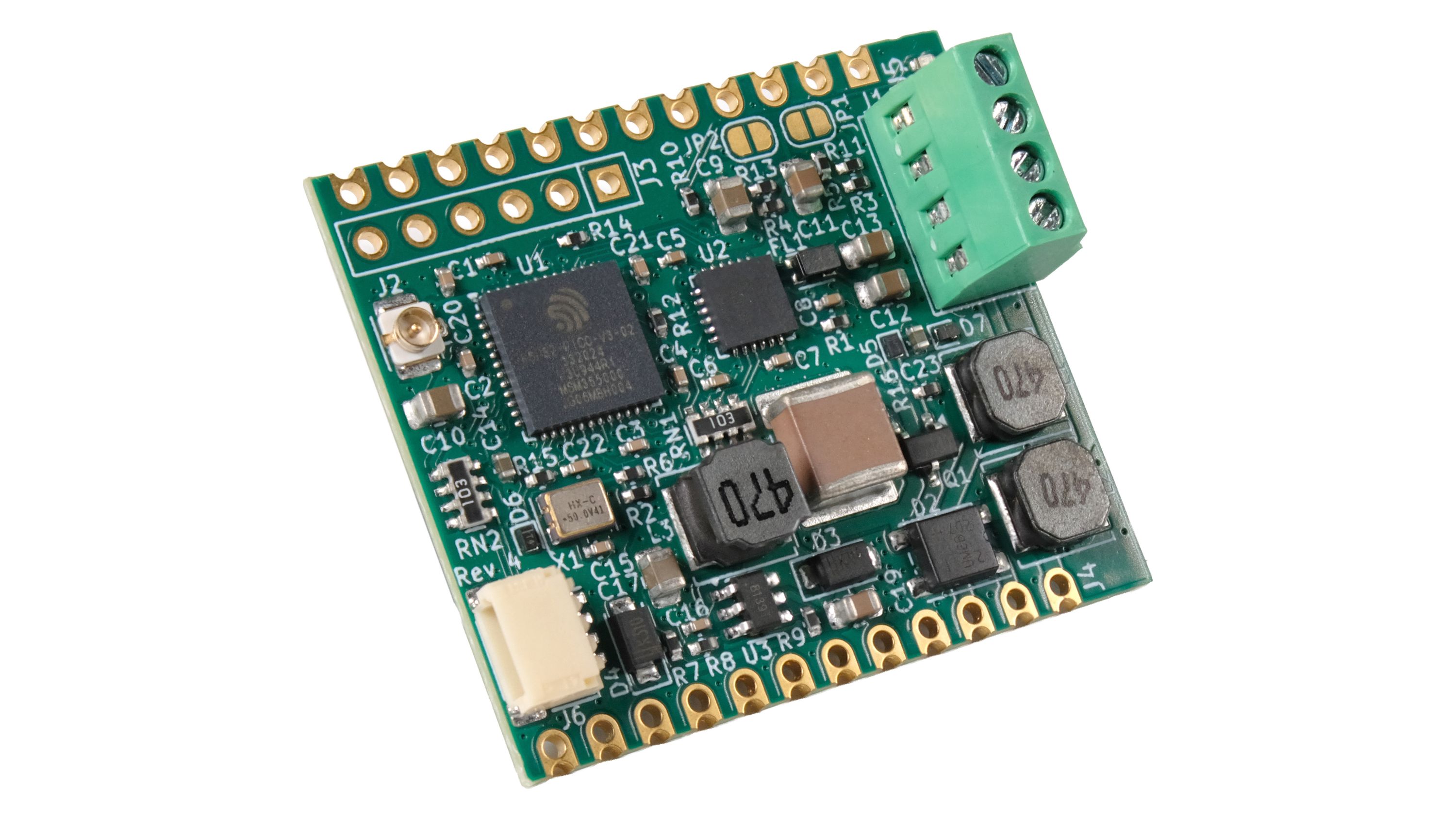
You might wonder: wait, a 10 Mbit/s network? What’s so great about that? The wESP32 implemented 100 Mbit/s seven years ago after all!
Well, as is usually the case in engineering, it’s all about the details. You can of course build a networked, distributed system with several wESP32 boards and a PoE switch, and some of you have indeed done this. For some applications, this continues to be the best approach.
But it tends to be rather equipment-heavy once you have many nodes since you need a PoE switch and individual point-to-point Cat5+ connections from the switch to each individual wESP32 node. Depending on the topology, that can add up to a lot of wiring, or the need for extra PoE switches in places where you might not want them.
So What Does the ManT1S Bring to the Table Instead?
With T1S networking technology as implemented in the ManT1S, a distributed system can become significantly simpler, lighter and cheaper to implement. For one thing, the ManT1S nodes on a T1S mixing segment can all communicate with each other without requiring a network switch. You got that right: just daisy chain a single pair of wires from one board to the next, and they are all talking! In addition, the same pair of wires can also distribute power to all the nodes on the network. Inject power at any one of the nodes, and your power distribution is solved. How much power? Up to 52 W @ 75 V! Convert the wire voltage locally at each node to the voltage you need, or distribute the exact voltage you need at all nodes over the wire, it’s up to you. Anything between 5 V and 75 V will work (though you need to use higher voltages to reach maximum power). If you just need 3.3 V at a node, the power system on the ManT1S most likely already has you covered.
And the 10 Mbit/s speed? Well, it depends on what you are doing whether that’s a limitation or not. Probably not the best option to stream 4K video, but for command and control messages, it’s just fine. Think about the kind of communication you usually send between microcontrollers, typically over a 115.2 kbit/s UART. T1S’es 10 Mbit/s provides you about 87x that bandwidth, and you don’t need to worry about implementing point-to-point channels between all the individual micros!
But I Don’t Have a T1S Network, So How Do I Talk to These Things?
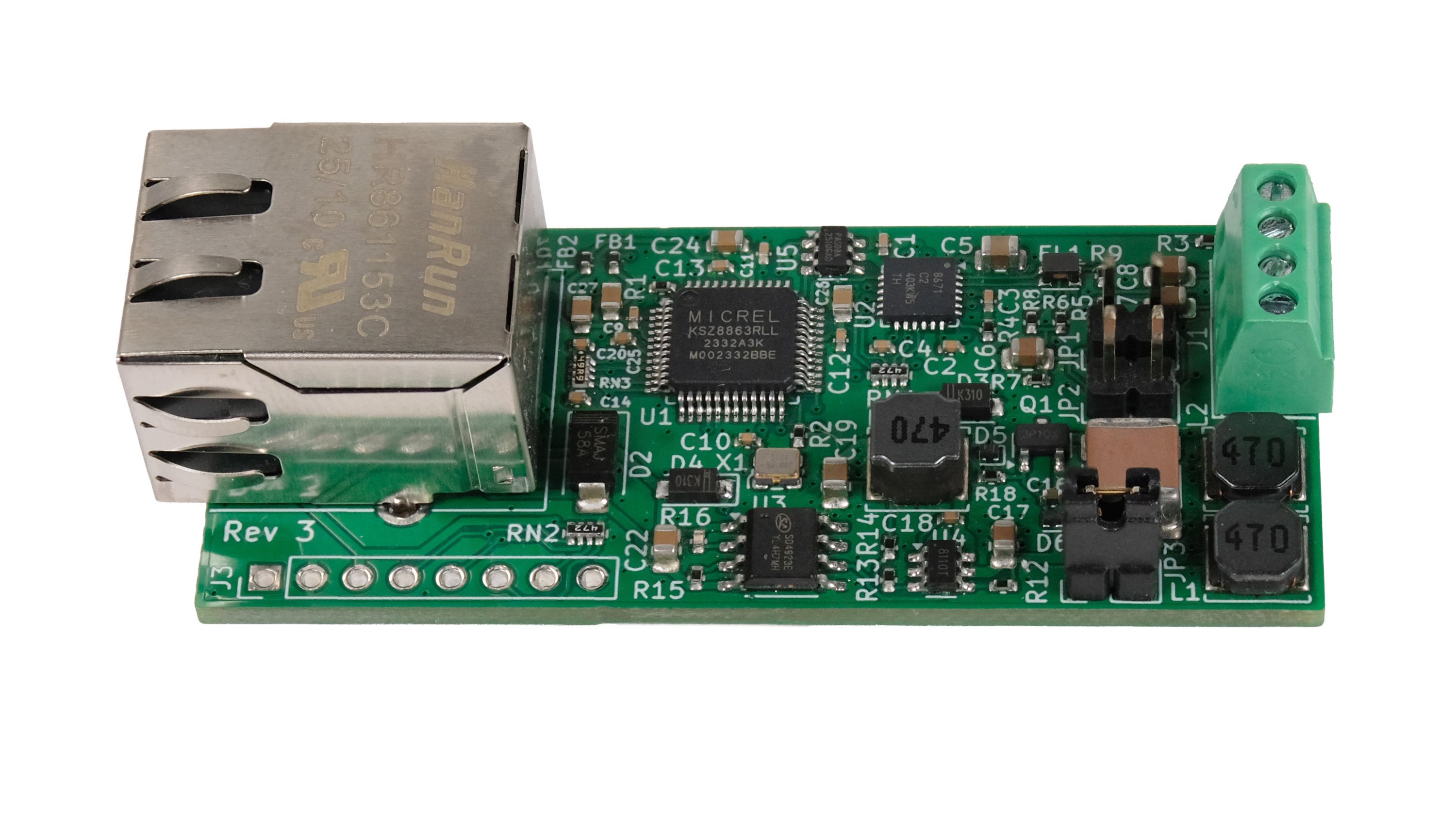
That’s where the ManT1S-Bridge companion device comes in. Connect it to the T1S mixing segment, the other side to Cat5+, and all the T1S devices are now on your network. This makes development extremely easy (especially when combined with MicroPython’s WebREPL!), and is equally great for monitoring your system in production. No need to build a custom system to collect the state of all distributed nodes to be available in some master node—all nodes are equally accessible from anywhere on the network!
Oh, and if you connect the ManT1S-Bridge to a PoE switch, it can also provide the power for all the nodes on your T1S mixing segment!
What Does This Mean for the Future of the wESP32?
Absolutely nothing! :) We will continue to make the wESP32 broadly available just as we always have. The ManT1S is in no way intended to replace the wESP32, but to be a complement to it. We envision a future where you will be able to build your distributed, networked systems with a mix of PoE switches, wESP32 and PoE-FeatherWing based nodes, and T1S segments that branch off of a ManT1S-Bridge to several leaf nodes running a ManT1S. This will give you even more freedom to choose the best option for each of the nodes. And since it’s standard TCP/IP networking, each node can still talk to any other node, no matter which device happens to be used to implement it.
So friends, if this tickles your interest, please head over to the ManT1S project page and subscribe so you’ll be among the first to know when we launch this exciting new board! As always, thank you for your support!
Baader Planetarium Showcase
I’m always on the lookout for interesting ways the wESP32 is used "in the wild", so when I kept getting bulk orders from Baader Planetarium, I started to get curious and asked some questions. :)
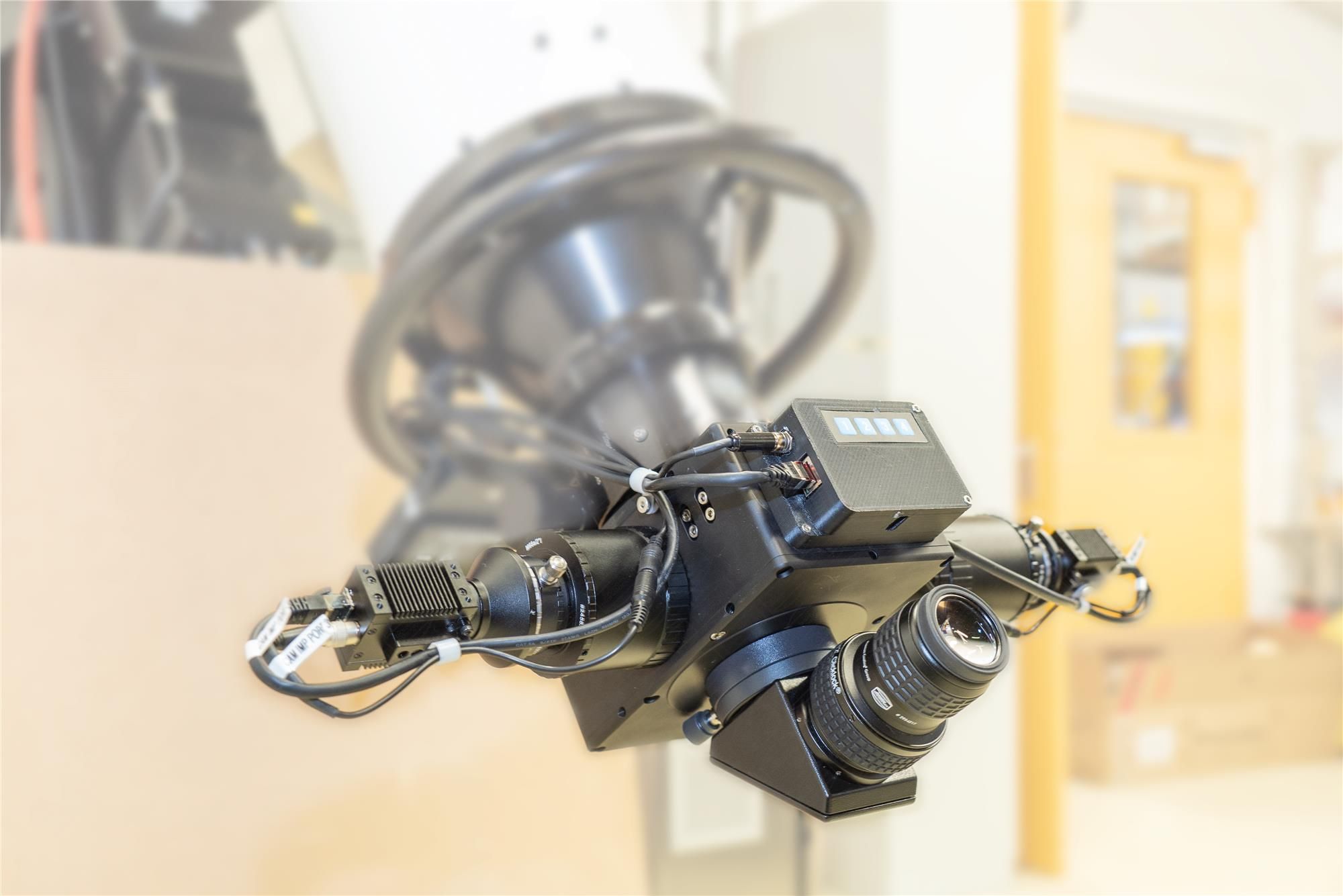
Turns out, they are using the "wESP32 as a base for different sorts of lab automation and one-time custom controls systems, as well as in an ‘Instrument MultiPort‘ for telescopes":
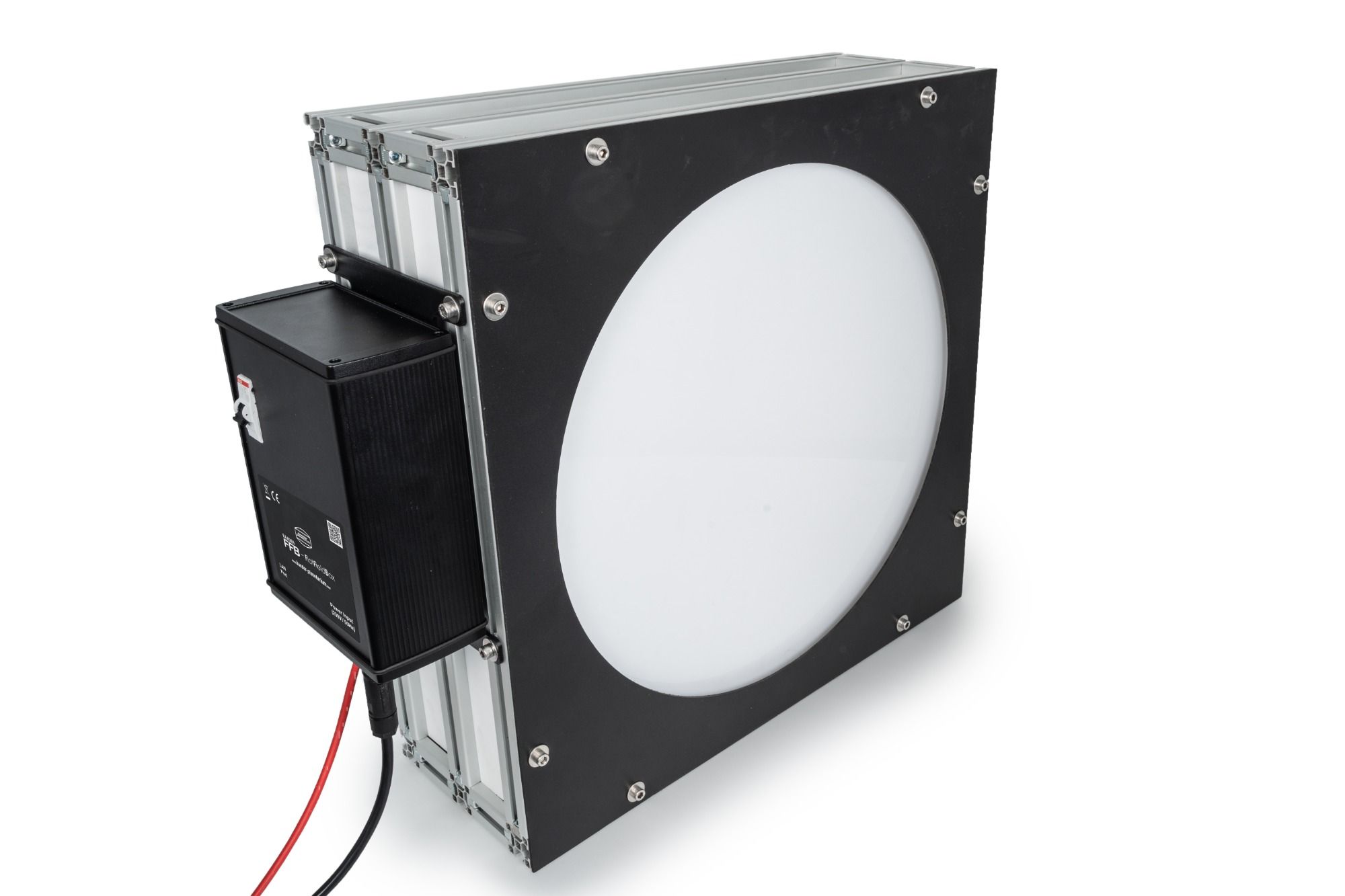
Another example of where they used a wESP32 is this FlatFieldBox:
And it sounds like they are working on some upcoming products based on the wESP32 as well!
I don’t know about you, but having always had a fascination for astronomy, this looks like some seriously awesome equipment to me, and I’m very tickled that my little wESP32 board has found a use in such cool applications. :)
Thank you for allowing me to show it off, Baader Planetarium!