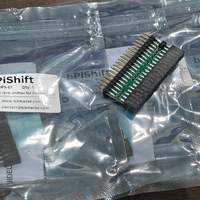
It's on the Way!
Great news! The shipment of bPiShift units is now on its way to Mouser's distribution center, which will ship them to backers within the next couple of weeks. Read the full update.
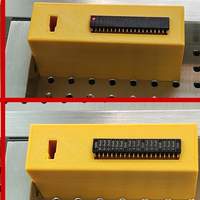
Laser Etching the Connector
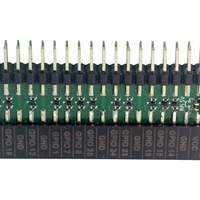
During testing and debugging, it's common to refer to pin details while connecting different modules, sensors, or devices. Usually, this information is printed directly on the PCB silkscreen. In some products, especially those that come with an enclosure, labels or screen-printed markings are added on the housing. For bPiShift, however, space on the PCB was very limited - too limited to add silkscreen pin labels. We also didn't want to use an enclosure, as that would make the module bulkier and more expensive... Read the full update.
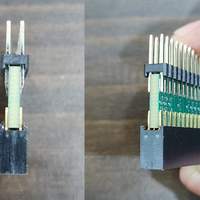
Choosing the Right PCB Thickness
When we built the first prototype of bPiShift, we went with a standard 1.6 mm PCB, the most common thickness for prototyping and manufacturing. It seemed like the obvious choice at first. However, once the boards arrived and we started soldering the header pins, we noticed a small but important issue: the headers didn't fit snugly... Read the full update.
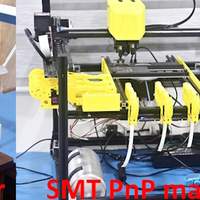
Straddle Mounting the Header Pins
To make bPiShift as compact as possible, we decided to mount both the male and female header pins along the edge of the board, even though they were originally designed for through-hole mounting. This update covers how and why. Read the full update.
Our Crowdfunding Campaign Is Now Live!
We’re excited to announce the launch of our crowdfunding campaign for bPiShift, the compact, plug-and-play, 5 V logic-level shifter designed specifically for Raspberry Pi boards! Read the full update.