Hello everyone,
First of all, thank you to all current backers for your support. For those still considering backing BenchVolt PD, please feel free to reach out with any questions, I’m always happy to clarify anything. In this update, I’ll cover a couple of topics:
- I would like to share a technical update regarding the DC-DC converter stage used in the latest prototype.
- I also want to share a preview of the current user interface design.
A Look Back at the First Prototype
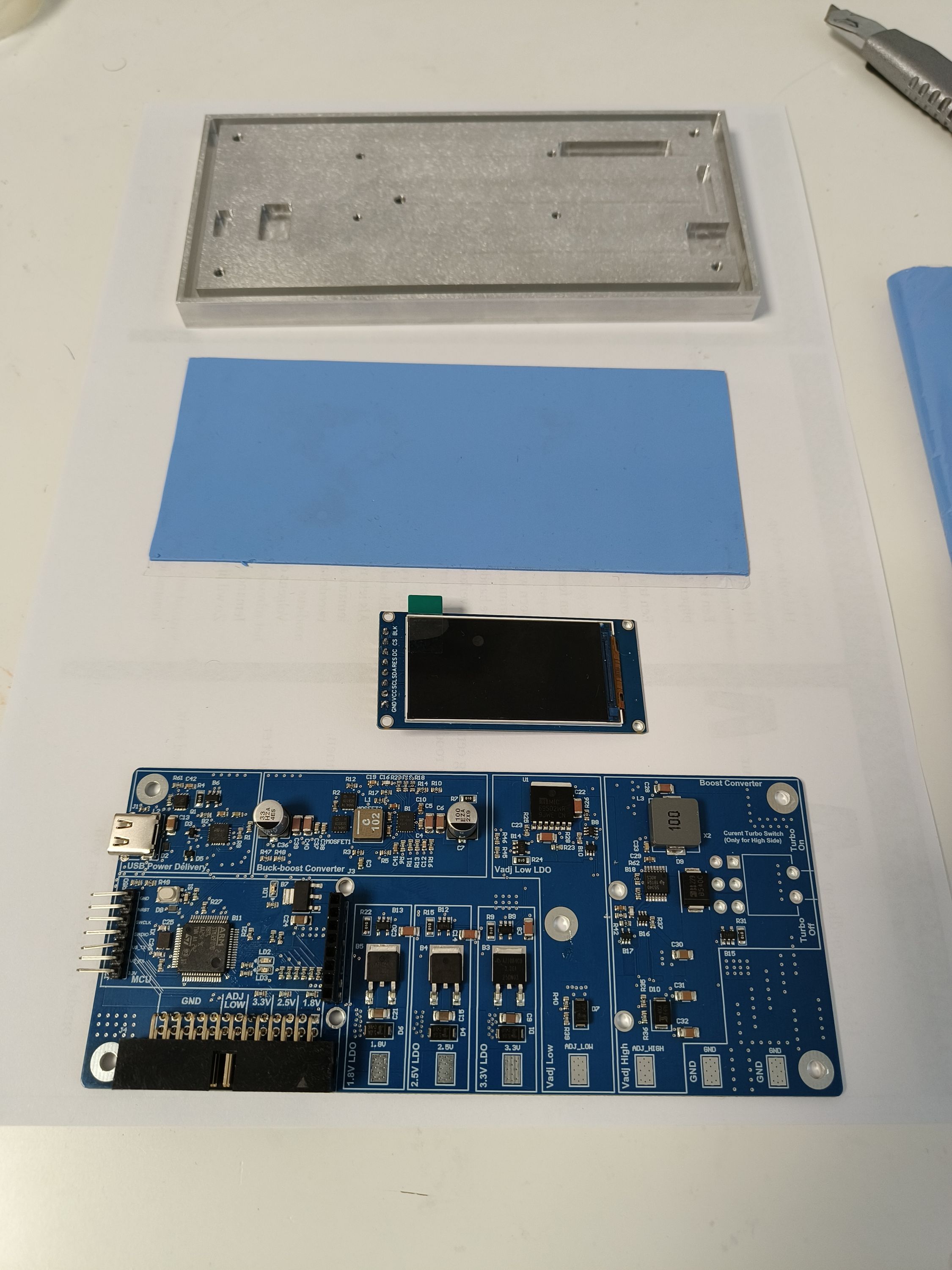
The very first version of BenchVolt PD had a fully onboard DC-DC layout and a single USB port which did not allow power and control from separate USB connections.
During early testing and firmware development, the first two prototypes experienced failures under stress testing.
For the second revision, I corrected these issues and switched to modular converters to allow faster testing and easy replacement.
Why Prototype 2 Uses Modular DC-DC Boards
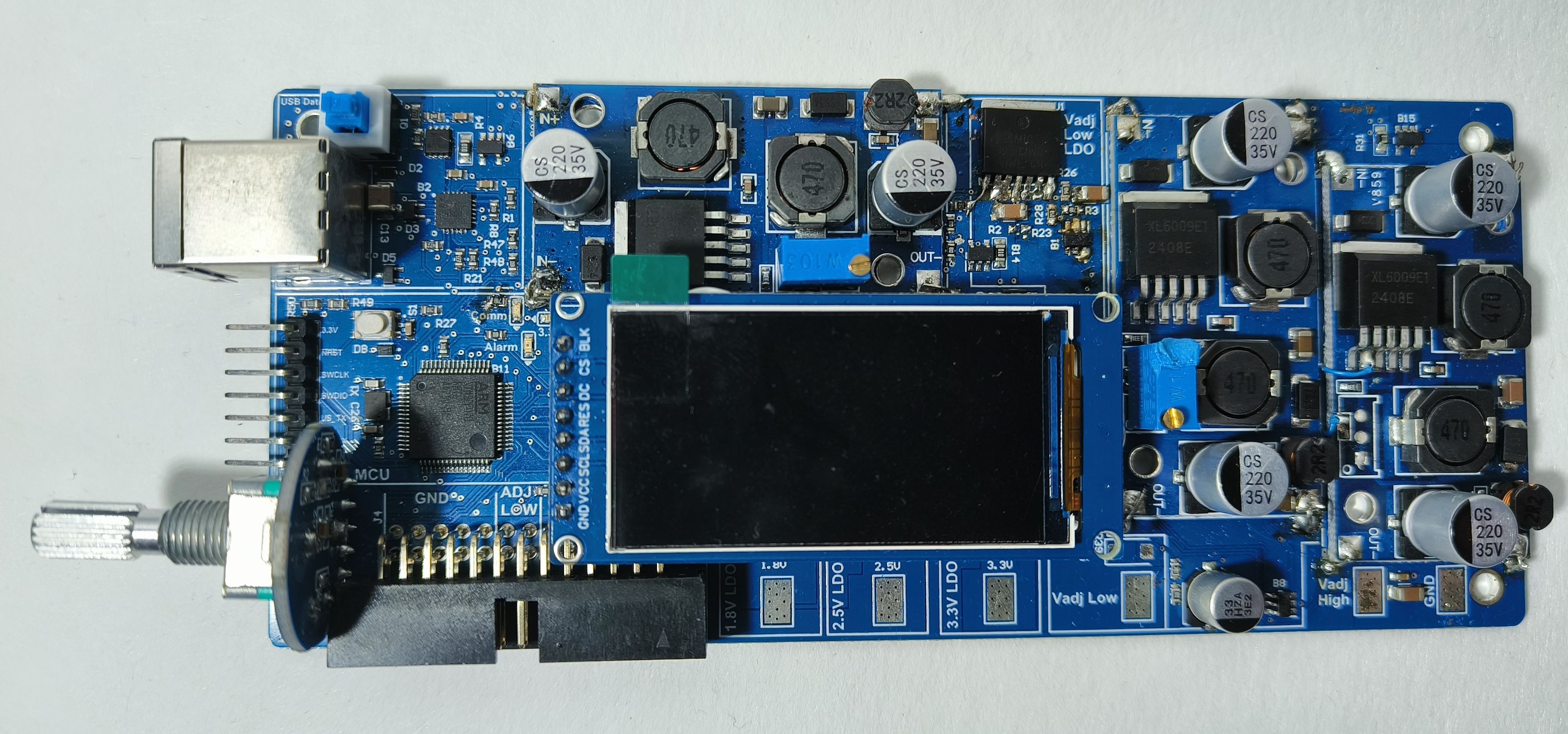
Some backers asked why the prototype photos show modular converter boards and whether the final product will also use this approach.
To clarify:
The final BenchVolt PD will have all DC-DC converters fully onboard.
The modular design was used only during the prototyping phase so I could:
- Evaluate different converter ICs efficiently
- Make quick hardware revisions
- Safely replace modules during stress tests
- Accelerate development without re-spinning the entire PCB
Transition Toward the Final Production Configuration
The XL6019 was initially chosen as the DC-DC converter because it can generate output voltages up to 32 V, which provided an advantage for CH5 (Adjustable Output 2), where the highest adjustable voltage is required.
However, after feedback from some users regarding potential EMI/EMC concerns and my own internal research, I decided to switch to the TPS55289 from Texas Instruments, which offers:
- Safer EMI/EMC performance
- More predictable compliance behavior
- Cleaner output noise characteristics
Impact on Adjustable Output 2
This design change affects the maximum voltage of Adjustable Output 2:
Previous Specification: 2.5 V – 32 V @ up to 3 A
Updated Specification: 0.8 V – 22 V @ up to 3 A
All other specifications remain the same. Additionally, with the TPS55289, overall noise performance should be improved.
Final Product Configuration
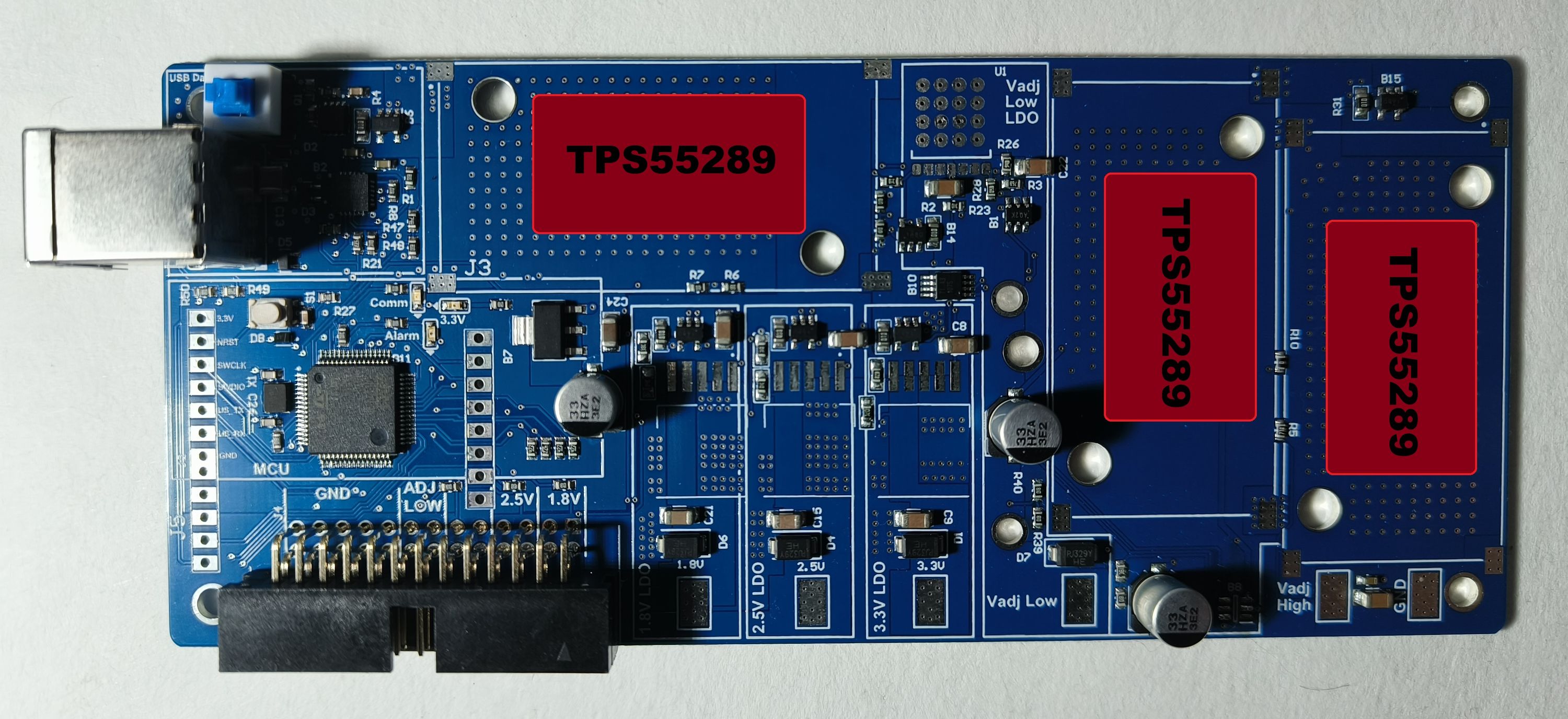
The final version will use three TPS55289 buck-boost converters from Texas Instruments, all onboard, no modular boards.
User Interface Development Is Ongoing
The UI design is still in progress, but here is a small preview of the direction it’s heading.