Project update 3 of 5
Our Open-Source Philosophy, Part One - Design, Architecture, and Documentation
by Ubah Fustinus, GatStevAs we progress in our crowdfunding campaign, we wanted to share some background information about the design principles behind Pixlpal. Pixlpal is designed to be minimalist, yet versatile. Every design decision, both hardware and software, was guided by the goal of creating a device that is approachable, adaptable, and easy to understand, while still being powerful enough for advanced use cases. Rather than optimizing solely for appearance or novelty, Pixlpal prioritizes practicality, longevity, and openness.
Hardware
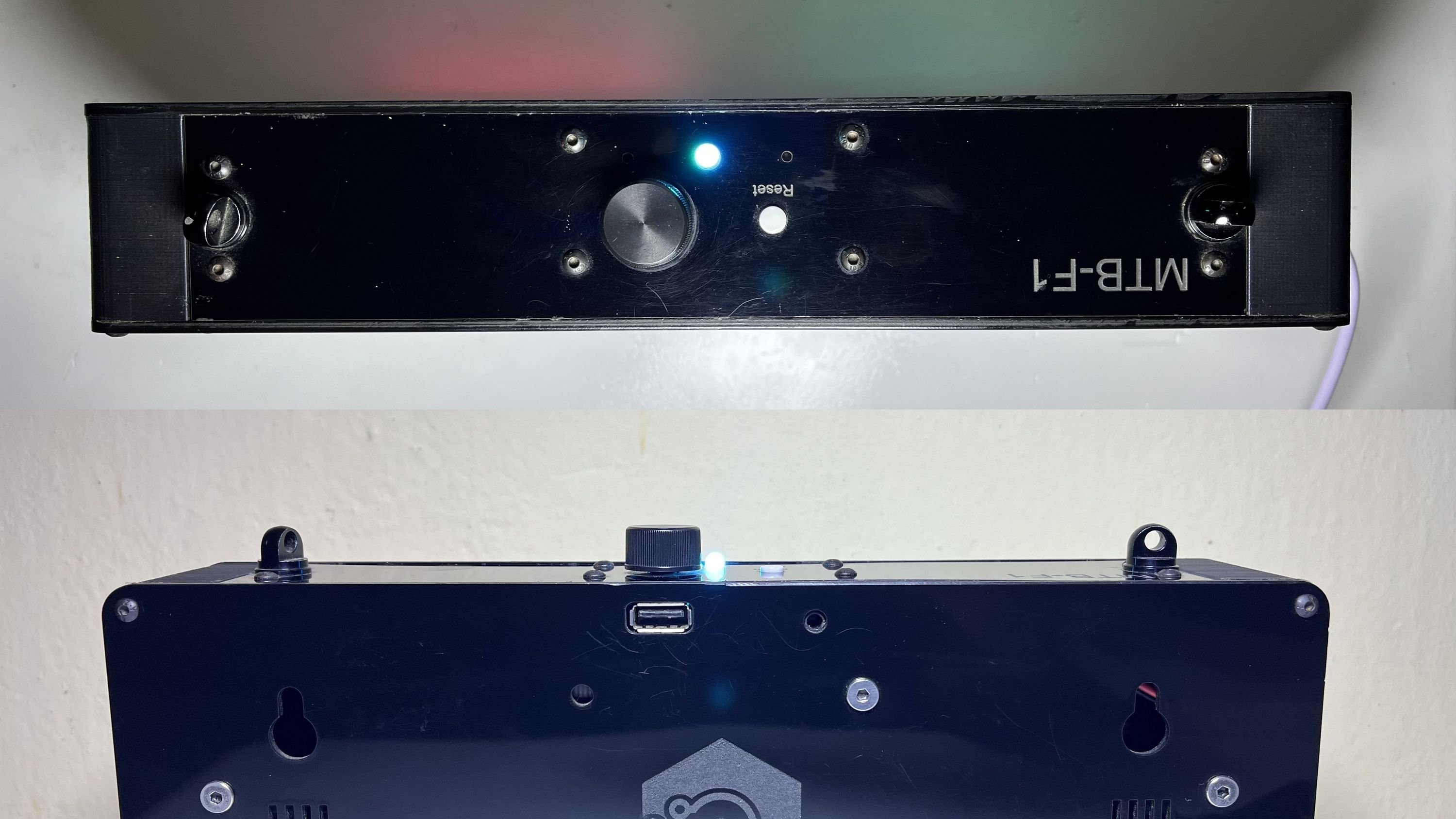
Pixlpal’s hardware design emphasizes simplicity, durability, and ease of maintenance. Its enclosure is made from 3 mm laser-cut acrylic sheets combined with 3D-printed corner brackets, all secured using standard M3 and M4 screws. This approach makes the device easy to assemble, disassemble, modify, and repair, an important consideration for an open-source product intended for experimentation and long-term use.
The device weighs approximately 850 grams (~30 oz) and is designed to be flexible in how it is deployed. It can be wall-mounted, placed on a shelf or desk, or suspended from a ceiling, depending on the user’s environment and preference.
Aside the RGB Matrix Display, Pixlpal features the following hardware components:
- A multifunctional control knob (rotary encoder) used for app interaction, including brightness and volume adjustment, menu navigation, and play/pause control.
- A 5 mm RGB LED status indicator that uses color-coded states to convey system information such as Wi-Fi connectivity, internet availability, OTA updates in progress, and USB drive detection.
- A USB Type-A port that extends Pixlpal’s capabilities by supporting USB peripheral devices such as speakers, microphones, keyboards, and other compatible accessories.
- An internal MEMS microphone for audio input, enabling features such as voice commands, voice recognition, VU metering, and audio recording.
- A 3.5 mm audio jack that outputs analog audio, intended for use with headphones or external speakers via a standard 3.5 mm auxiliary cable.
- A piezoelectric buzzer used for alerts, notifications, and system feedback.
Together, these hardware choices reflect Pixlpal’s broader philosophy: use readily available components, avoid unnecessary complexity, and design the device in a way that encourages learning, customization, and reuse.
Firmware
Pixlpal is designed to run on the ESP32-S3 due to its advanced features compared to other ESP32 variants, its ease of programming, extensive documentation, and strong support within the maker community. The Pixlpal firmware is designed to run all applications locally, requiring an internet connection via Wi-Fi only to fetch external data. This local-first approach ensures the device remains functional even when internet access is unavailable, while also harnessing the full capabilities of the ESP32-S3 and exposing them to developers. Pixlpal is controlled using a mobile app running on a smartphone via Bluetooth, providing users with a simple and intuitive setup and control experience.
We selected the ESP-IDF platform as the primary programming interface for the following reasons:
- ESP-IDF is the official software foundation from the chip maker itself.
- A component-based project structure that scales cleanly as firmware complexity grows.
- Earlier access to new silicon features and drivers compared to Arduino-only stacks.
- Explicit memory management across internal RAM, PSRAM, and DMA-capable buffers.
- Native support for advanced subsystems (USB Host/Device, BLE, Wi-Fi, I2S audio, DMA displays).
- Long-term maintainability for devices expected to evolve beyond the prototype stage.
Pixlpal is built on ESP-IDF for full, first-party hardware control and RTOS-native multitasking, whereas platforms such as Arduino IDE favors simplicity over depth, MicroPython prioritizes rapid experimentation at the cost of performance and control, while PlatformIO serves as a development environment rather than a firmware framework.
Getting started with development is as simple as:
- Installing ESP-IDF via VS Code on your Mac or Windows machine
- Cloning or downloading the Pixlpal project repository from GitHub
- Opening the project folder in VS Code
- Building the Pixlpal project
- Flashing the compiled binary to your Pixlpal via a USB connection
For a detailed, step-by-step guide, please follow the Quick Start instructions in our GitHub repository.
Code Structure and Modularity
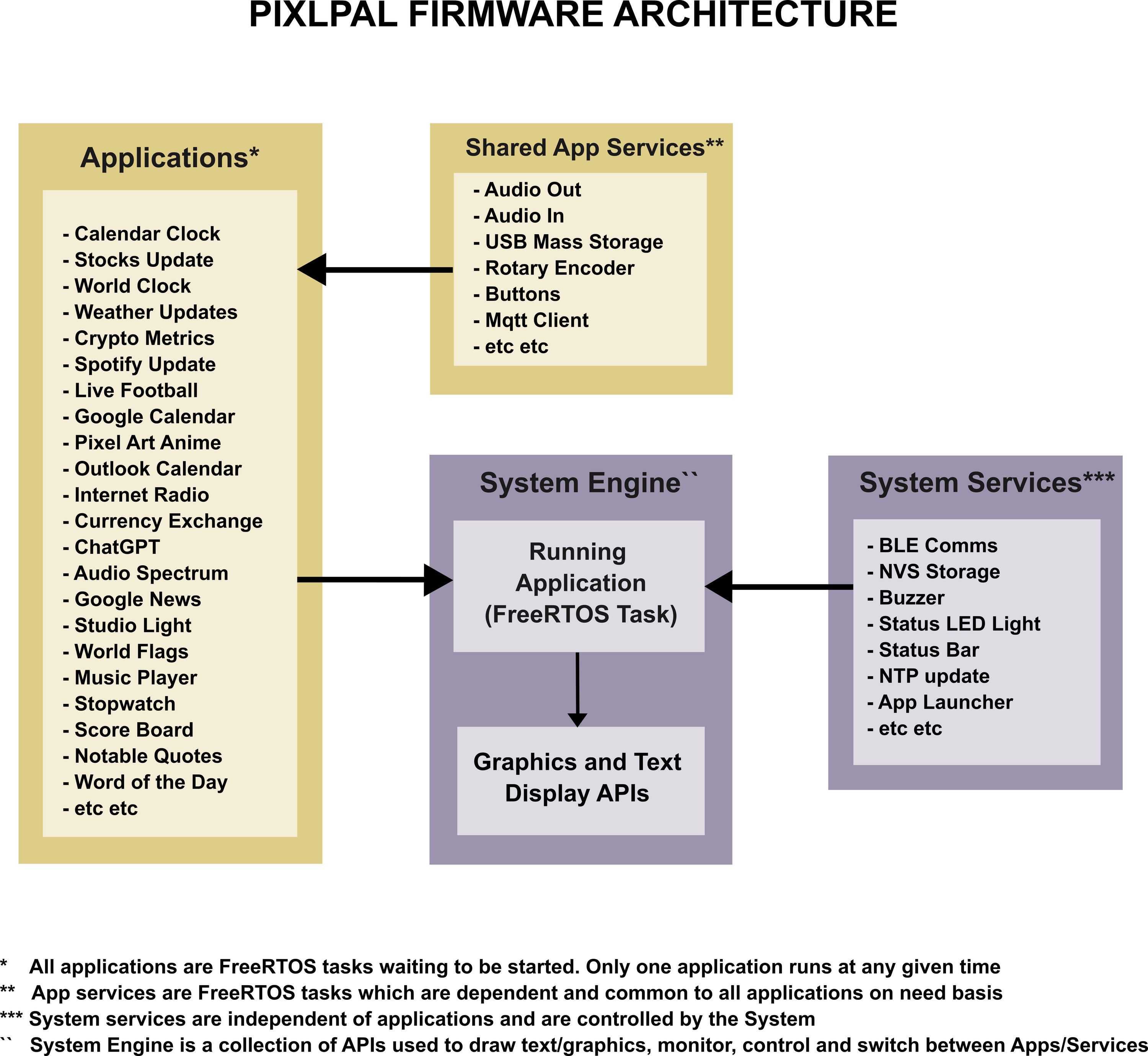
The Pixlpal firmware, built on Espressif’s ESP-IDF, takes advantage of Espressif’s official software components, the Arduino Core, standalone libraries, and custom user libraries. Based on the firmware design, each Pixlpal app runs as a FreeRTOS task that can be started, suspended, or stopped (deleted). In the current firmware architecture, only one app can run at any given time based on user selection. When a different app is launched from the mobile control app, the currently running app is stopped, its resources are freed up, and the newly selected app is started. As firmware development advances, Pixlpal will be enhanced to cycle through user-selected apps at periodic intervals.
The combination of ESP-IDF components and Arduino libraries gives Pixlpal a wide range of application possibilities, meaning what Pixlpal can do is limited only by imagination. New apps can be created easily, with each app organized as an ESP-IDF component. This approach allows multiple Pixlpal apps to coexist within the firmware and be available to run locally on the device.
To support Pixlpal applications, the firmware exposes standalone services that can be activated based on the requirements of the running app. These services include audio input/output, USB mass storage, encoder and button handling, an MQTT client, BLE-based sensor communication, USB speakers, USB mouse support, and more.
Documentation
We will be documenting the Pixlpal project using two main platforms: the Pixlpal GitHub repository and Meterbit’s YouTube channel.
Pixlpal’s GitHub Repository
The GitHub repository already contains the Pixlpal firmware and hardware files, a development environment installation guide, and instructions on how to get started. We are continuously working to expand the repository with API usage guides, as well as documentation on app and service structure and creation. Through the same GitHub repository, technical issues related to Pixlpal’s development can be raised and discussed, and developers can contribute to firmware improvement, optimization, and debugging.
Pixlpal’s YouTube Channel
Meterbit’s YouTube channel will serve as the platform for video tutorials demonstrating Pixlpal setup and real-world applications. It will also cover programming API usage and discuss the various Pixlpal app design structures. We encourage everyone interested in the Pixlpal project to subscribe to the channel in order to receive notifications when new video updates are published.
What’s Next and How to Get Involved
This update presents Part One of Pixlpal’s open-source journey. In Part Two, we’ll walk through practical demos that bring the topics discussed here into clearer focus, while also exploring the key tools, libraries, and resources that underpin the Pixlpal design.
In the meantime, we invite you to join our Discord community to discuss the project, share ideas, and engage with other backers and developers. You can also reach us directly at any time using the “Ask a question” button on our campaign page if you have specific questions or feedback.
If you believe in what we’re building, please help spread the word by sharing Pixlpal with friends, colleagues, and communities you’re part of, be they online forums, social platforms, or maker groups. Your support and enthusiasm play a meaningful role in helping the project grow.
Thank you for being part of the Pixlpal journey. Your support, feedback, and patience continue to shape the direction of the project, and we’re excited to share more with you in the next update.