Project update 11 of 11
Control Your Target Device From Your Phone with KeyCmd 0.19
by Billy WangHi everyone,
Thank you for backing KVM-GO and for your patience as units move through production and shipment. We know many of you are still waiting on hardware, and we want your setup to feel complete from day one.
Alongside the Openterface KVM app (video and full KVM control on your phone or tablet), we have been improving KeyCmd, our companion app for keyboard, mouse, gamepad, and shortcut input. KeyCmd 0.19 is the build we recommend today if you use KVM-GO. Pair over USB or Bluetooth, install on top of any previous build, and your settings, profiles, and paired devices will carry over.
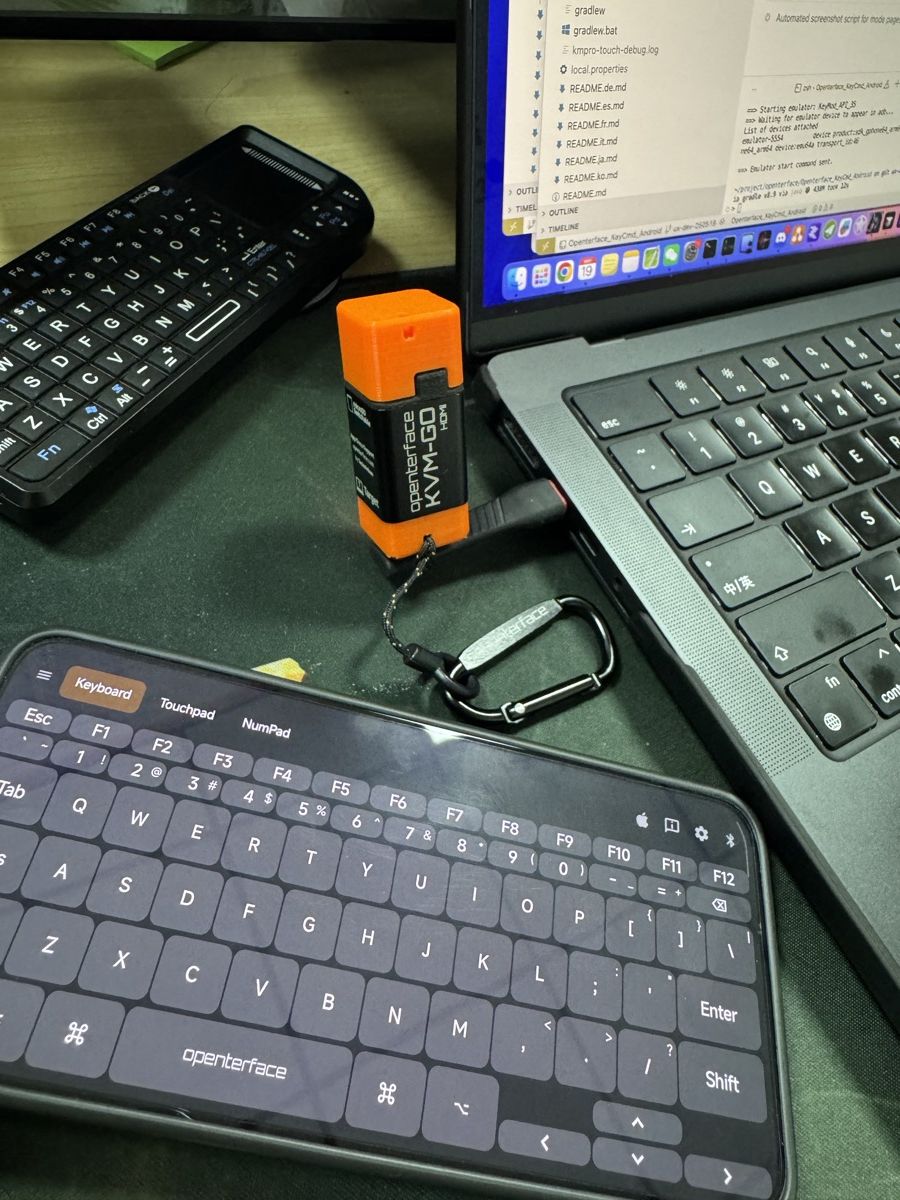
Below you can learn what KeyCmd does with KVM-GO, which mode to open for which job, and how to get the most out of it on a real target machine.
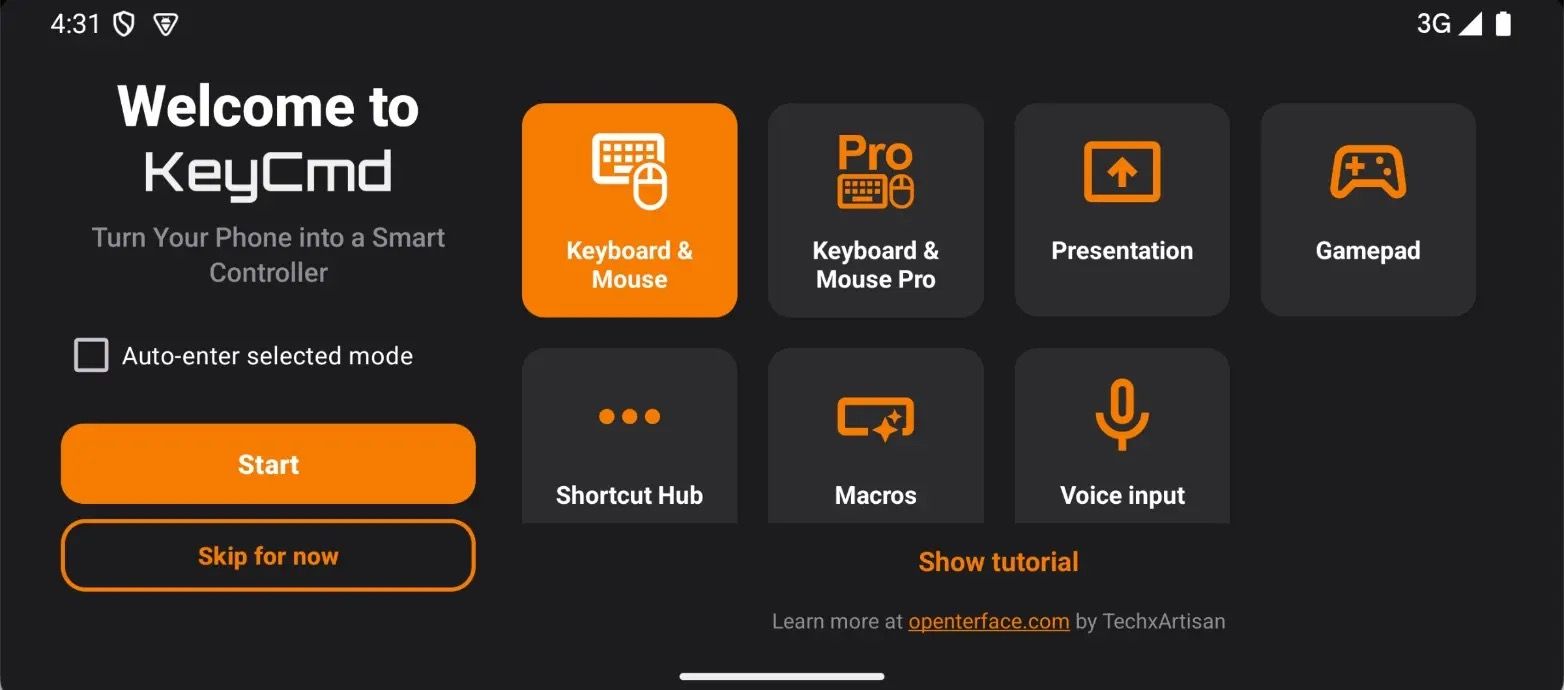
Modes and How to Use Them
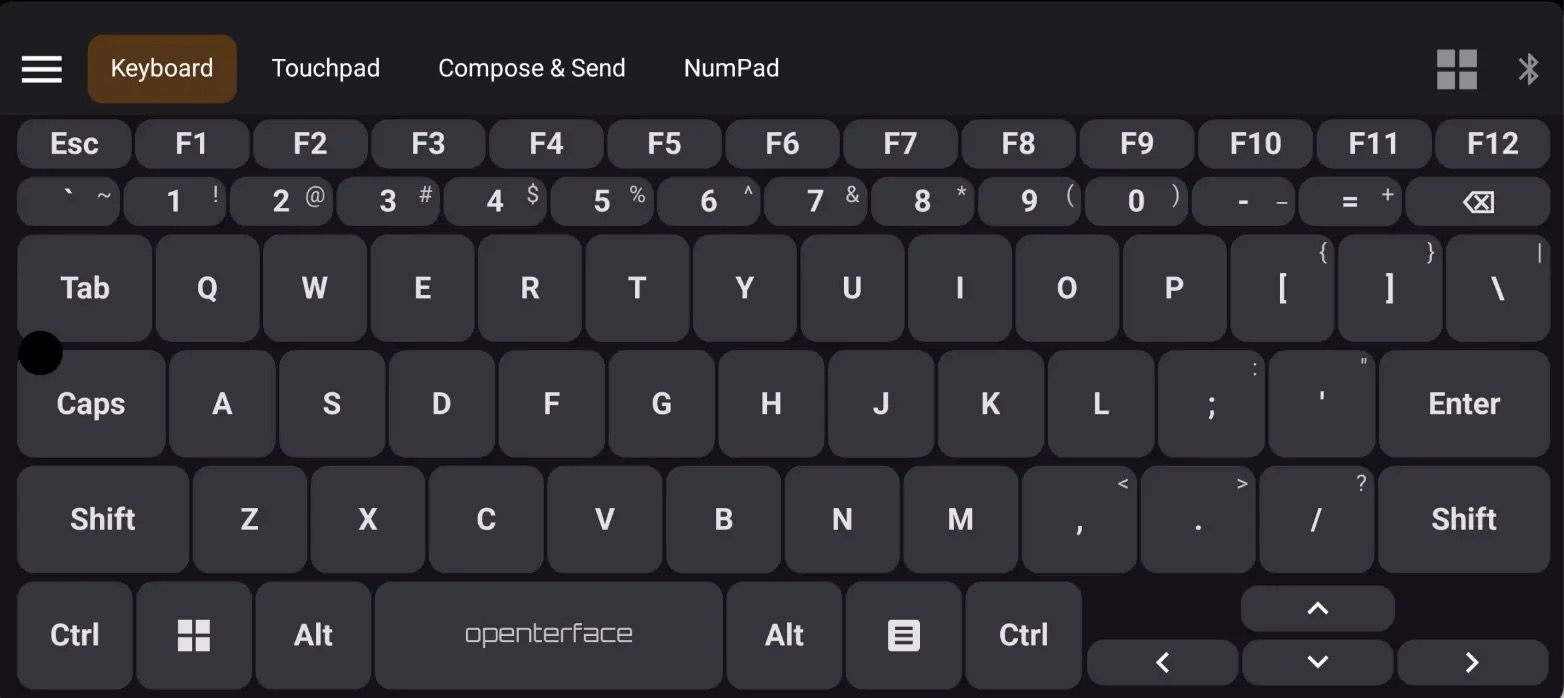
Keyboard & Mouse Mode (Basic)
Open this when you want a simple, full-screen keyboard with nothing else getting in the way.
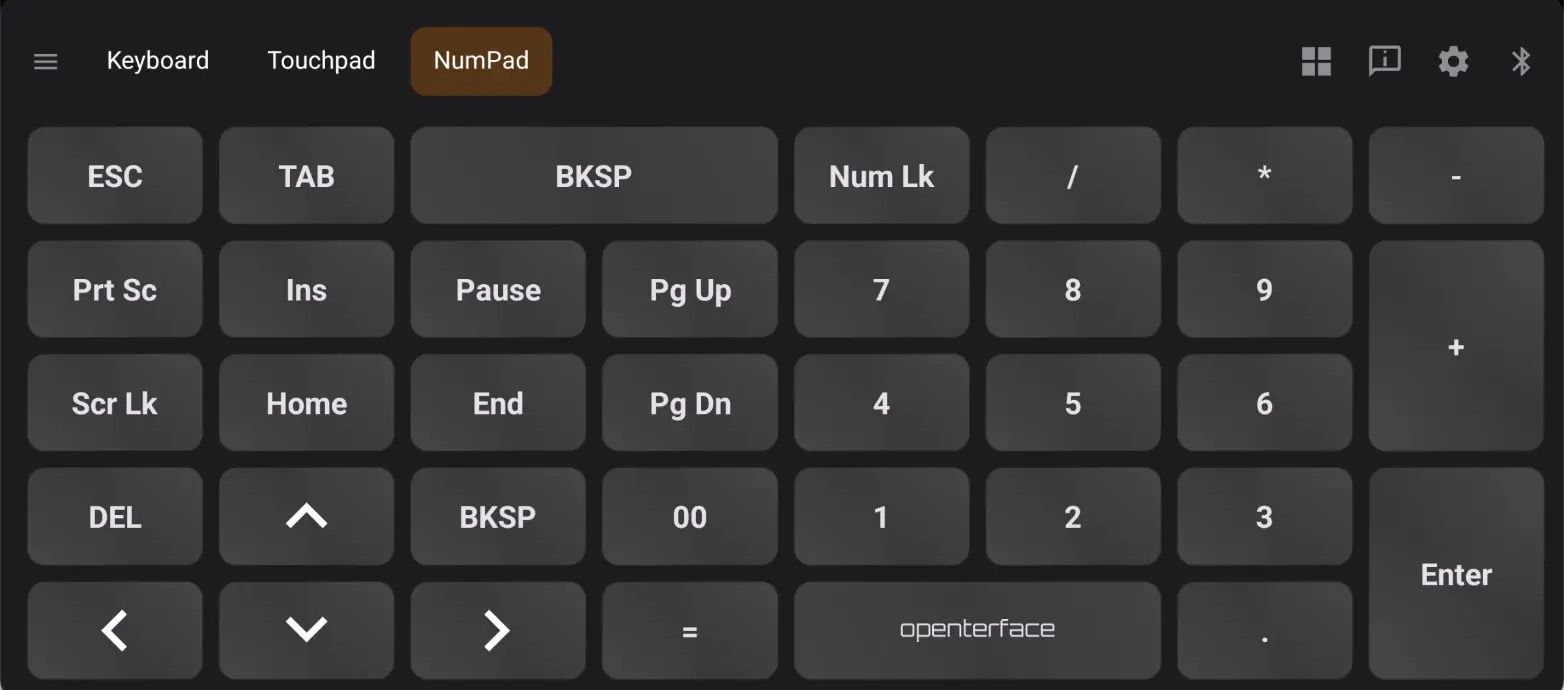
Good for: BIOS passwords, short shell commands, numpad entry, or mouse control with a large touchpad while KVM-GO shows you the screen.
How to Use It
- Open "KM Basic" from the navigation drawer.
- Use the on-screen keyboard, numpad (in portrait or landscape mode), or touchpad tab as needed.
- In "Settings", choose "sticky modifiers" (tap to latch Shift/Ctrl) or "chord-style" modifiers if you prefer hold-and-tap combos.
Why It Helps
More screen space for keys, less chrome, faster when you only need input and not shortcuts.
Keyboard & Mouse Mode (Pro)
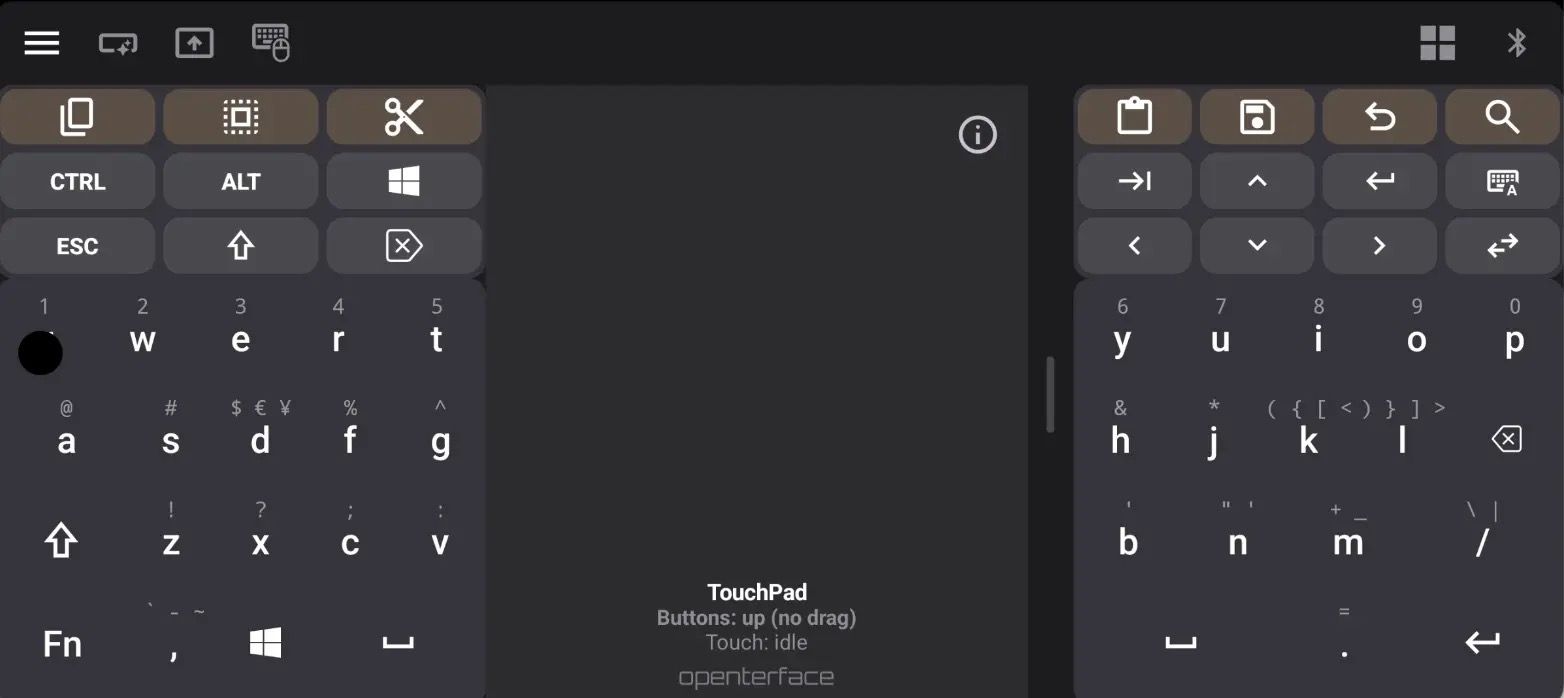
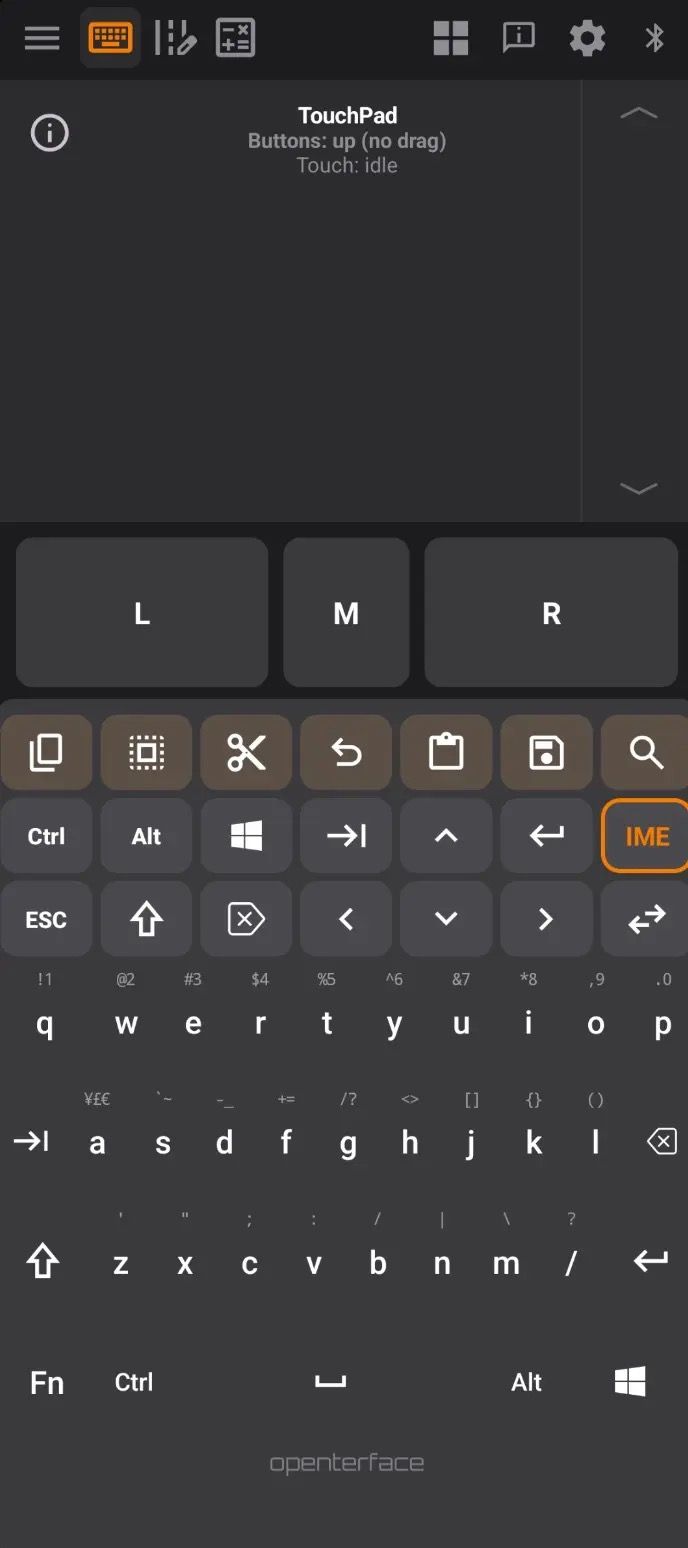
Open this for daily control work on machines behind KVM-GO: split keyboards, IME, Shortcut Hub strips, and the Compose editor.
Good for: Longer typing sessions, macros and shortcuts, sending blocks of text or scripts to the host while you watch the result on the KVM view.
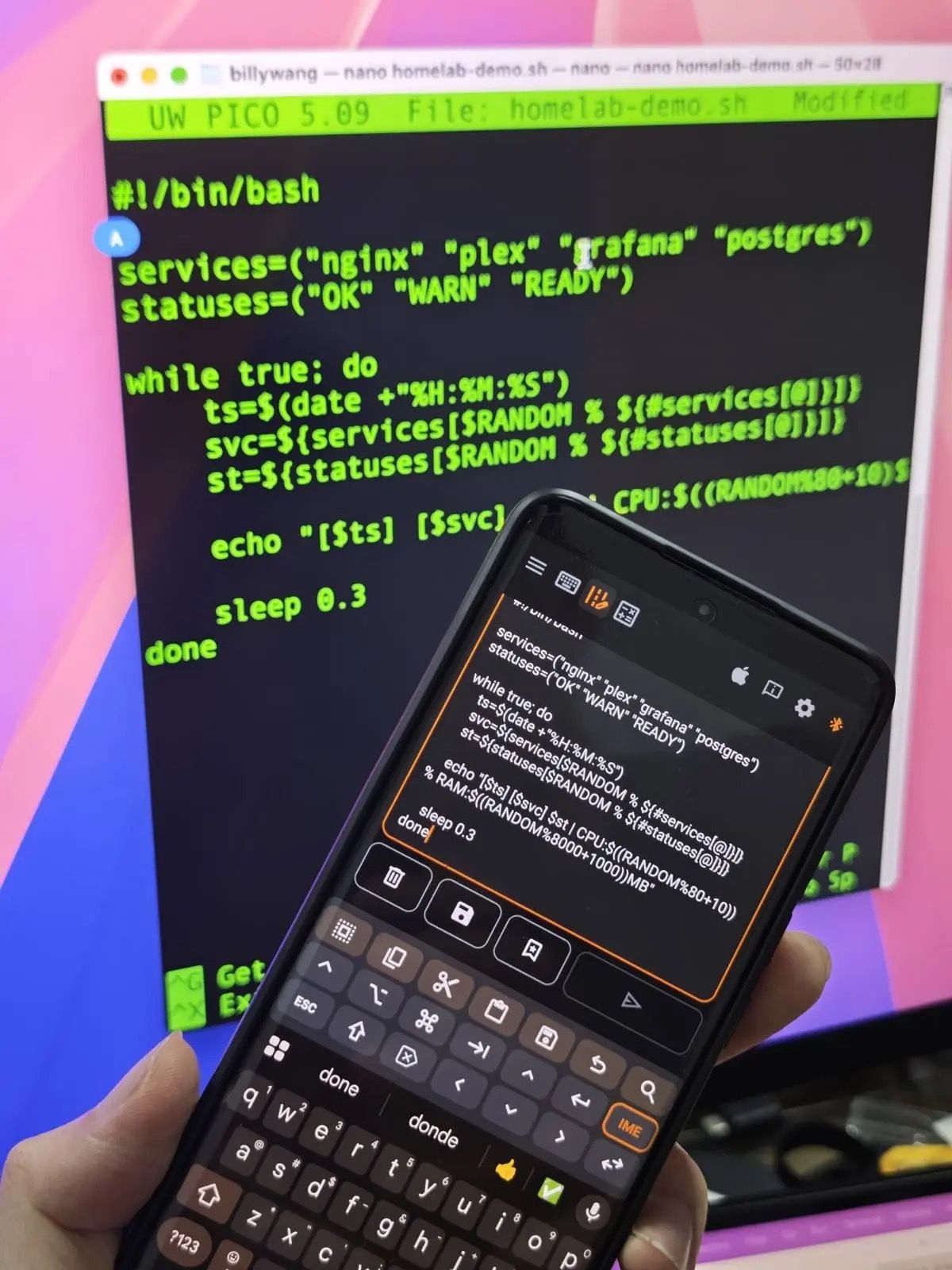
Compose is useful if you paste commands or scripts often: write on your phone, review, then send as keystrokes to the host. [This short demo shows the flow end to end.
How to Use It
- Open KM Pro from the navigation drawer.
- Use the keyboard and touchpad as in Basic mode, plus Shortcut Hub categories along the top for one-tap actions you can set up in profiles.
- Open Compose to draft longer text on your phone, review it, then "send" it as HID keystrokes. Large sends show a progress bar. If your text has non-ASCII characters, the app warns you before sending so you can check host compatibility (helpful on macOS in particular).
Why It Helps
Enjoy one place for typing, pointing, shortcuts, and paste-like workflows without carrying a full keyboard to the target.
Gamepad Mode
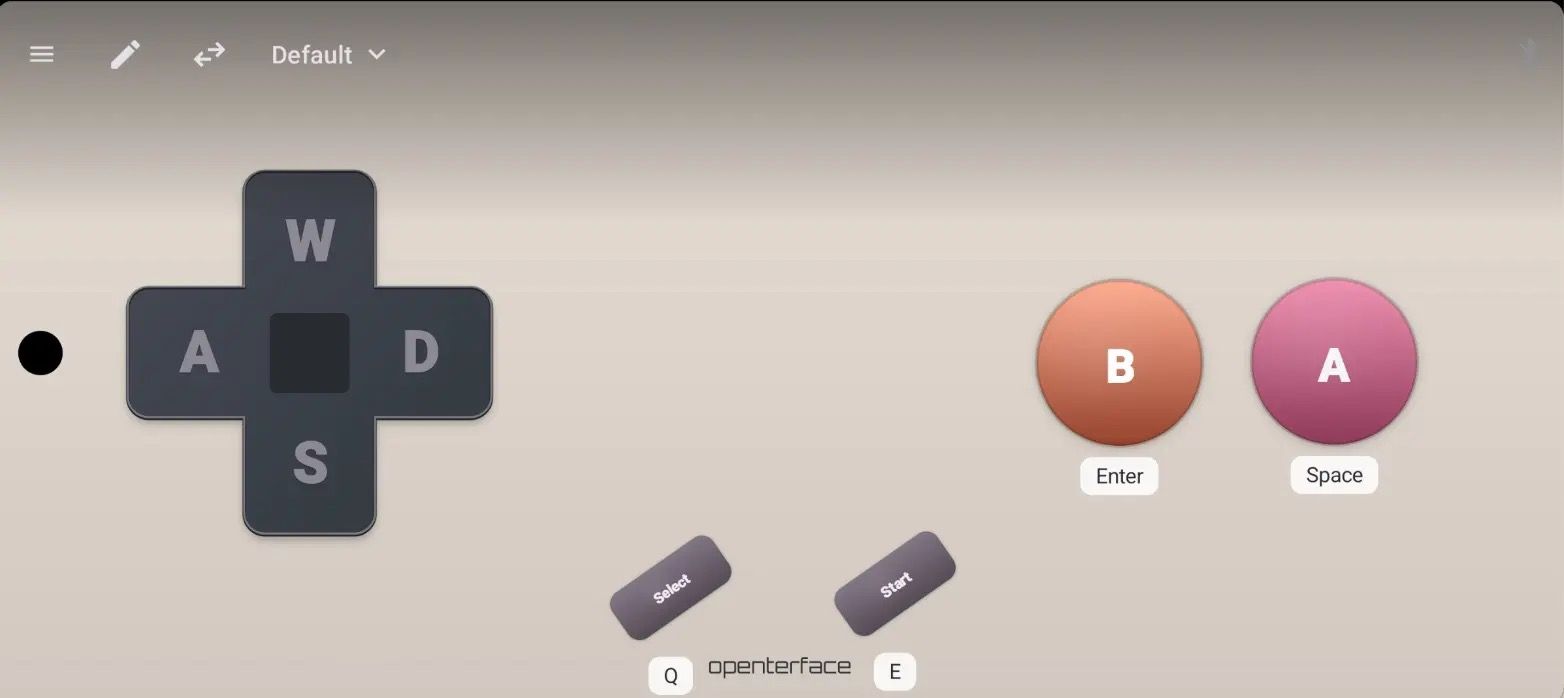
Open this when you want a virtual controller layout on screen, tuned for games or any app on the target that expects a gamepad.
Good for: emulators, casual games, or a compact control surface with sticks and buttons while KVM-GO handles the display.
How to Use It
- Switch to "Gamepad" mode.
- Tap "Preset" in the toolbar to cycle saved layouts. Long-press "Preset" to open the full list, import/export, or add modules (joysticks, buttons, touchpads).
- Start from the bundled "emu-6" preset and edit from there. You can add multiple touchpads and extra stick modules in one layout.
Why It Helps
You are not stuck with one factory layout; you can save layouts per game or per machine, and you can share presets with others.
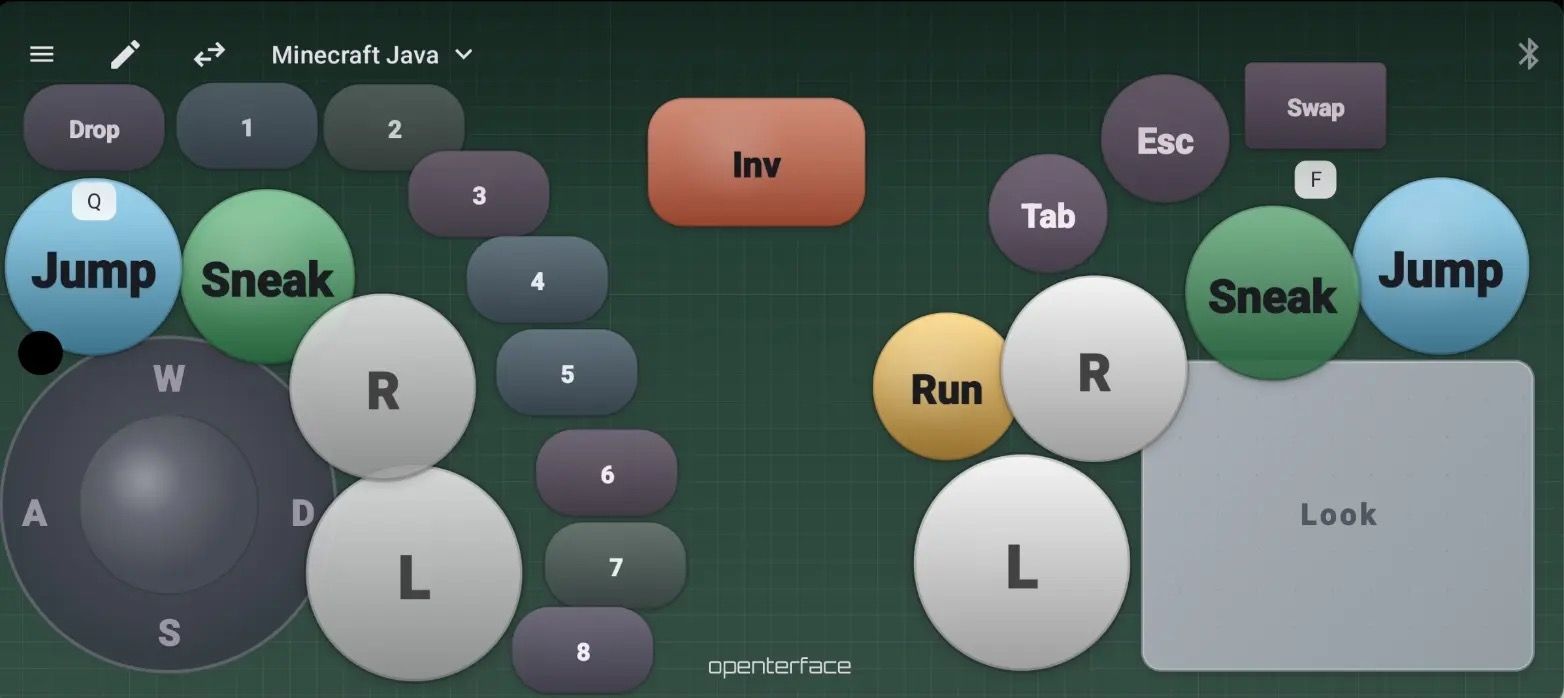
Shortcut Hub
This is the profile and shortcut home inside KM Pro: categories, detail panels, and the shortcuts you assign to strips.
Good for: performing repeatable operations on the target (open a terminal, paste a command chain, toggle settings, etc.) while KVM-GO stays connected for video.
How to Use It
- From KM Pro, work in the "Default" profile (or your own).
- Use category tabs and the detail UI to manage shortcuts.
- Run the "Shortcut Hub guide tour" if you are new to how profiles are organized.
Presentation Mode
A simpler, presenter-style control surface, kept in portrait so buttons do not jump when you rotate the phone.
Good for: stepping through slides or light presenter controls on the target.
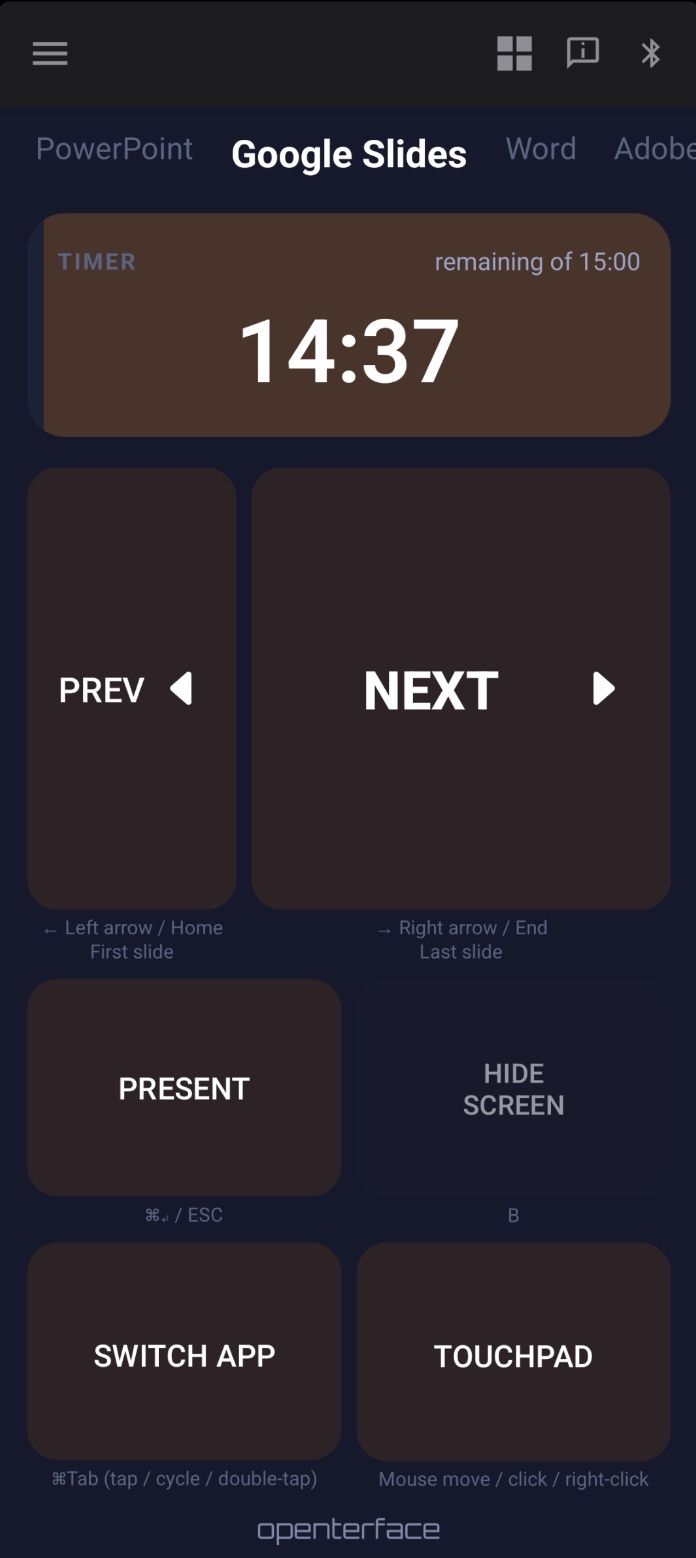
Languages
The app UI is available in 11 languages. Recent additions include: Korean, Italian, Russian, and Brazilian Portuguese. Open "Settings" → "App language" to switch.
Get KeyCmd 0.19 and Connect to KVM-GO
Download: KeyCmd-release-0.19.apk
Install over your existing app if you already have one. There’s no need to wipe data.
Connect to KVM-GO (video port can stay unplugged)
For all three KVM-GO variants (HDMI, VGA, and DP), you do not need to plug the video connector on the dongle into anything for KeyCmd input. The HDMI, VGA, or DP port can sit empty. Pick either setup below.
Option A — Bluetooth (target powers KVM-GO)
- Plug the short, black USB cable into the "Target" port on KVM-GO and into the machine you are controlling. That connection alone powers KVM-GO.
- On your phone, open KeyCmd and find KVM-GO over Bluetooth.
Option B — USB to your Android phone (host port)
- Plug the long, orange cable from the "Host" port on KVM-GO into your Android phone.
- Open KeyCmd and connect over USB in the app.
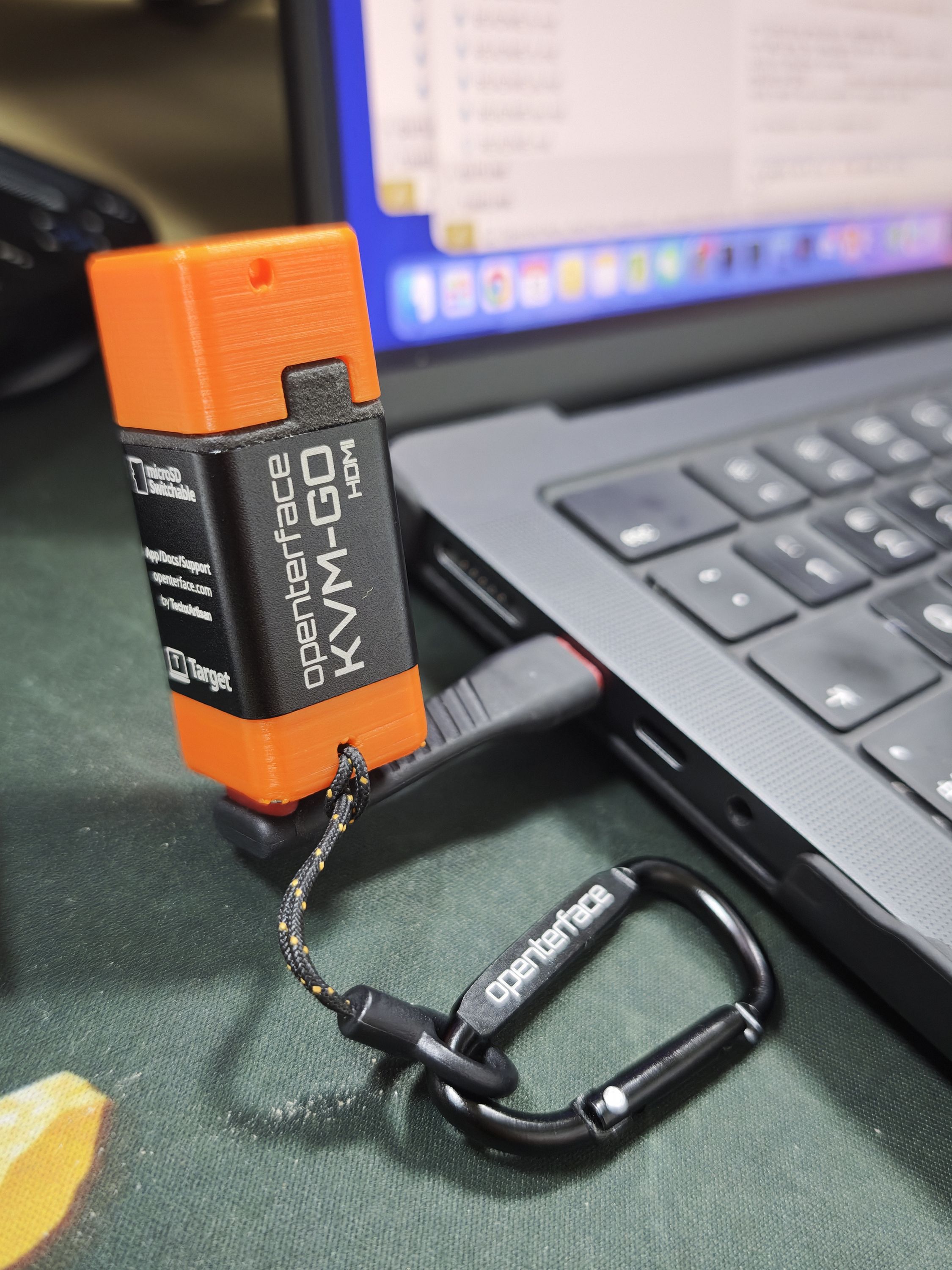
For full screen video plus input, use Openterface KVM for the target display and KeyCmd for keyboard, mouse, and shortcuts. KeyCmd alone is enough when the target already has its own display and you only need input.
Also works with Mini-KVM over USB if you use both devices.
Note:
Still in beta. Gamepad presets and Compose sends can behave differently depending on the host OS. If something odd happens with KVM-GO, please reach out to us on Discord with a screenshot, your KVM-GO variant (HDMI / DP / VGA), and what you expected.
Source code is not public yet. We plan to open-source after crowdfunding milestones on related projects. Ask on Discord if you need help finding the APK.
About KeyMod (Optional and Separate From KVM-GO)
We are also developing KeyMod, a dedicated USB and Bluetooth HID dongle for the same KeyCmd app. KVM-GO backers do not need KeyMod for the workflows above; KeyCmd over KVM-GO is the path we want you on now.
If you are curious about a standalone dongle for non-KVM setups, you can follow our KeyMod campaign on Crowd Supply. This is separate from KVM-GO fulfillment.
We Would Love Your Feedback
If you have a few minutes, install KeyCmd 0.19, connect it to your KVM-GO (or Mini-KVM), and tell us what still feels awkward. Reports from Crash-Cart and Homelab use-cases go straight into our next releases.
Reach out to us via Discord and social media.
Practical Ways to Help
- Share what works in Discord or your community (BIOS tips, Bluetooth pairing, favorite modes).
- Tell a colleague who runs headless gear and could use a pocket KVM.
- Keep sending honest feedback, especially on rough edges. That shapes the product more than cheerleading.
Thank you again for backing KVM-GO and for helping us make portable KVM-over-USB better for everyone.
Best regards,
Openterface Team | TechxArtisan