Ashok Tinkering Labs
FPGA Boards
Soan Papdi
A dev board that makes learning FPGA development easy
This project is launching soon.
0
updates
updates
Ashok Tinkering Labs
FPGA Boards
This project is launching soon.
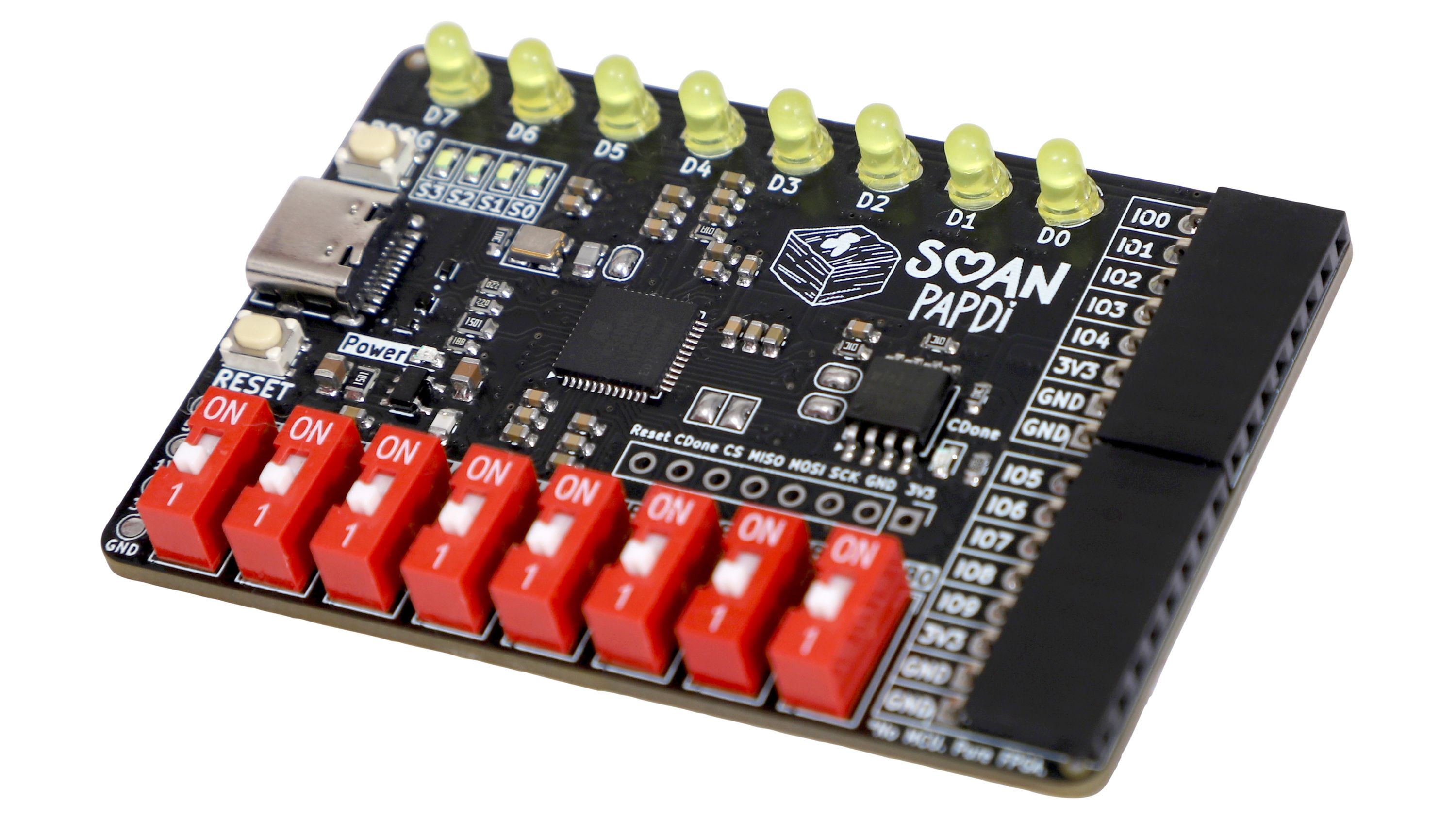
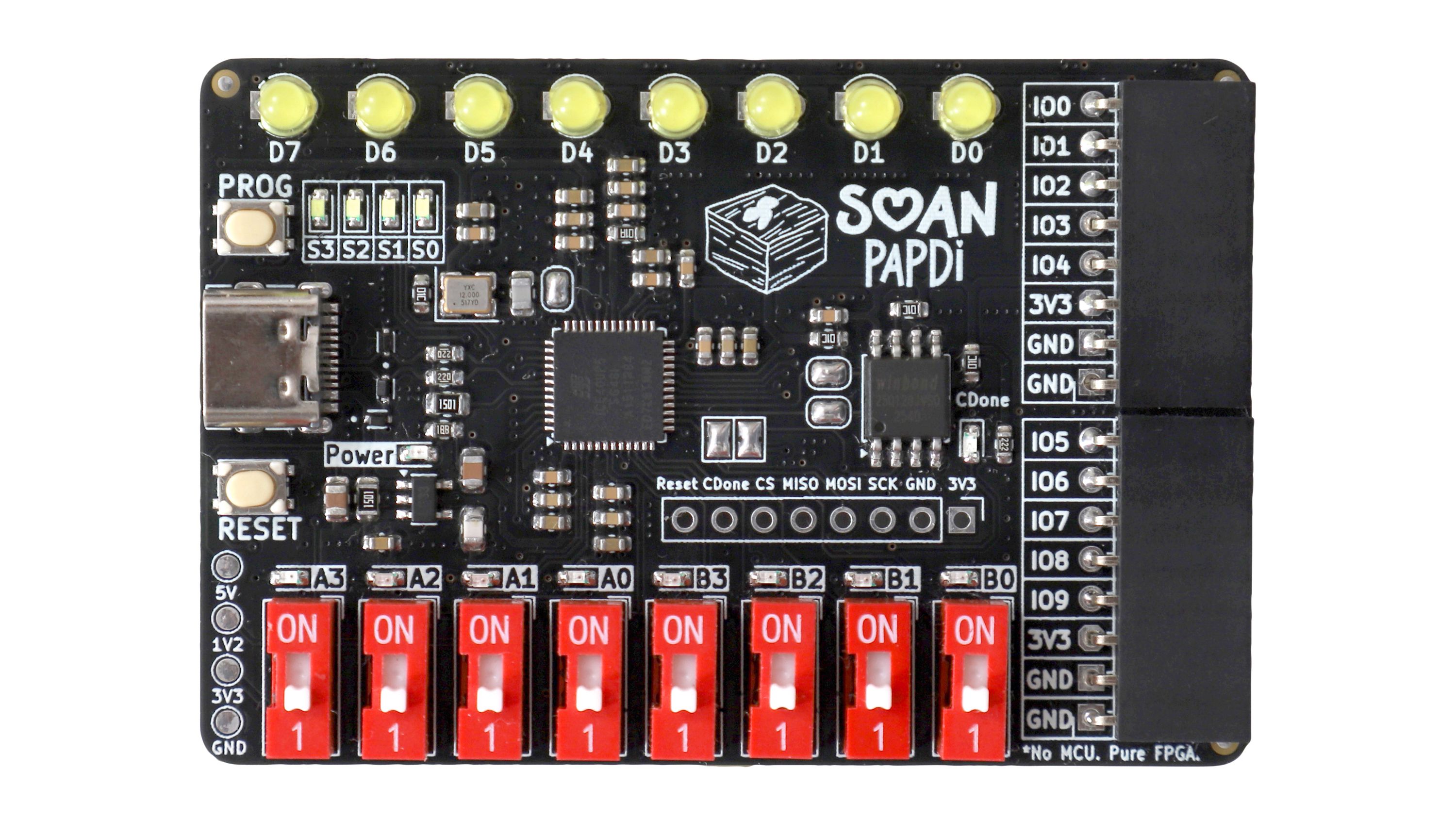
Soan Papdi is a beginner-friendly FPGA development board with everything you need onboard—LEDs, switches, and GPIO headers—so you can start learning digital design immediately, without the usual hardware setup headaches.
Most FPGA boards are designed for experienced engineers. You spend hours hunting for components, wiring up circuits, and debugging setups before writing a single line of code. Soan Papdi is different—just connect your blocks on iCEStudio and deploy your circuits directly on the hardware, no complex HDL needed.
FPGAs are incredibly powerful, but getting started can be painful. Maybe it’s too complex. Maybe there are an overwhelming number of tools. Too many things can go wrong, which is exactly why many people give up.
That’s why we decided to design our own FPGA board. Not simply another board for experts, but something designed for people who just want to start. That simple question started a ten-month journey of designing, testing, and refining the board through multiple hardware iterations and real user feedback. It’s designed with learning in mind, and is the perfect way to start your FPGA journey. Its lights, input switches and GPIO pins lets you set up a variety of sensors, and see the status of your programming at a glance.
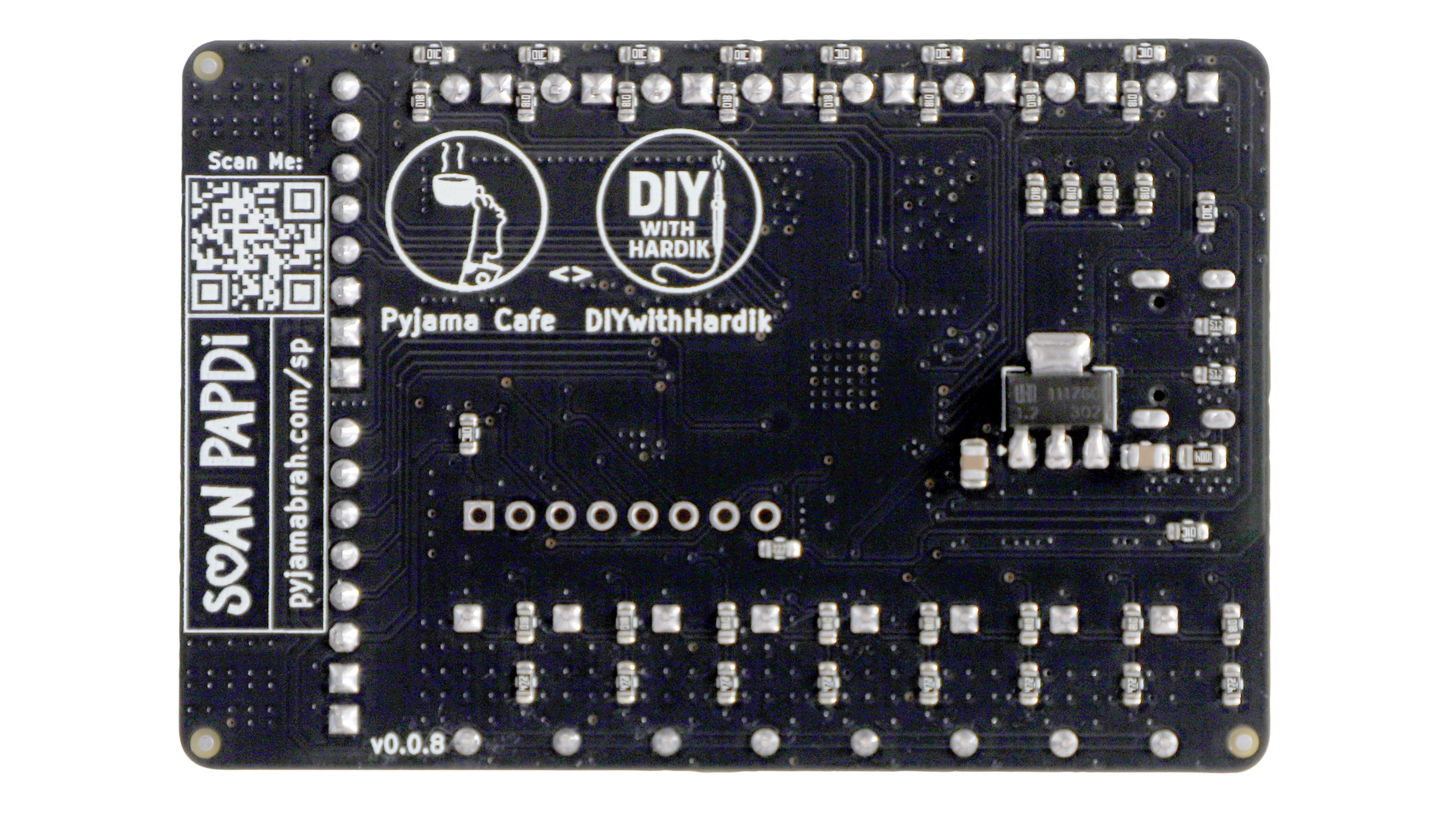
FPGA: Lattice iCE40UP5K FPGA
Logic Resources: 5,280 LUTs (capable of hosting RISC-V soft-core CPUs)
Embedded Memory: 120 Kbit Block RAM
SPRAM: 1 Mbit (128 KB) Single-Port SPRAM
Clocking: On-chip PLL
Hard IP: 2 × SPI, 2 × I2C
Internal Oscillators: 10 kHz and 48 MHz
DSP Resources: 8 × DSP multiplier blocks
Onboard Storage: 128 Mbit onboard SPI Flash
User Interface:
USB: USB Type-C, fully controlled by FPGA (no external MCU)
Programming: DFU bootloader (preloaded)
Toolchain Support: iCE Studio, APIO, Yosys, nextpnr, IceStorm, Icarus Verilog, Amaranth HDL
Power: 5 V
Dimensions: 67.5 x 45.5 mm (2.65 x 1.79 in)
Platform: Works on Windows, macOS & Linux
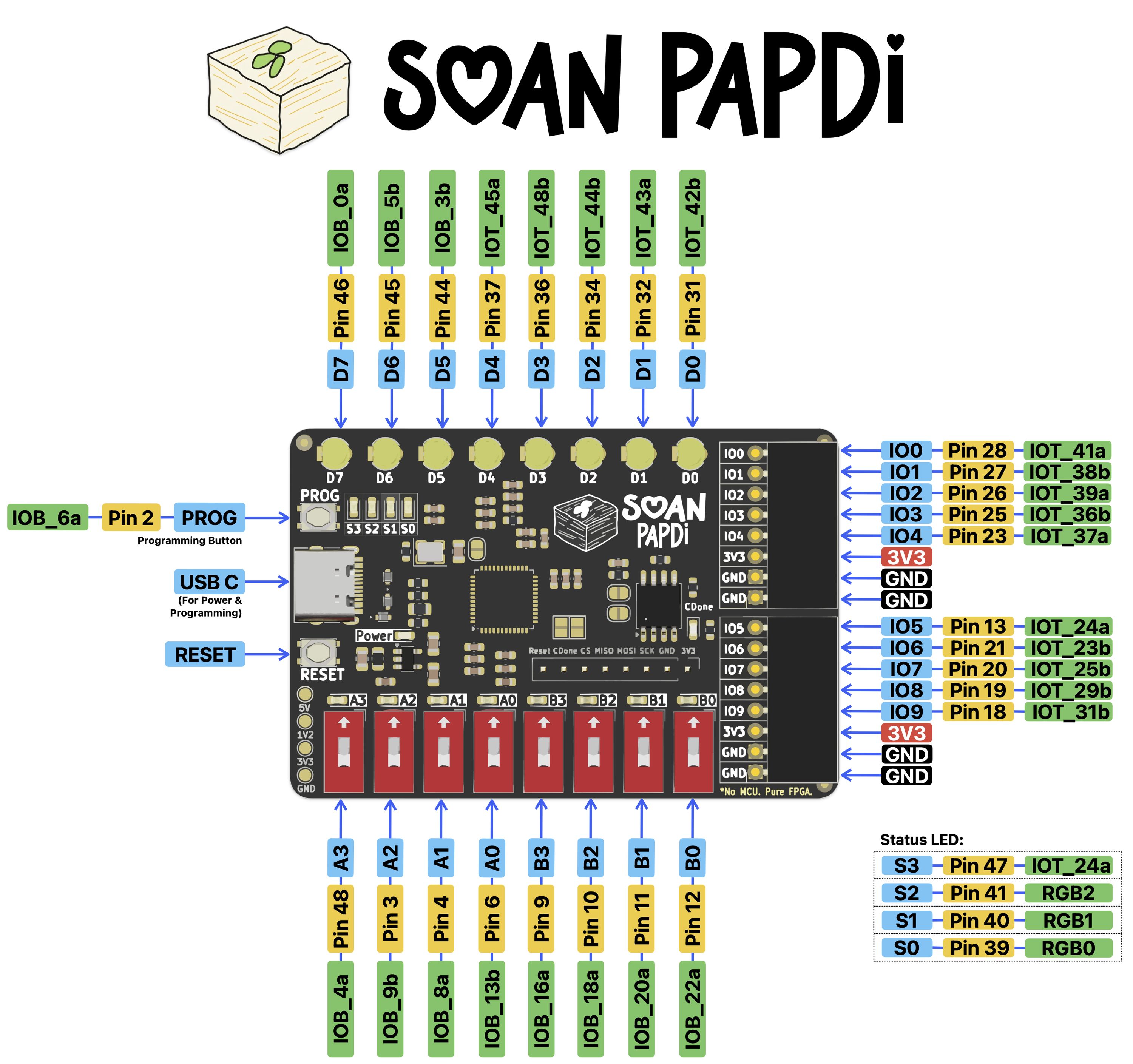
Soan Papdi FPGA is built around open-source FPGA toolchains including Yosys, nextpnr, IceStorm, Icarus Verilog, Amaranth HDL, and iCEStudio. The following will be published in our public GitHub repository before products are shipped to Crowd Supply for fulfillment:
Community contributions are welcome! We want to see your FPGA examples, tutorials, bug reports, documentation improvements, and educational resources.
You can sign up at the top of this page to be notified when the campaign launches and to receive other updates. We only send out relevant content, and you can unsubscribe at any time.

We believe electronics shouldn't feel like a textbook. The best way to learn is by building, experimenting, breaking things, and discovering how they work. That's why we create open and accessible tools that turn complex technologies into hands-on learning experiences.


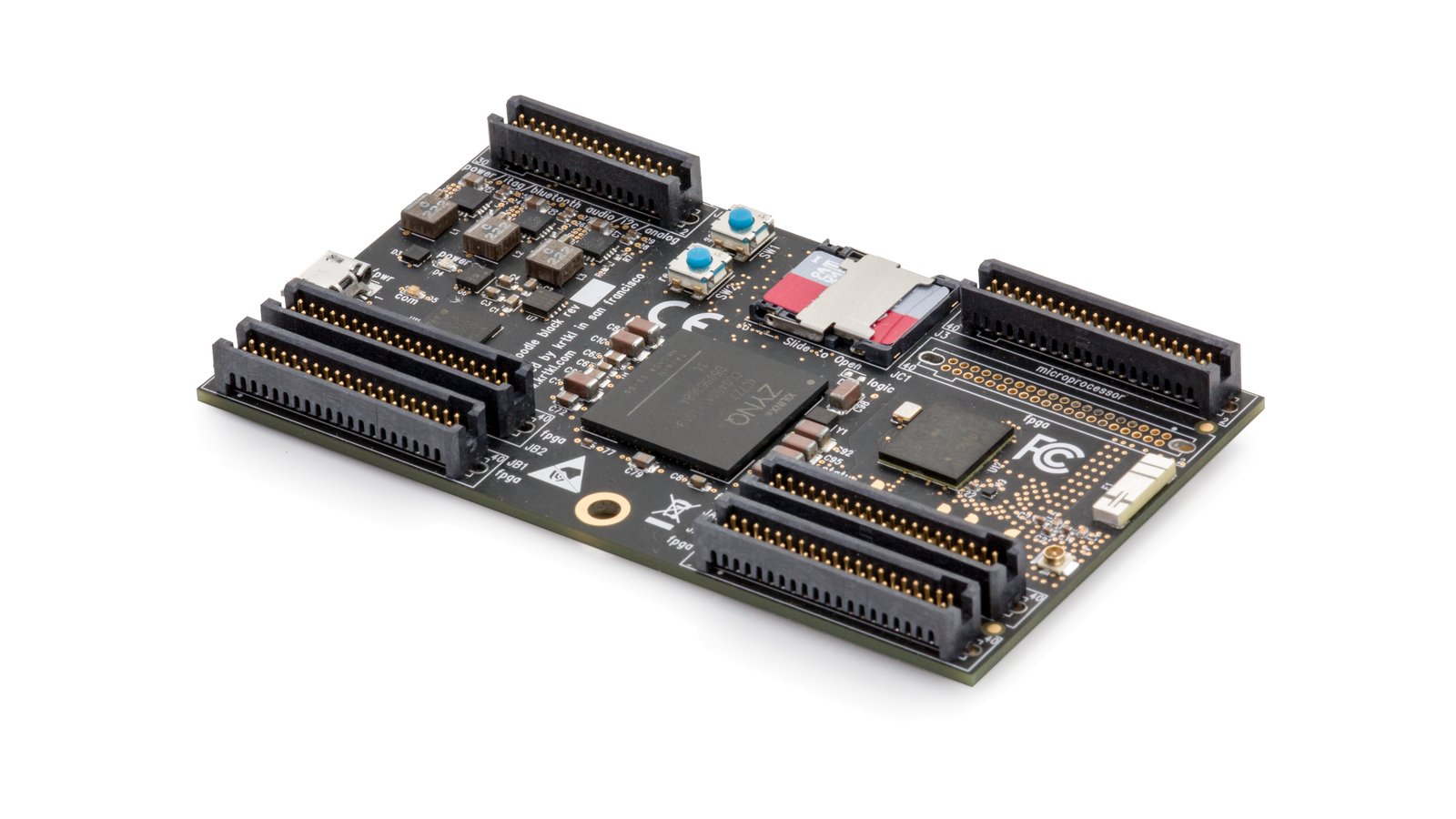
A Linux computer that connects to the real world: ARM + FPGA + Wi-Fi + 180 I/O
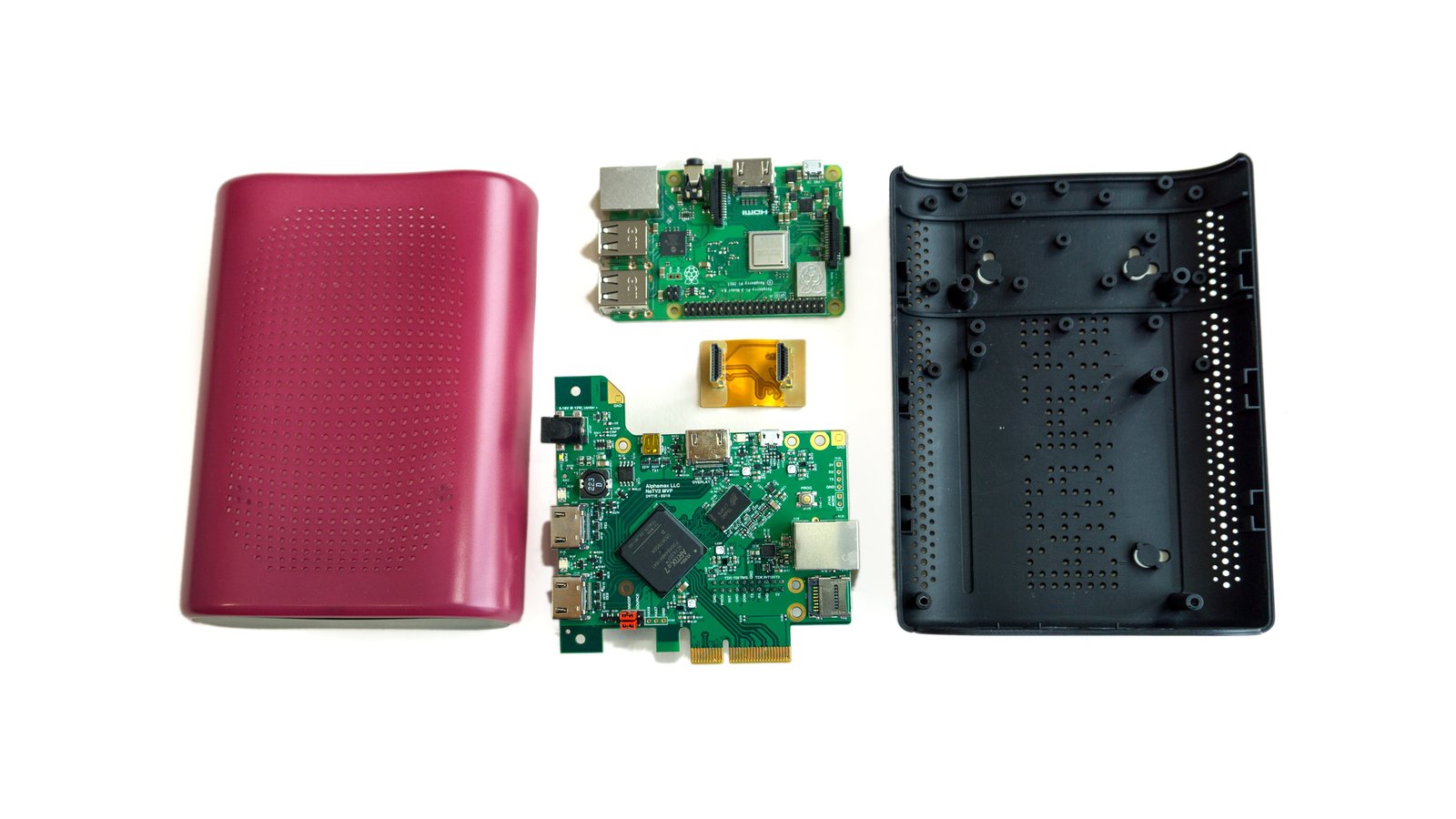
An open video development board in a PCI express form factor that supports overlaying content on encrypted video signals. Let's bring open video to the digital age!
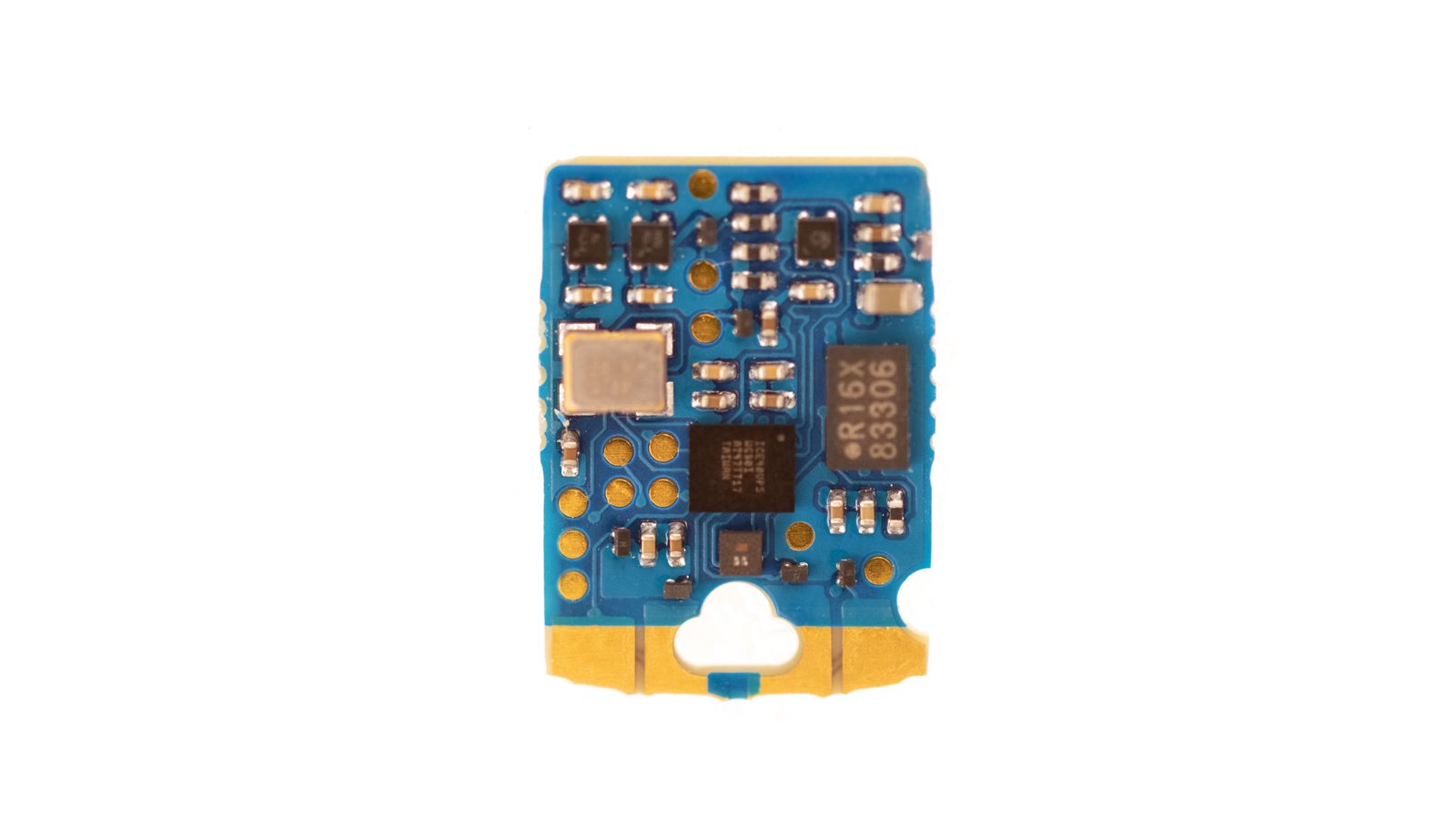
An FPGA board that fits inside your USB port