Project update 4 of 8
From Idea to Reality
by Omar Kermia, Ibrahim MezzahIn this update, we’d love to take you back through the journey of Omnimo nRF52840. The idea first took shape a few years ago, when we imagined a compact form factor that could bring together a wide range of add-ons. That spark came after years of working on various electronic projects. As passionate makers, we experimented with numerous development boards of different types and got to see up close the advantages and disadvantages of each one.
Supporting Popular Add-On Ecosystems
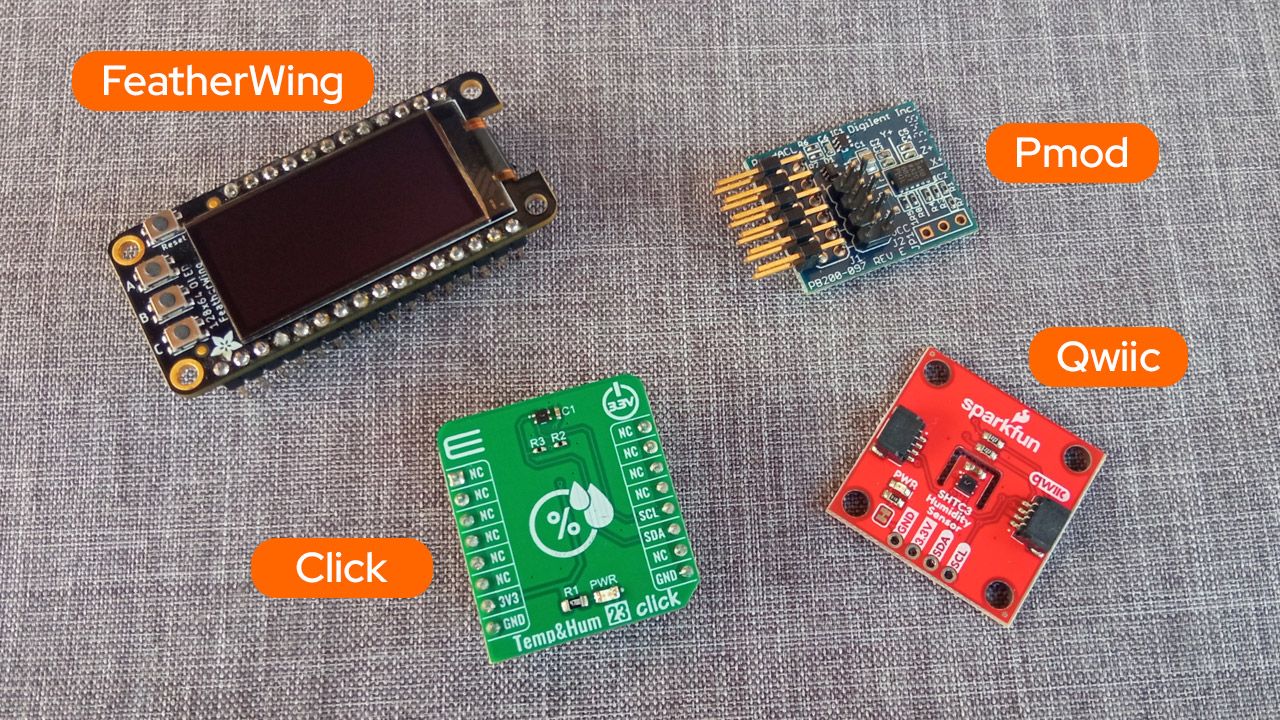
Makers often rely on extra components like sensors and displays, so a good dev board should support standardized module interfaces to simplify setup and reduce the need for wires or breadboards. With that in mind, we knew our board had to support the largest collection of add-ons in the world: Click boards. These connect through the mikroBUS socket from Mikroe, with thousands already available. Other popular options include FeatherWings and Qwiic (also known as Stemma QT). Qwiic modules can even be chained together, communicating over the I2C interface.
Features to Be Packed Into a Compact Board
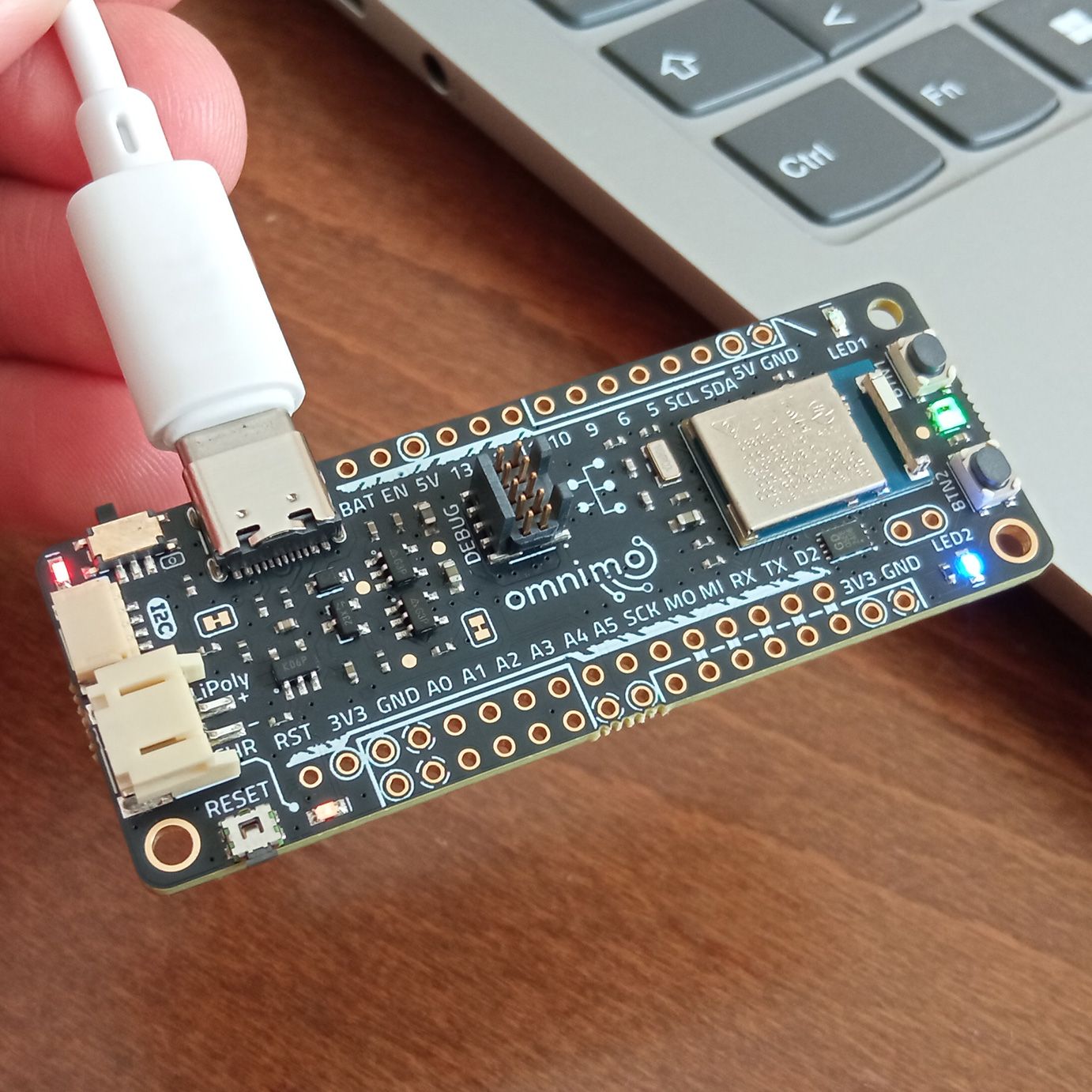
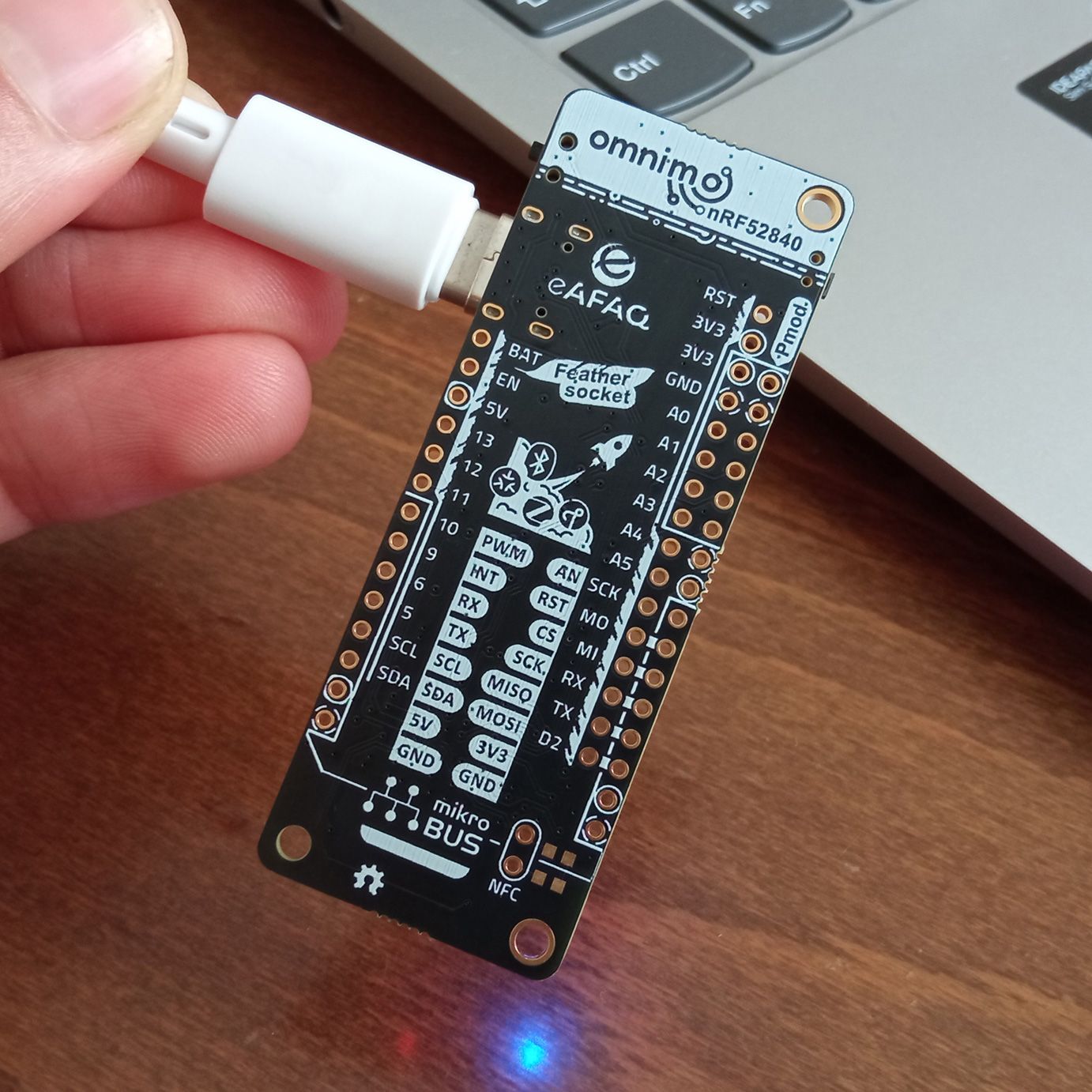
And here we are! Our goal was to design a compact dev board that brings together all the essentials: a mikroBUS socket, an Adafruit Feather socket, a Qwiic connector, a battery connector, a battery charging circuit, and a USB connector for both power and data.
We also wanted to include a few practical features often missing from compact boards:
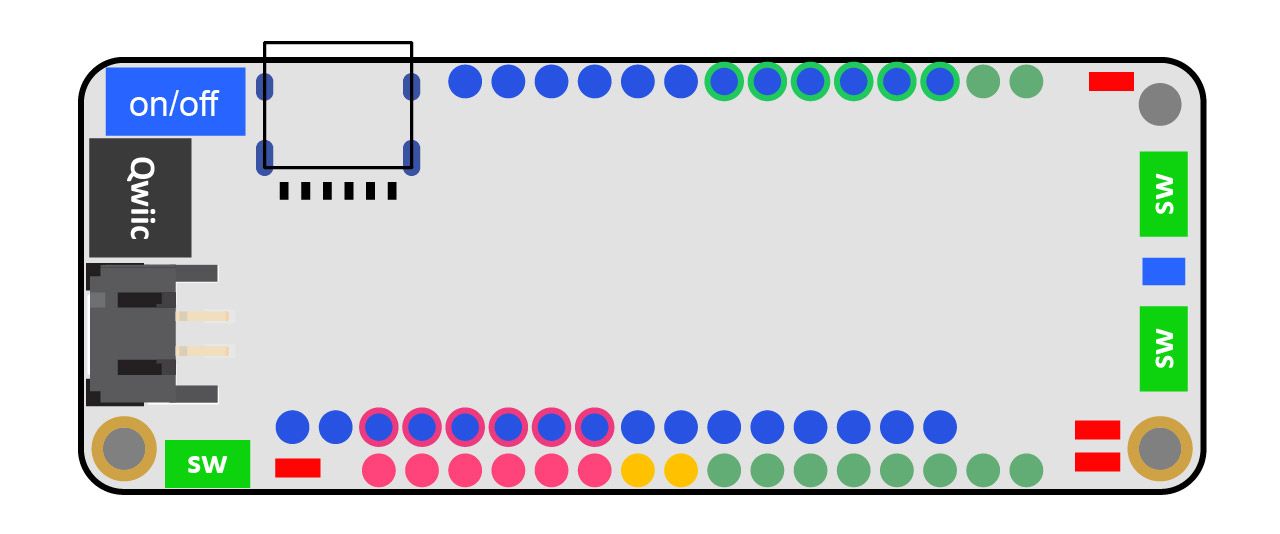
- On/off switch – lets you turn the board off without unplugging the USB cable or battery, and even charge the battery while the board is off. Most small boards skip this feature due to space constraints.
- Mounting holes – for fixation when needed.
- User LEDs and switches – positioned so they remain accessible, even when add-ons are mounted on the board.
How We Fit It All In
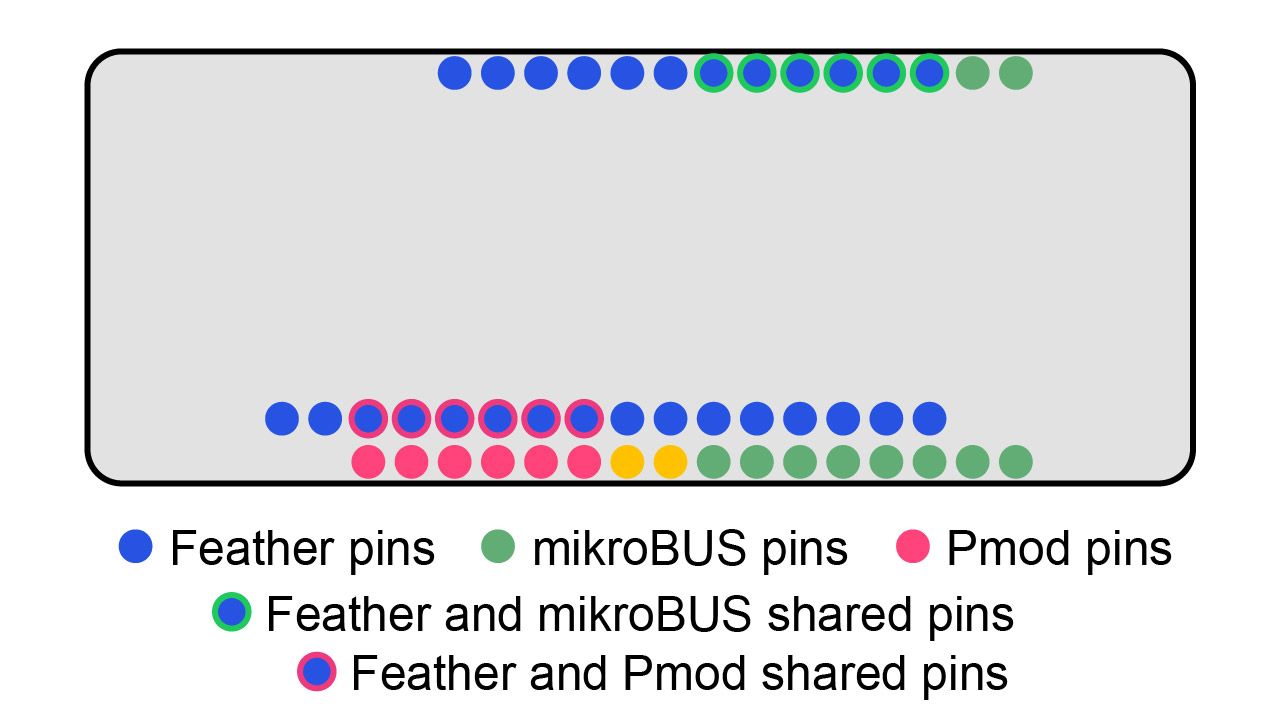
Including all these features in such a tiny board was no easy task. That’s when we came up with the idea of sharing the pins of the Feather socket with those of the mikroBUS socket. This design choice became the defining characteristic of our board. This arrangement makes it possible to use either FeatherWing or Click add-ons (though not both at the same time). Following the same reasoning, we also added a Pmod socket.
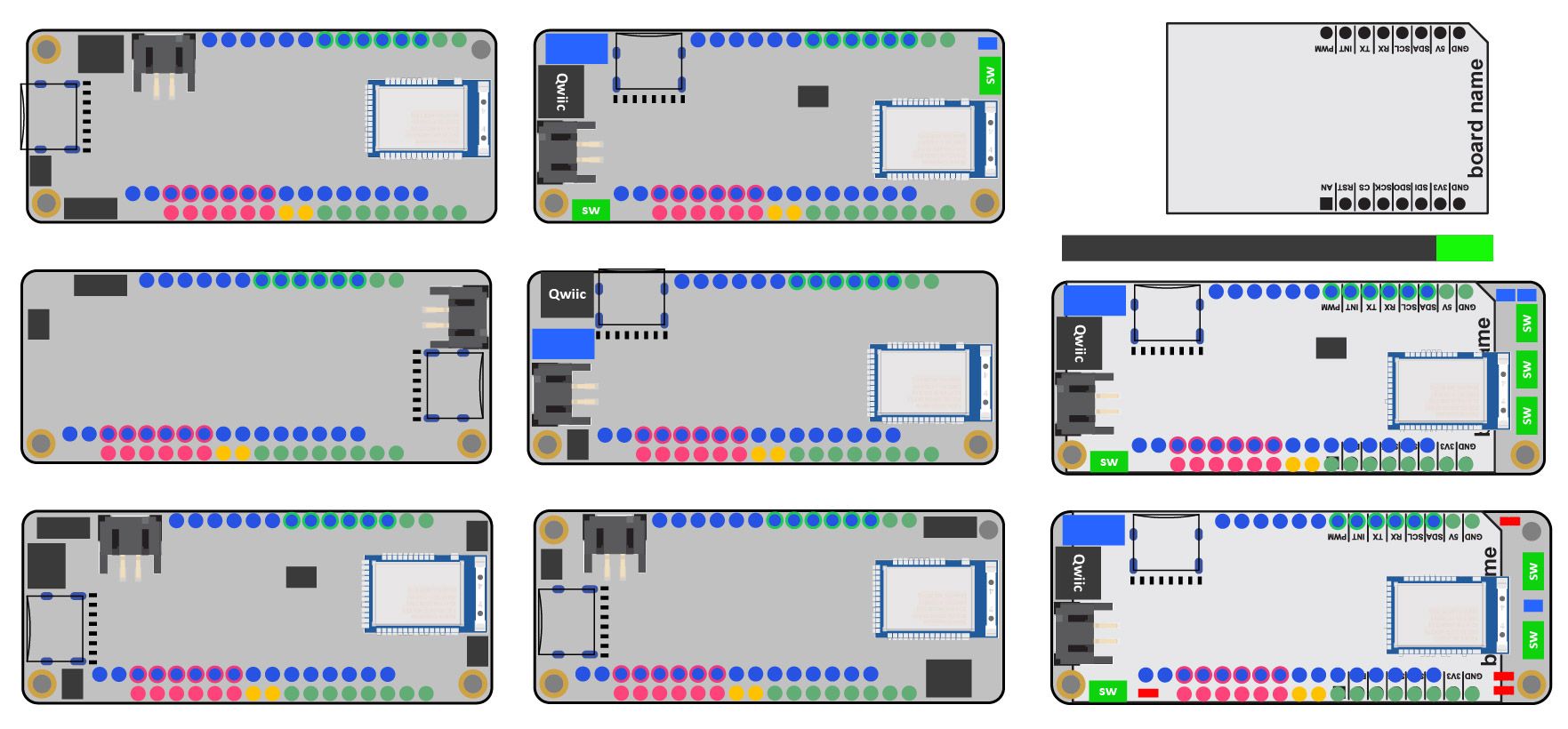
After selecting small switches that could fit our board, we experimented with many layouts to find the best arrangement. The capture below shows some of the options we tried.
After testing different options, we settled on the following configuration:
Launching with the nRF52840
The resulting configuration represents a new form factor that can work with several types of MCUs. For our first dev board, we chose the nRF52840 from Nordic Semiconductor, a powerful multi-protocol SoC that is widely adopted by the community and well-suited for a broad range of applications. In addition, the Nordic Semiconductor Hub on Crowd Supply could help support this board and bring it to life. Using pre-certified modules is often recommended. For our board, we chose the Raytac MDBT50Q-1MV2 module, which offers 48 GPIOs, enough to support all the features we wanted to include.
Naming the Board
Now it was time to find a name for our board. After many attempts, we chose Omnimo as the name for our new form factor, short for “omni-modules”. After that, we went on to design a logo for it.
First Prototype
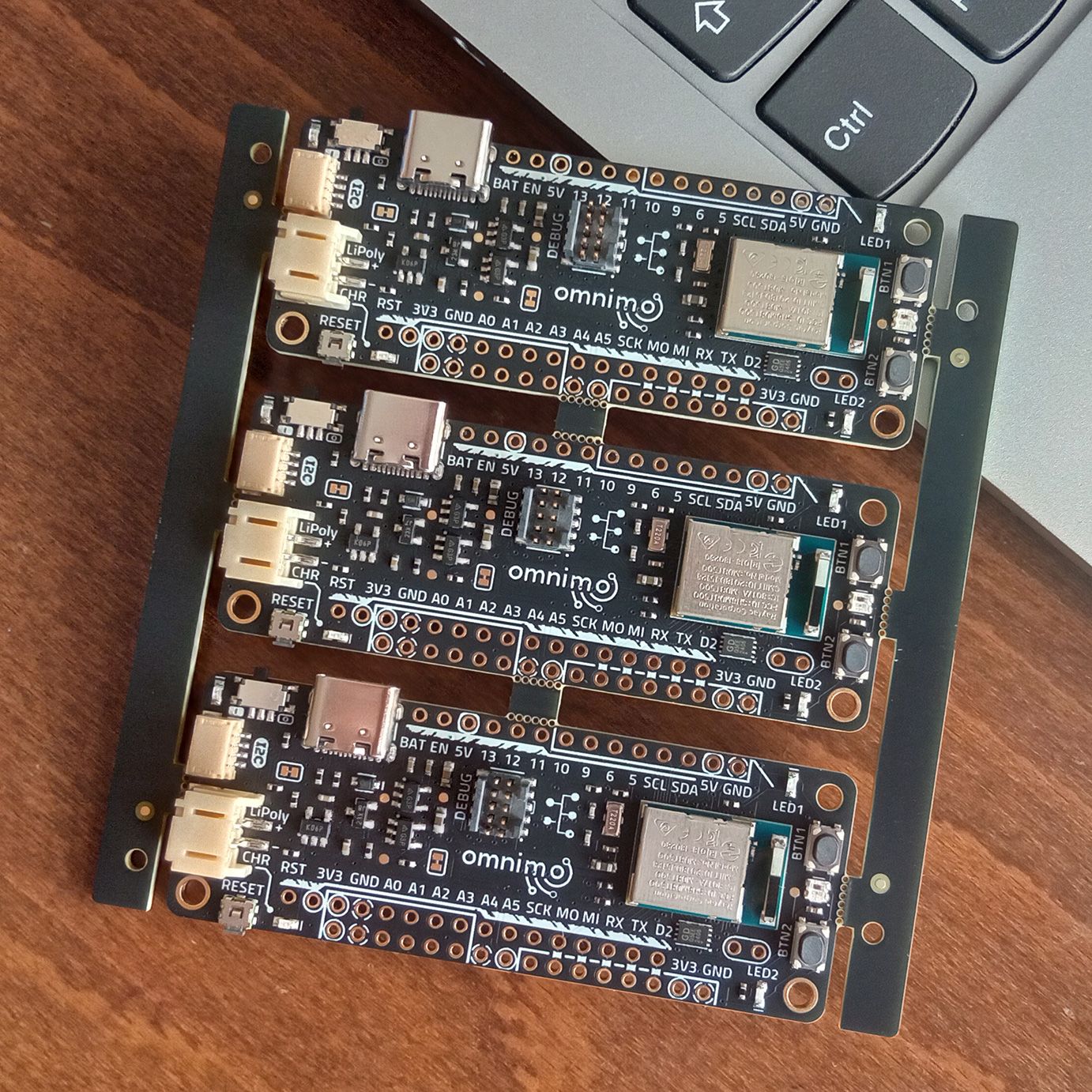
After completing all the previous tasks, we carefully designed the board PCB (4 layers) and had it fabricated. We then assembled it manually. That became the first version of the board (v0.1). The overall result was satisfying: a compact and elegant board packed with features.
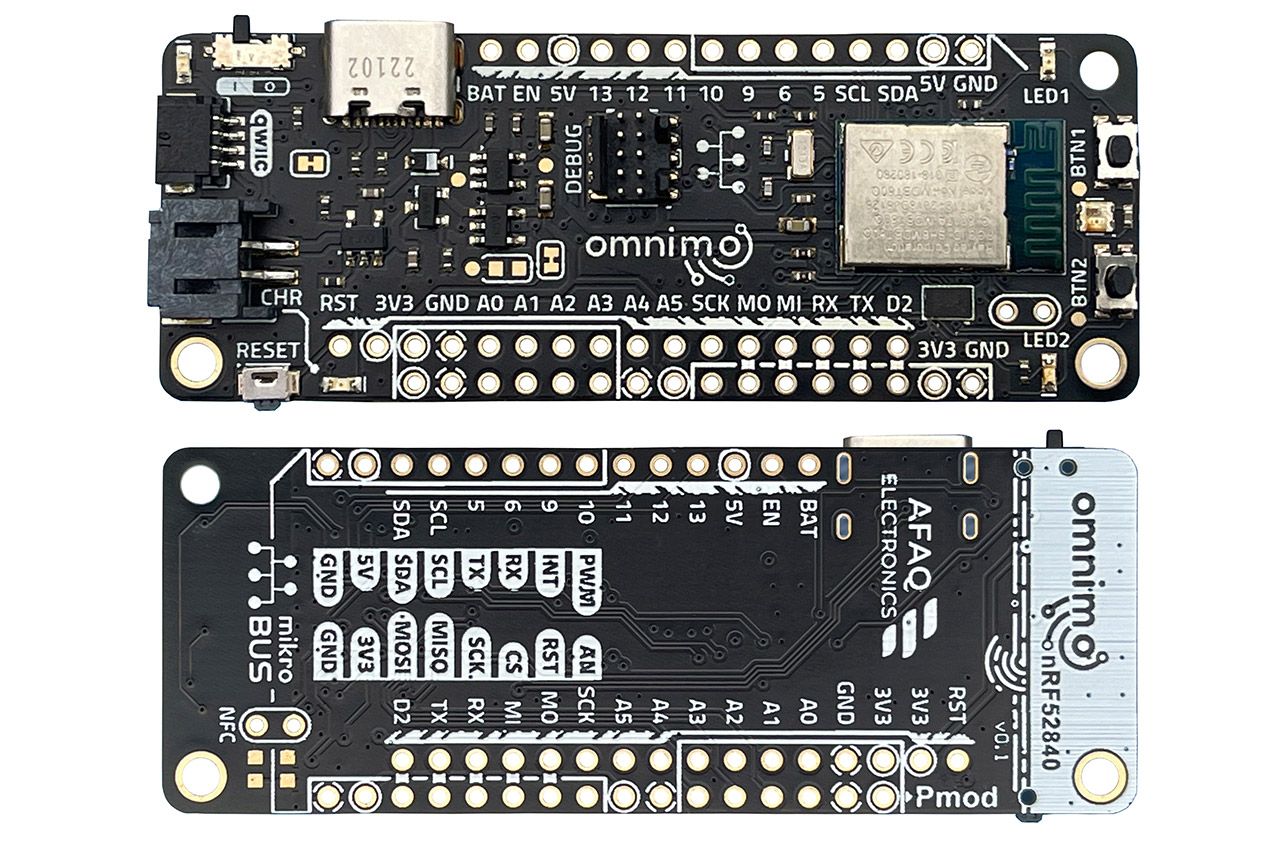
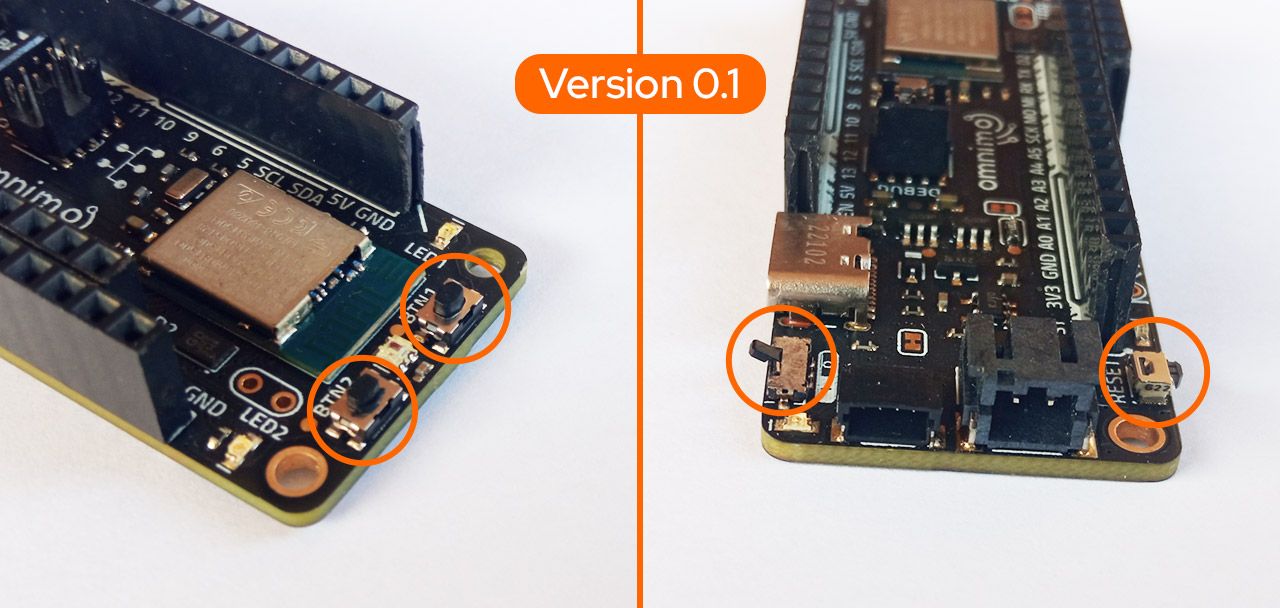
We encountered some issues with this version. The on/off switch and the user push-buttons were selected for their small size, but we discovered that they were not reliable enough. Additionally, the side reset button did not perform as well as expected.
Refining the Design
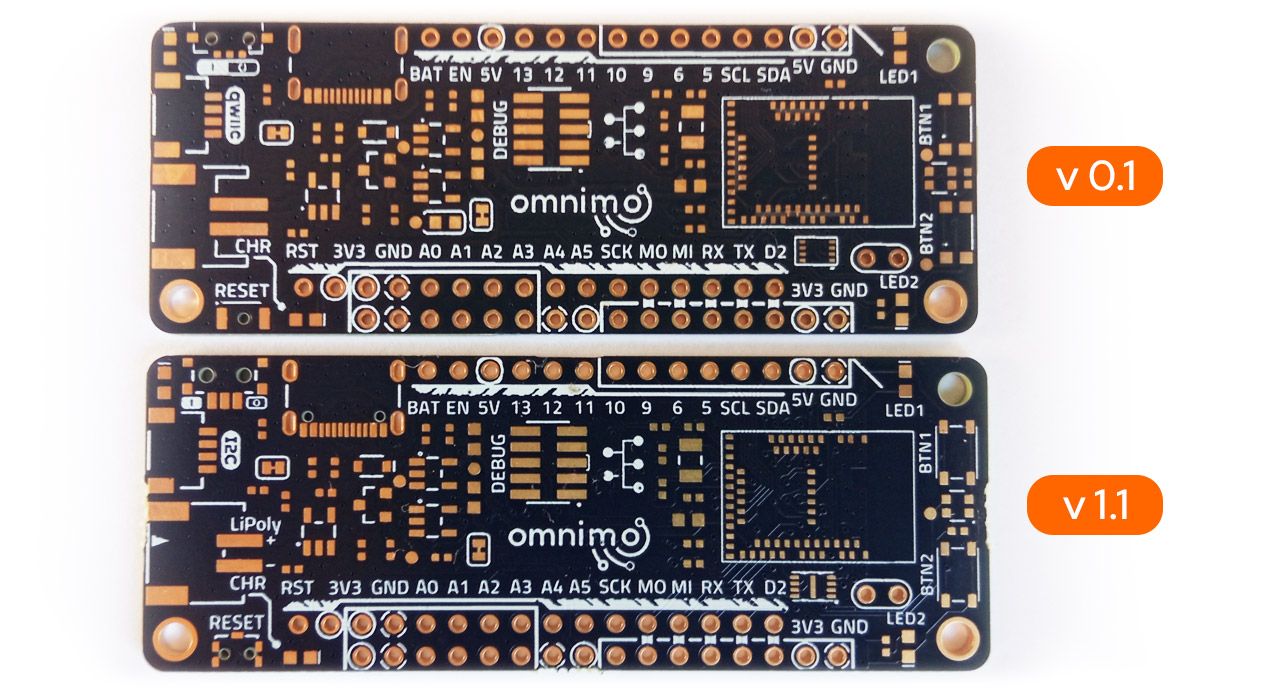
A second version (v1.1) of the board was designed, but this time the on/off switch and push-buttons were replaced with slightly larger components that are much more practical and reliable. The length of the board was also slightly increased. Below is a comparison of the PCBs from the two versions.
Despite its small size, the on/off switch is easy to use and can be operated without long nails or special tools:
The reset button is also convenient to use:
The final result of this second version was much more satisfying, and we really liked it. We successfully tested it in many practical applications.
That was a bit of the story behind Omnimo nRF52840, thanks for being part of it! Stay tuned, back the campaign, and we look forward to seeing your projects join this journey.