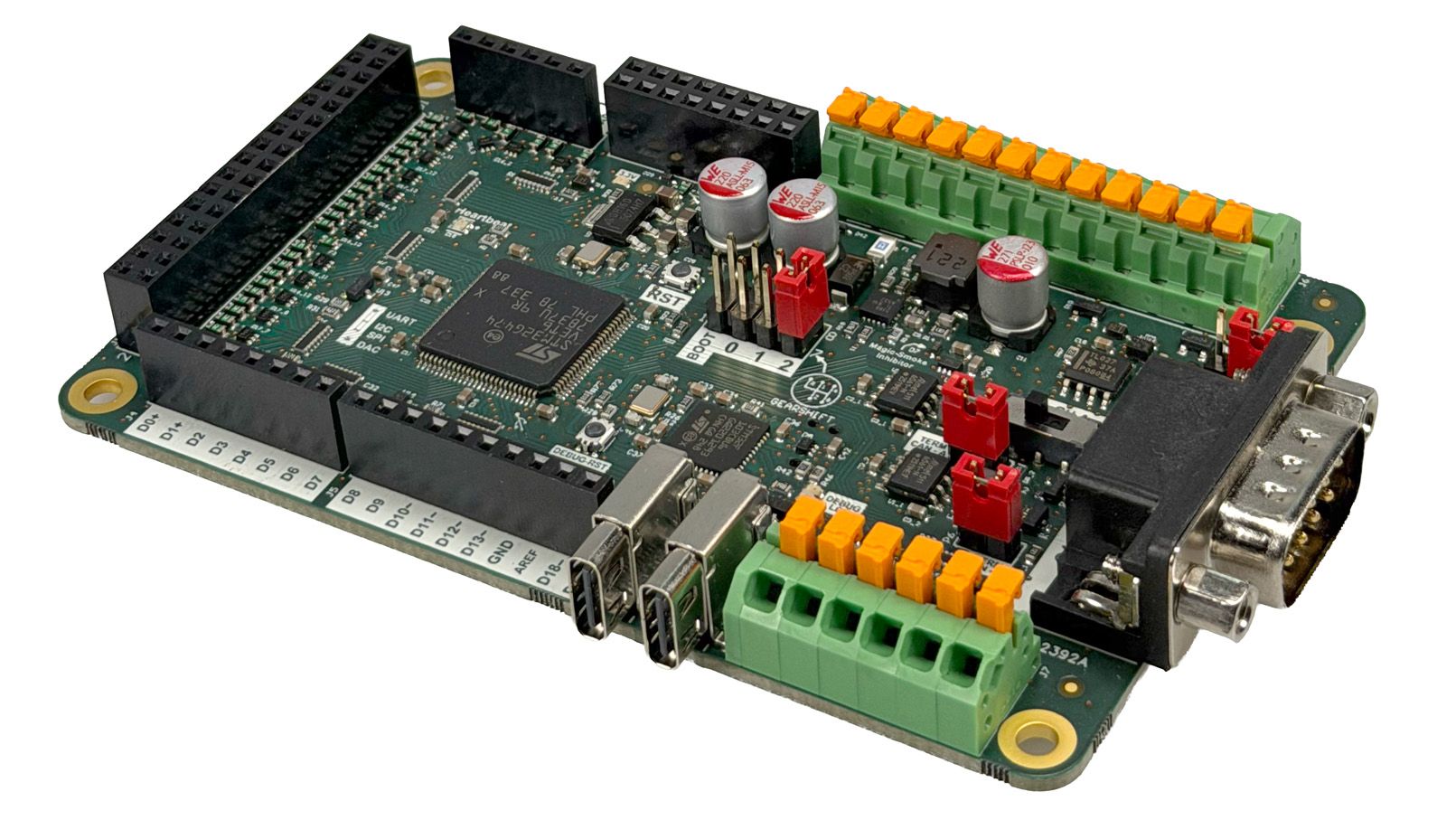
ARDEP (Automotive Rapid Development Platform) is an open-source hardware and software development board built specifically for automotive work. It gives you two native CAN-FD channels, LIN, and UDS diagnostics on a board that handles 5 V to 48 V input with proper overvoltage and ESD protection, so you can connect it straight to a vehicle network and start developing in minutes instead of days. No shields, no adapter stacks, no boards that give up the first time they see an automotive supply rail.
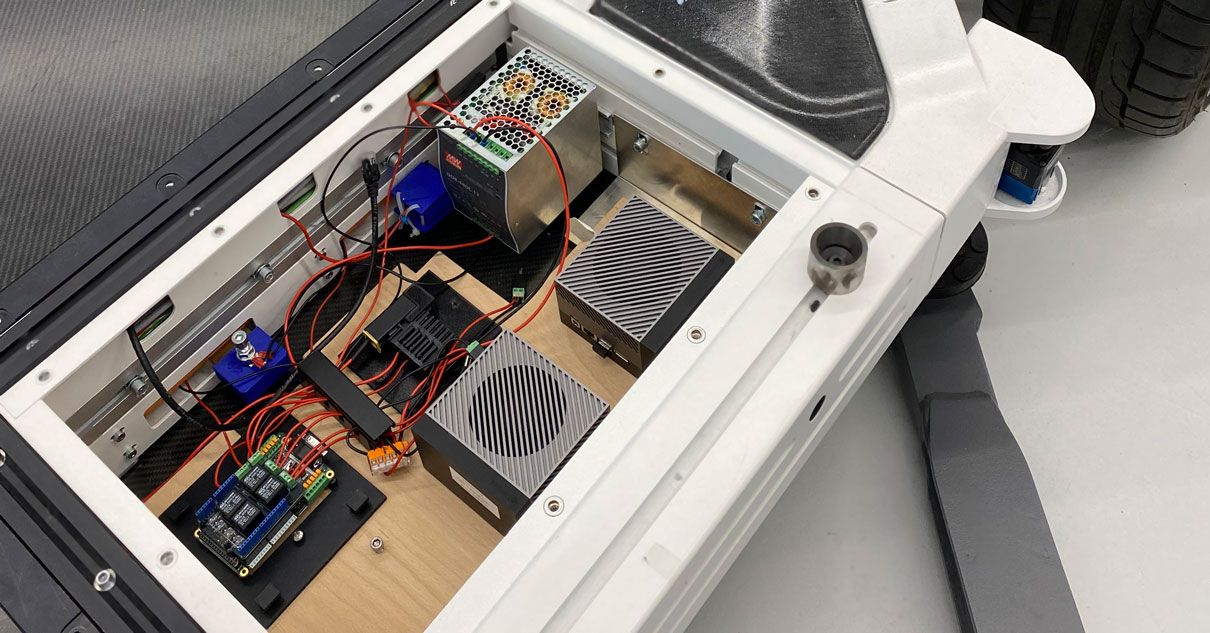
The firmware runs on Zephyr RTOS, with UDS (ISO 14229) diagnostics and firmware updates over both CAN and USB out of the box. Everything is open: the hardware design files, the firmware, and the documentation are all public under the Apache 2.0 license, hosted on the Mercedes-Benz GitHub. This is not a concept board, it’s already being used in development at the highest level.
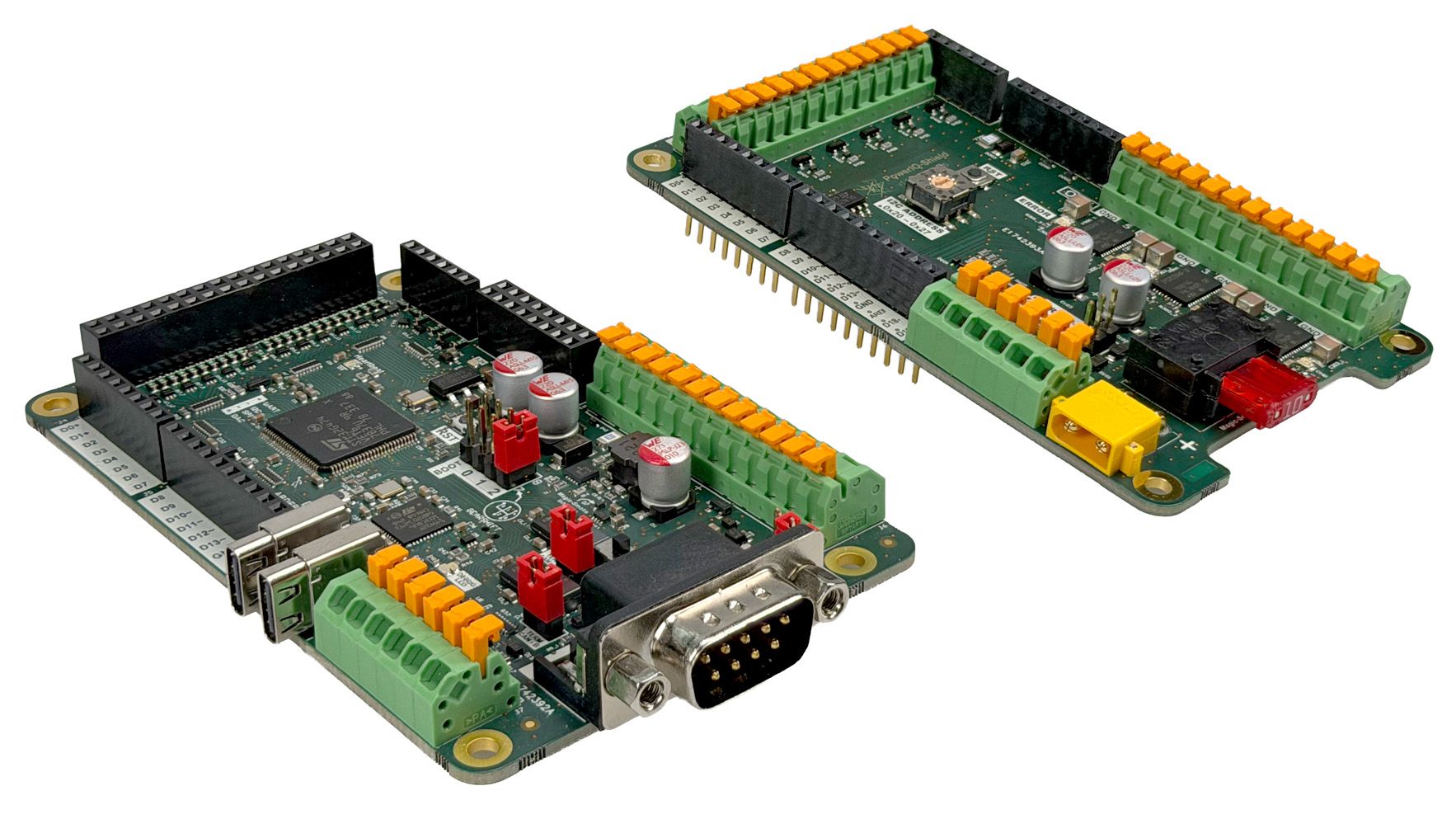
The campaign features two products: the ARDEP main board, and an optional Power IO Shield that adds six 48 V high-side outputs for switching real automotive loads like relays, solenoids, and small actuators.
Skip the Setup, Start Building
If you have ever tried to get a microcontroller talking to a car, you know how the first week goes. Either you are paying for an expensive, often Windows-only proprietary toolchain and spending days on integration before you can read a single CAN frame, or you have reached for a hobbyist dev board that was never designed for automotive voltages and bus loads, and watched it misbehave or quietly die. ARDEP exists because industry developers kept hitting that exact wall, so we wanted one board we could actually trust on a bench or bolted inside a vehicle.
A typical workflow looks like this: plug ARDEP into your computer over USB Type-C, clone the repository, and start building right away. Because it can flash other devices over CAN, it slots naturally into modern zonal E/E architectures where one node manages distributed hardware. The whole stack is open and based on Zephyr, so it fits comfortably into modern development workflows, including coding agents. The on-board STM32G474VE pairs a Cortex-M4 with CORDIC and FMAC hardware math accelerators. TinyML models run at the edge through CMSIS-NN and ST X-CUBE-AI, with no extra hardware.
Whether you are prototyping a control unit, bringing up a sensor, or teaching automotive bus communication, ARDEP gets the infrastructure out of your way so you can focus on the problem that actually matters.
Features & Specifications
Main Board (ARDEP V2)
- Microcontroller: STMicroelectronics STM32G474VE, Arm Cortex-M4 with FPU at up to 170 MHz
- CAN: 2x CAN-FD capable transceivers, each with a common mode choke, ESD protection, and hardware-configurable 120 Ohm termination
- LIN: 1x LIN transceiver, software-selectable master or slave mode
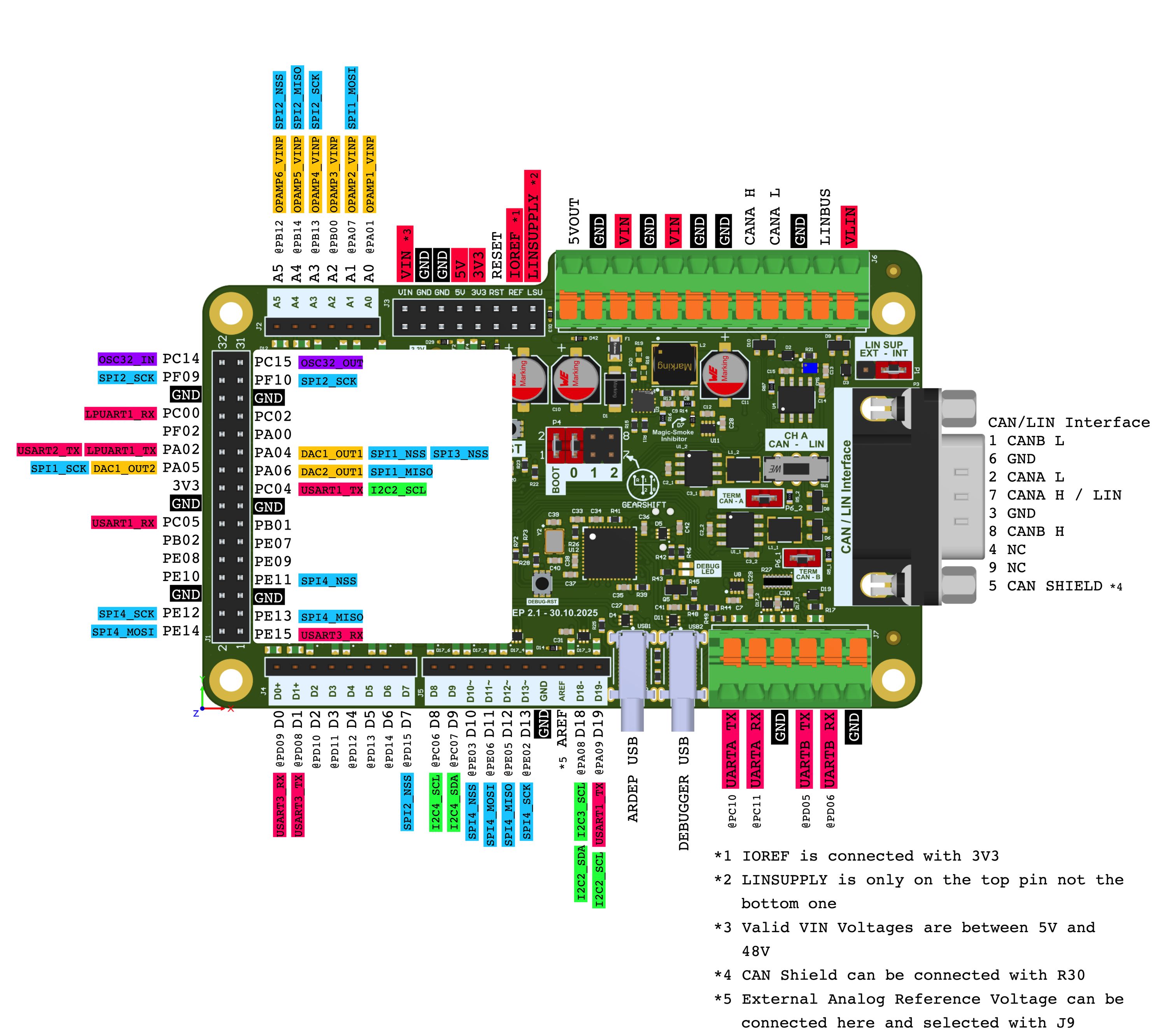
- Connectors: Single DB-9 following the Vector pinout, plus spring contact terminals for CAN-A and LIN. A hardware switch (SW1) routes either CAN-A to DB-9 pins 2 and 7, or LIN to DB-9 pin 7
- Other interfaces: SPI, I2C, UART, and Arduino-compatible headers
- Input voltage: 5 V to 48 V via main terminals, protected by a 51 V TVS diode and a 1 A slow-blow fuse
- USB power: 4.75 V to 5.25 V via USB Type-C (ARDEP or Debug port)
- Internal 5 V rail: 500 mA maximum total, shared across the 5 V and 3.3 V outputs and the MCU
- 3.3 V output: Available on the Arduino header and 32-pin connector, 200 mA poly fuse per group
- LIN supply input (VLIN): 0 V to 24 V external, extendable to 36 V with different ESD protection
- GPIO logic level: 3.3 V
- Debugger: On-board debugger with UART connection (from v2.0.0)
- Protection: Overvoltage, reverse current, and ESD protection on the supply path
- Dimensions: 69 x 109 x 16 mm (2.72 x 4.29 x 0.63 in)
- Weight: ~60 g (2.12 oz)
Power IO Shield
- Supply voltage: Up to 48 V
- Outputs: 6x high-side drivers based on the IPS2050HQ-32 smart high-side switch, 3 A continuous per channel, 10 A total across all six
- Inputs: 6x 48 V-capable digital inputs
- Diagnostics: Per-channel overcurrent and overtemperature fault indication via onboard LEDs, plus I2C fault feedback to the main board that identifies which driver IC has faulted
- Dimensions: 61 x 99 x 23 mm (2.40 x 3.90 x 0.91 in)
- Weight: ~70 g (2.47 oz)
Firmware
- RTOS: Zephyr RTOS
- Diagnostics: UDS (ISO 14229) included out of the box
- Firmware update: DFU over both CAN and USB
- Bootloader: Production-ready bootloader and firmware loader pre-installed, with sysbuild integration
- Samples: A library of ready-to-run samples and demos, including CAN, LIN, ADC, DAC, GPIO, UDS, and a CAN-to-USB bridge
Pinout Diagram
Open Source
ARDEP is open source all the way down. The hardware design files, the firmware, and the full documentation are public, and the project is hosted on the Mercedes-Benz GitHub. All files are available for you to peruse today.
- License: Apache 2.0, for both hardware and software
- Hardware: Schematics, board layout, and project files are published in the repository
- Firmware and software: The complete Zephyr-based firmware, drivers, and samples are in the repository
- Documentation: Full hardware and software documentation, including pinouts, power scheme, and getting-started guides are in the repo
- How to contribute: Issues and pull requests are welcome on GitHub. You can study the design, build on the codebase, adapt it for your own hardware, or contribute improvements back, with no special access or licensing fees
Interested in This Project?
You can sign up at the top of this page to be notified when the campaign launches and to receive other updates. We only send relevant content, and you can unsubscribe at any time.