We sent early pre-production Modos Flow samples to My Deep Guide and Tom’s Hardware so they could test it in real use. Even though these reviews weren’t based on final production units, they showed how Flow handles with typing, browsing and switching modes, while highlighting what still needs work. Flow is meant to be inspected, adapted, and improved over time for each users’ individual needs, so we are grateful for all of the constructive feedback that will help us continue to perfect Flow!
What Reviewers Noticed First
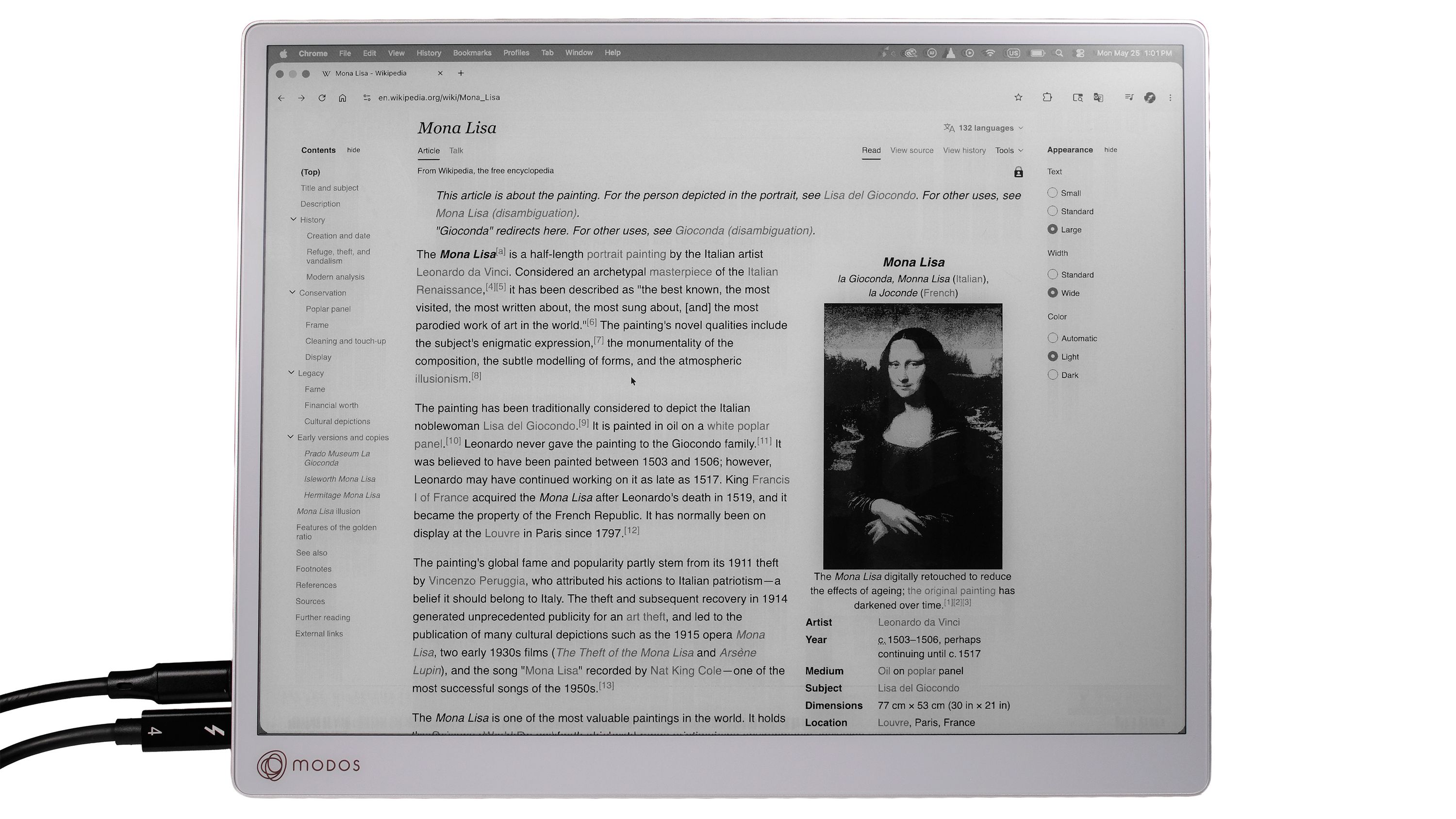
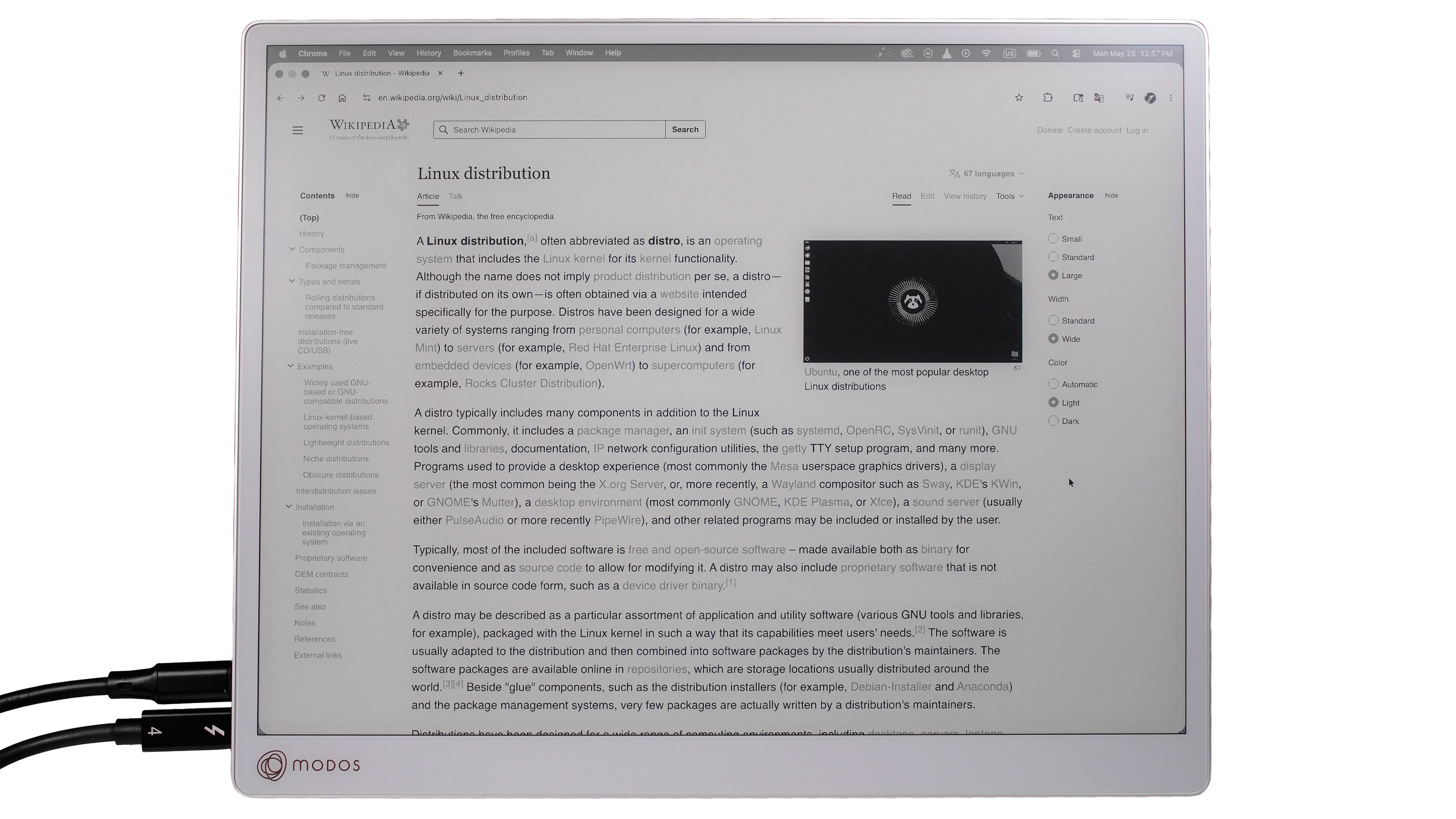
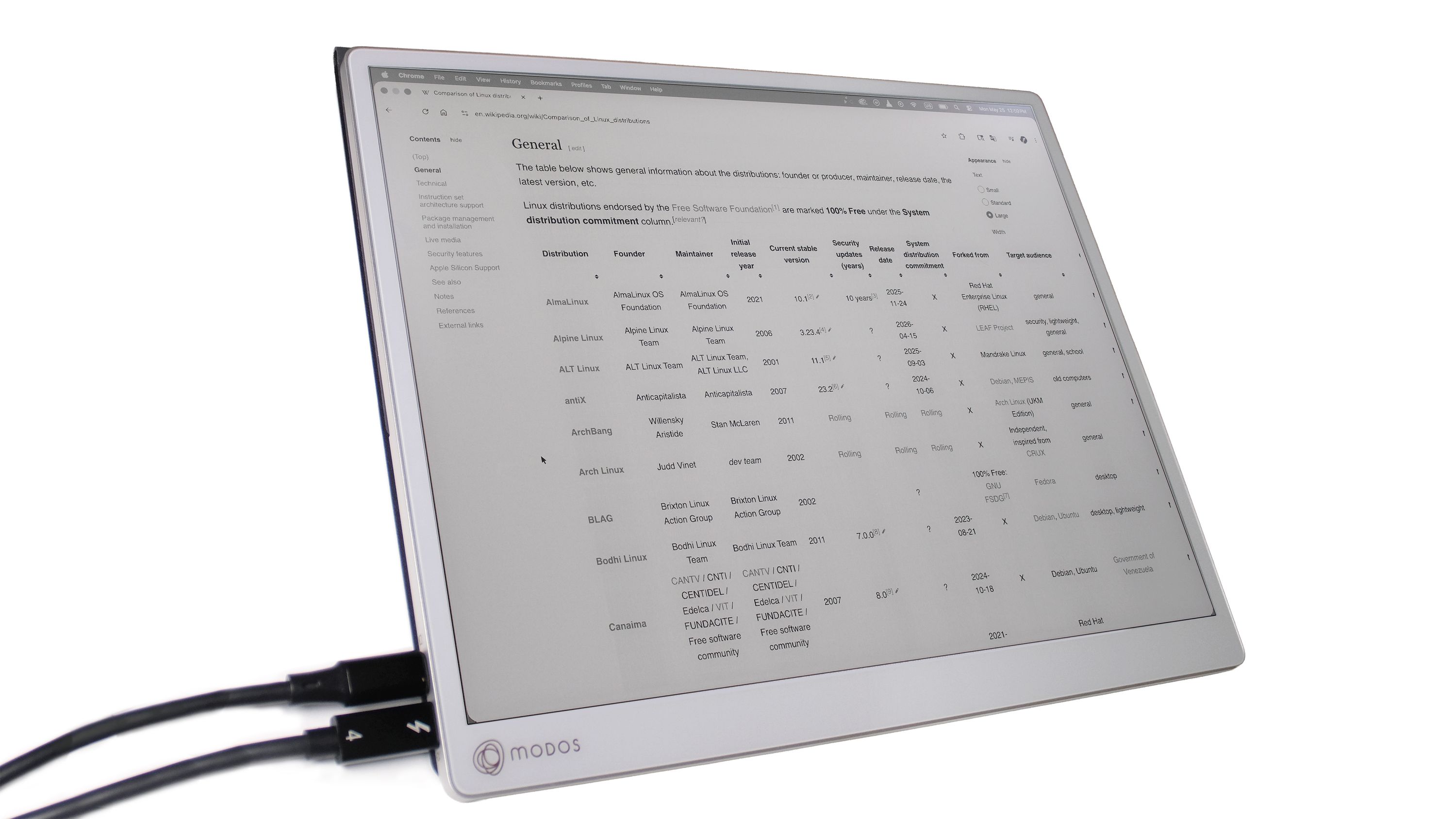
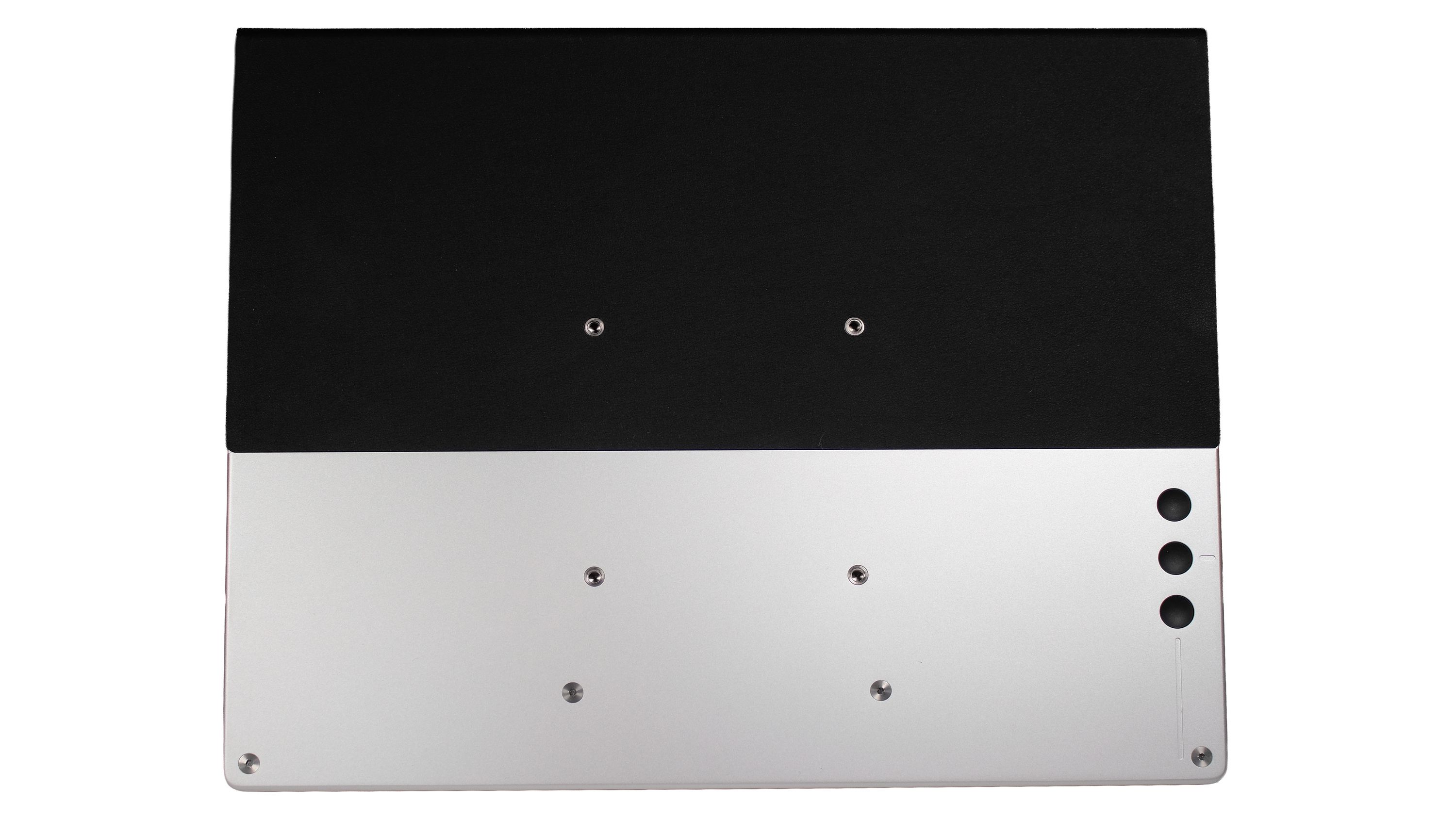
Our focus is the physical system around the panel; how the controller board, firmware, display modes, and physical design all work together. Reviewers commented on the custom controller board and firmware stood out as key differentiators. The enclosure, magnetic stand, and VESA mounting details were described as solid and utilitarian, with a more finished feel than a bare prototype. Specific details were important to reviewers, like having rounded edges, a hinged cover, and a front light. The minimalist aesthetic of having a metal chassis, visible screws, and a matte panel made Flow feel like it would visually match with everyday use and various needs.
What Is Already Working Well
- Responsiveness: In early testing, typing and basic navigation felt responsive enough for focused work. If typing lags, focused work breaks down.
- Text clarity and ghosting control: During typing and browsing, the display kept text readable while controlling ghosting well. Manual and automatic screen clearing made ghosting easier to manage.
- Display modes: Each mode changes how Flow balances clarity, speed, visual stability, and ghosting for your specific needs. Reading favors clarity and stability; Writing minimizes latency; Browsing and Watching balance speed, detail, and visual stability.
- Controls and user experience: Flow has a touch-enabled on-screen display, with customizable buttons, auto-clear and front-light toggles, and reset-to-default behavior. On an e-paper monitor, switching modes and clearing the screen should be quick enough to stay out of the way of the reading experience.
- Front light and readability: The front light came across as pleasant and adjustable, with useful warmth and brightness controls.
What Flow Is and Is Not For
Flow isn’t meant to replace every screen for every task, as it’s built around the strengths and limits of e-paper. It’s at its strongest when motion is not the priority; like during reading, writing, browsing, coding, and keeping reference materials open. While reviewers found Flow’s display speed with moving content technically impressive for an e-ink monitor, e-paper is better suited to slower and focused work rather than high-motion media. It’s also not meant to replace LCD or OLED for gaming, video editing, or any other general-purpose media. But keep in mind that for many people, that’s the point – an e-paper display can feel easier on the eyes during reading, writing, and long sessions with text, and can encourage a calmer style of computing that leads to more focused work.
What We Are Improving Before Production
Flow is the result of years spent building around e-paper’s limits instead of pretending they do not exist. The custom controller, firmware, display modes, front light, touch support, and open-source hardware all come from the same goal: making an e-paper monitor responsive enough for real daily work while still preserving what makes E Ink useful in the first place.
- Firmware stability: One reviewer encountered a firmware crash that required a power cycle. Reviewers also saw pre-production issues around sleep, restart, and reconnecting. We're now prioritizing stability, recovery behavior, and sleep/restart handling before production.
- Power and connection flow: Some pre-production samples required separate USB-C connections for power and video, and reviewers had to follow a specific connection sequence. We're working to make setup clearer, reduce surprises, and improve power behavior before production.
- Touch, stylus, and multi-display behavior: Touch worked, but latency, multi-touch gestures, and multi-display mapping still need improvements in order to be more predictable across common desktop setups.
- Color calibration: Text was readable, but charts, tables, and color-heavy web content still need better tuning. Color helps with visual structure, but e-paper color still involves tradeoffs in saturation, detail, and update behavior. We're continuing to tune lightness, saturation, dithering, and mode-specific behavior so color is more predictable in daily use.
- Mechanical polish and documentation: Reviewers also gave useful mechanical feedback. That included anti-skid or noise-dampening material around the stand edge, screw flushness, and the density of the sample with its cover and stand. This valuable feedback will make the final design even better, and future setup expectations clearer.
What This Feedback Helps Us Do
The reviews show where Flow is already becoming useful, what makes it visually and physically appealing, and where it still needs refinement. It’s incredibly encouraging that reviewers noted its responsiveness, readable text, useful controls, open-hardware and open-source. Next, we’re focusing on stability, power behavior, touch and stylus mapping, color tuning and clearer documentation.
Our New Goal: Reach 80%!
Every backer, share, and mention moves us closer to a more open e-paper ecosystem: one where the hardware and software are accessible, adaptable, and built to be understood, repaired, and improved over time.
If this vision resonates with you, please back the campaign, share it with a friend, or help us spread the word.
Thank you to the reviewers who spent time with these early units, and to everyone following Flow as it moves from early hardware toward a daily-use monitor!