Project update 9 of 10
Introducing Rpeak: A Real-Time Heart Monitoring Application
by Upside Down LabsRpeak is a comprehensive web application for real-time ECG monitoring, heart rate variability analysis, and AI-powered heartbeat classification. Rpeak is built with Next.js, TensorFlow.js, and other modern web technologies for in-browser ECG signal processing.

Note
This application is currently in the development and testing phase. Features, performance, and results may change as improvements are made. Please use only for research, learning, and prototyping and not for clinical or diagnostic purposes.
Key Features
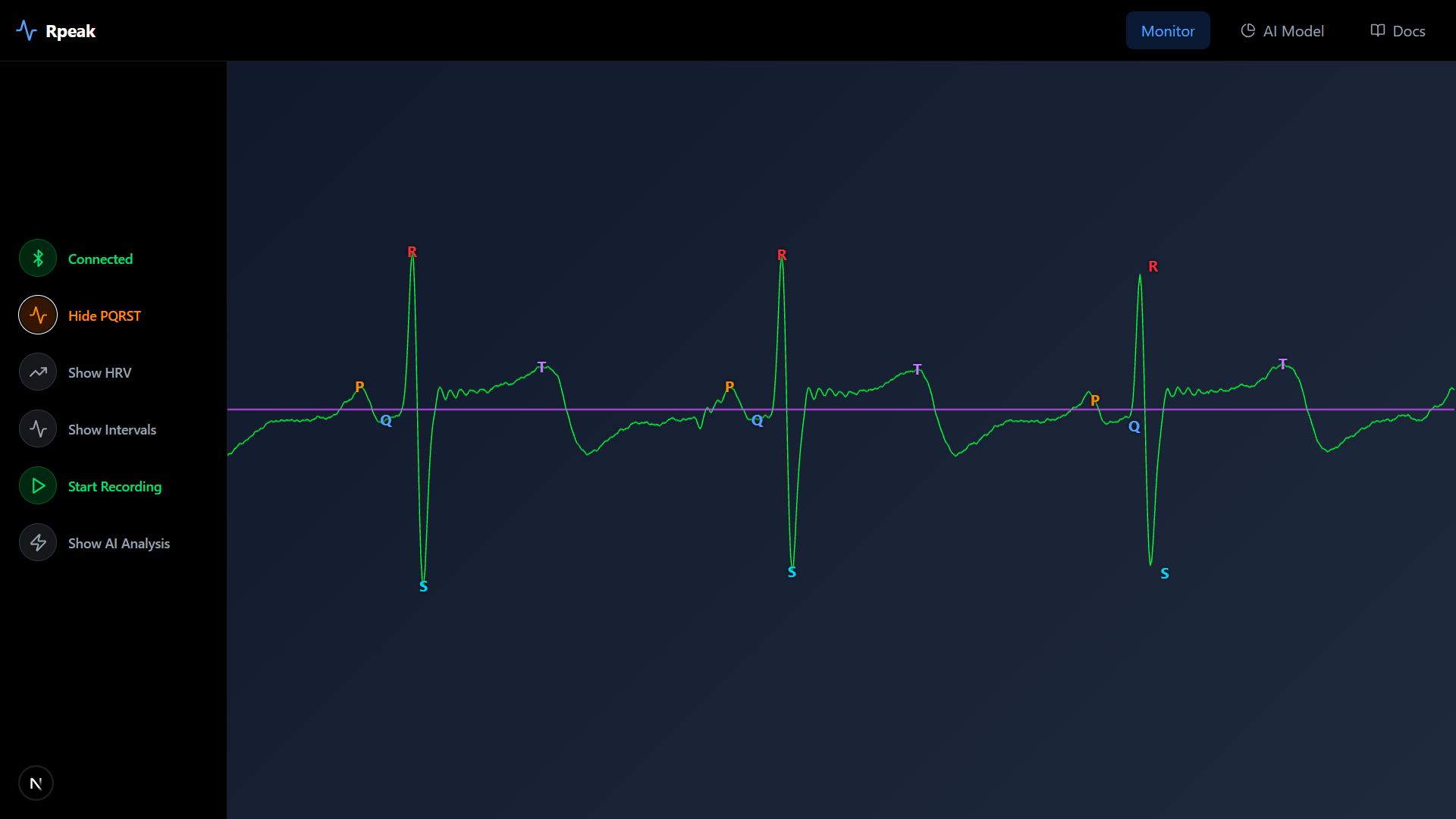
- Real-time ECG monitoring with live waveform at 360 Hz sampling rate.
- Advanced heart rate analysis using multiple peak detection algorithms and physiological validation.
- Automatic detection of PQRST wave components.
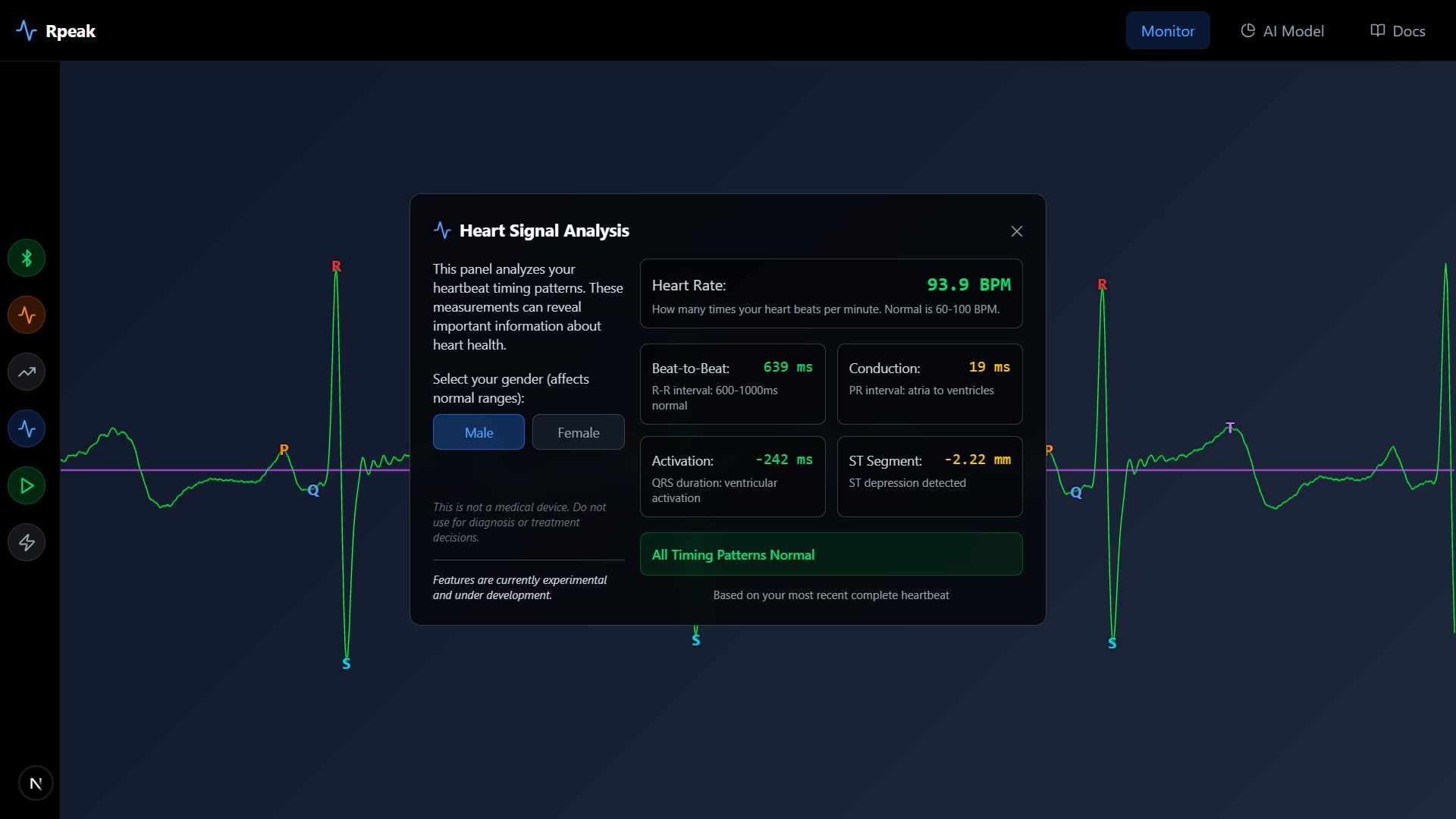
- Measurement of intervals (PR, QRS, QT) with normal/abnormal indicators.
- AI-powered heartbeat classification based on the AAMI EC57 standard.
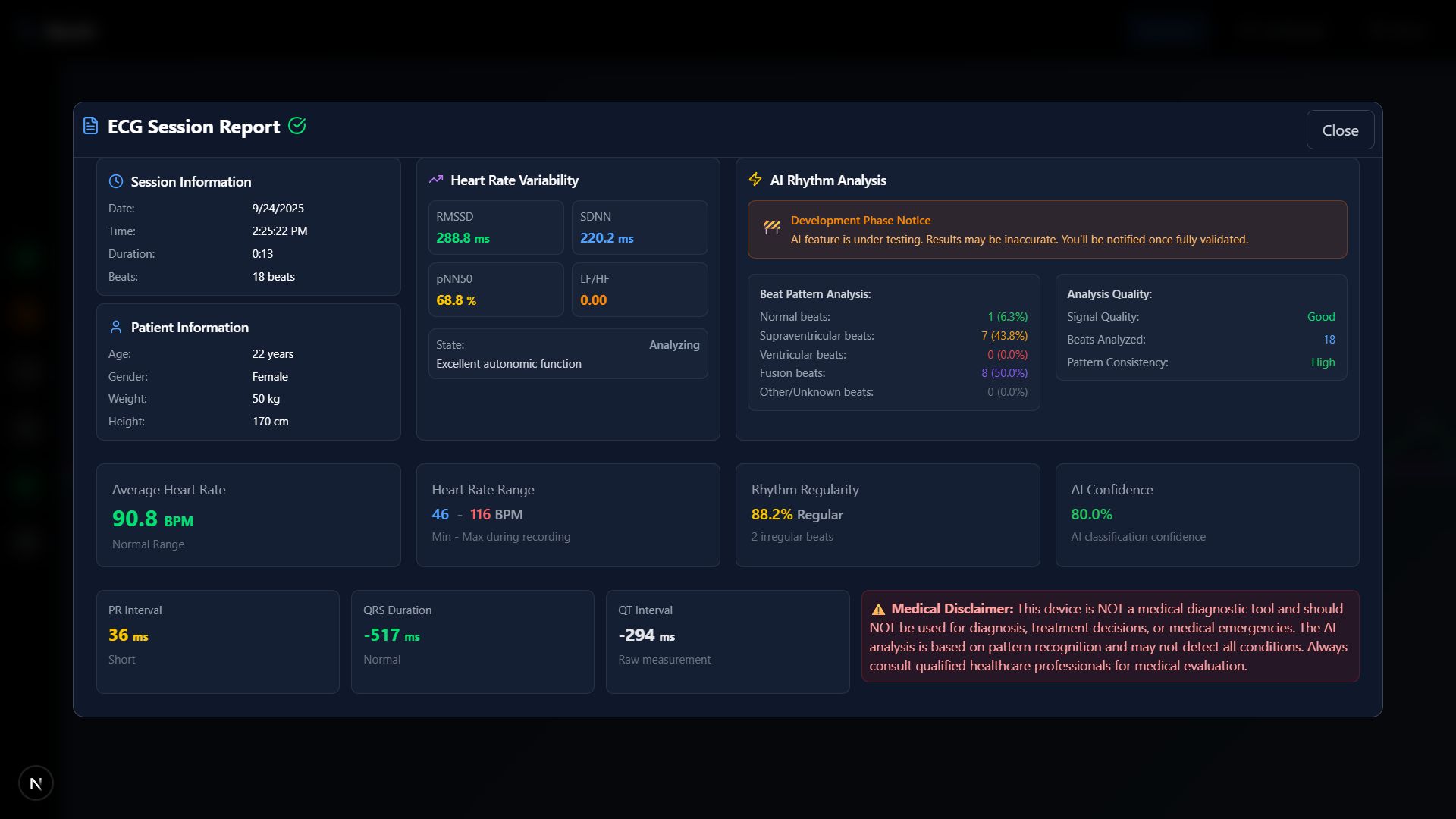
- Session recording for long-term monitoring and detailed analysis reports.
- All processing and analysis are performed locally in a browser for maximum privacy.
Quick Start
Pre-requisites
- Modern web browser with Bluetooth support (Chrome, Edge)
- NPG Lite device with Bluetooth connectivity firmware change sampling rate to 360 - visit firmware

How to Use
Launch the Live Rpeak App
- Connect Your NPG Lite device
- Click the Connect button in the sidebar.
- Select your NPG Lite device from the browser's device list.
- Wait for "Connected" status.
- ECG waveform will automatically start displaying.
- Monitor Your Heart
- Real-time waveform shows your ECG signal.
- Heart rate is calculated automatically from detected beats.
- Enable Analysis Features
- Click sidebar buttons to activate different analysis tools:
| Button | Feature | Description |
|---|---|---|
| PQRST | Wave Analysis | Identifies P, Q, R, S, T wave components |
| Intervals | Measurements | PR, BPM, QRS, QT intervals with normal ranges |
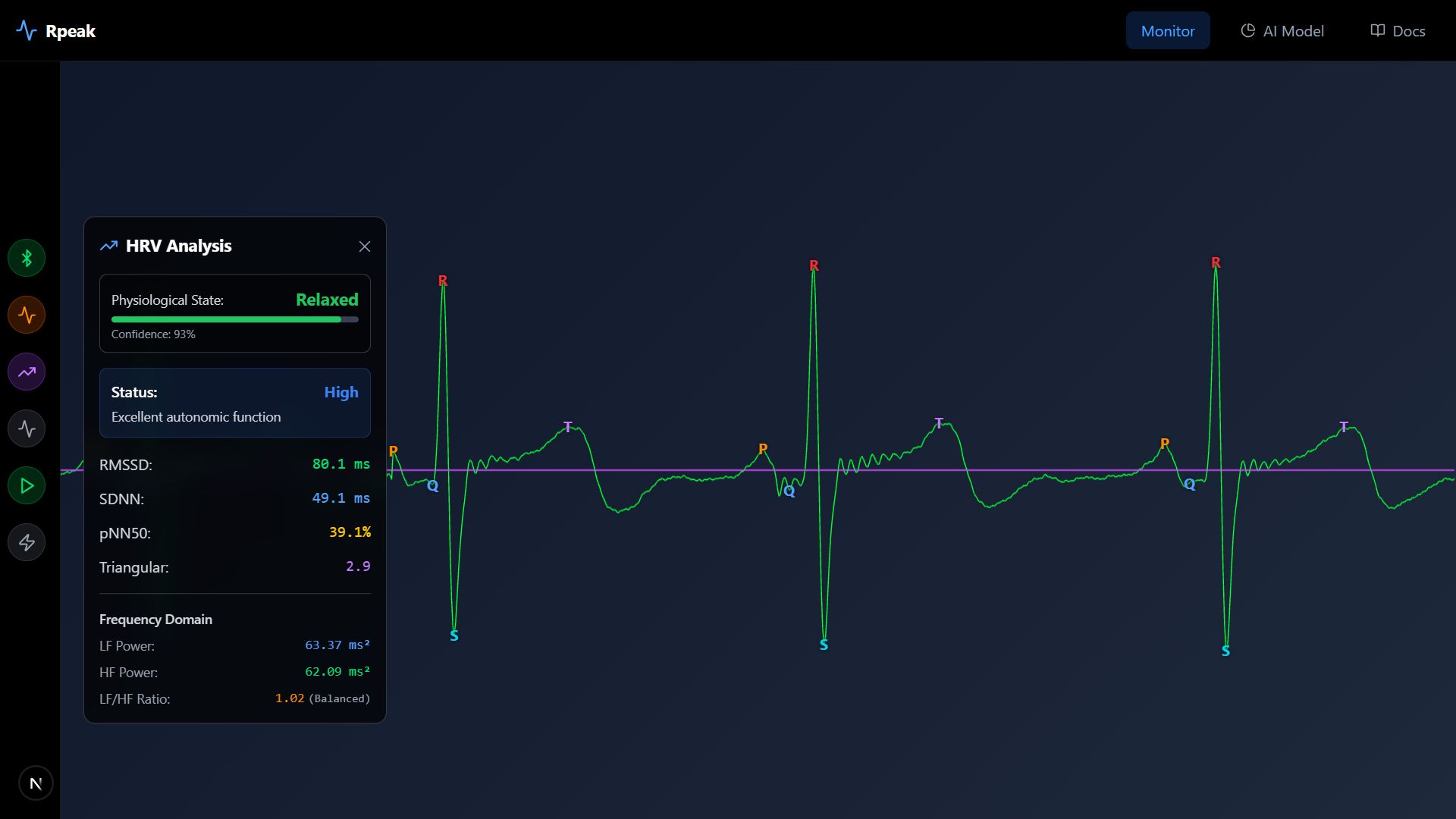
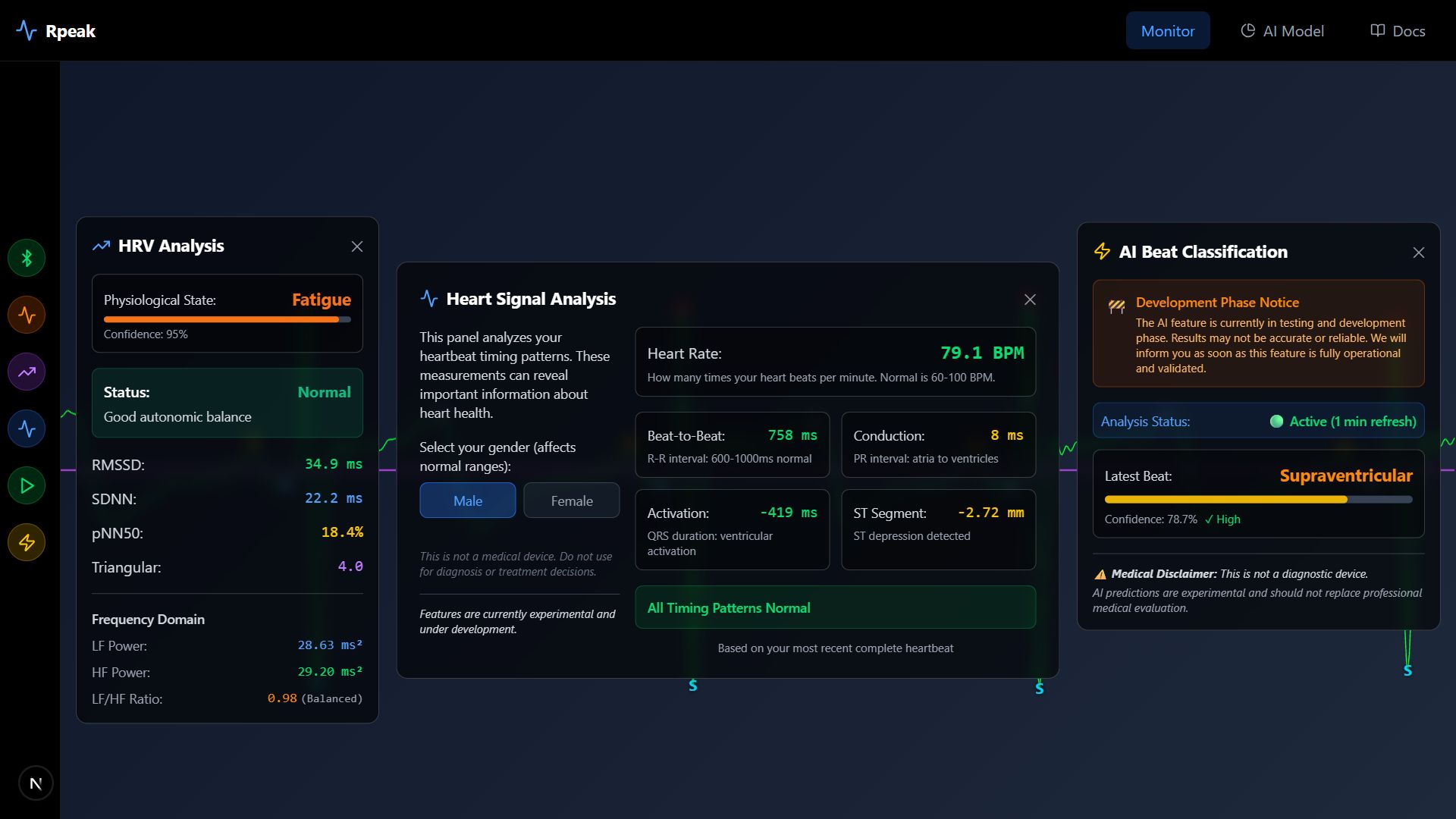
| HRV | Heart Rate Variability | RMSSD, SDNN, stress level analysis |
| AI Analysis | Beat Classification | Neural network heartbeat classification |
| Session | Recording & Reports | Long-term monitoring with detailed analysis |
- Record Sessions
- Click Start Recording button to record the session.
- Monitor for desired duration.
- Click Stop Recording to generate a comprehensive analysis report.
Understanding Your Results
- Heart Rate
- Normal: 60-100 BPM (resting)
- Bradycardia: < 60 BPM (may be normal for athletes)
- Tachycardia: > 100 BPM (exercise, stress, or medical condition)
- HRV Metrics
- RMSSD: Higher values (>30ms) indicate better cardiovascular fitness
- Stress Level: Derived from multiple HRV parameters
- LF/HF Ratio: Balance between sympathetic/parasympathetic nervous systems
- AI Classification (if enabled)
- Normal (N): Healthy heartbeats
- Supraventricular (S): Beats from above ventricles
- Ventricular (V): Beats from ventricles (may need attention)
- Fusion (F): Beats with a mixed or unusual shape (morphology)
- Other (Q): Unclassifiable or paced beats
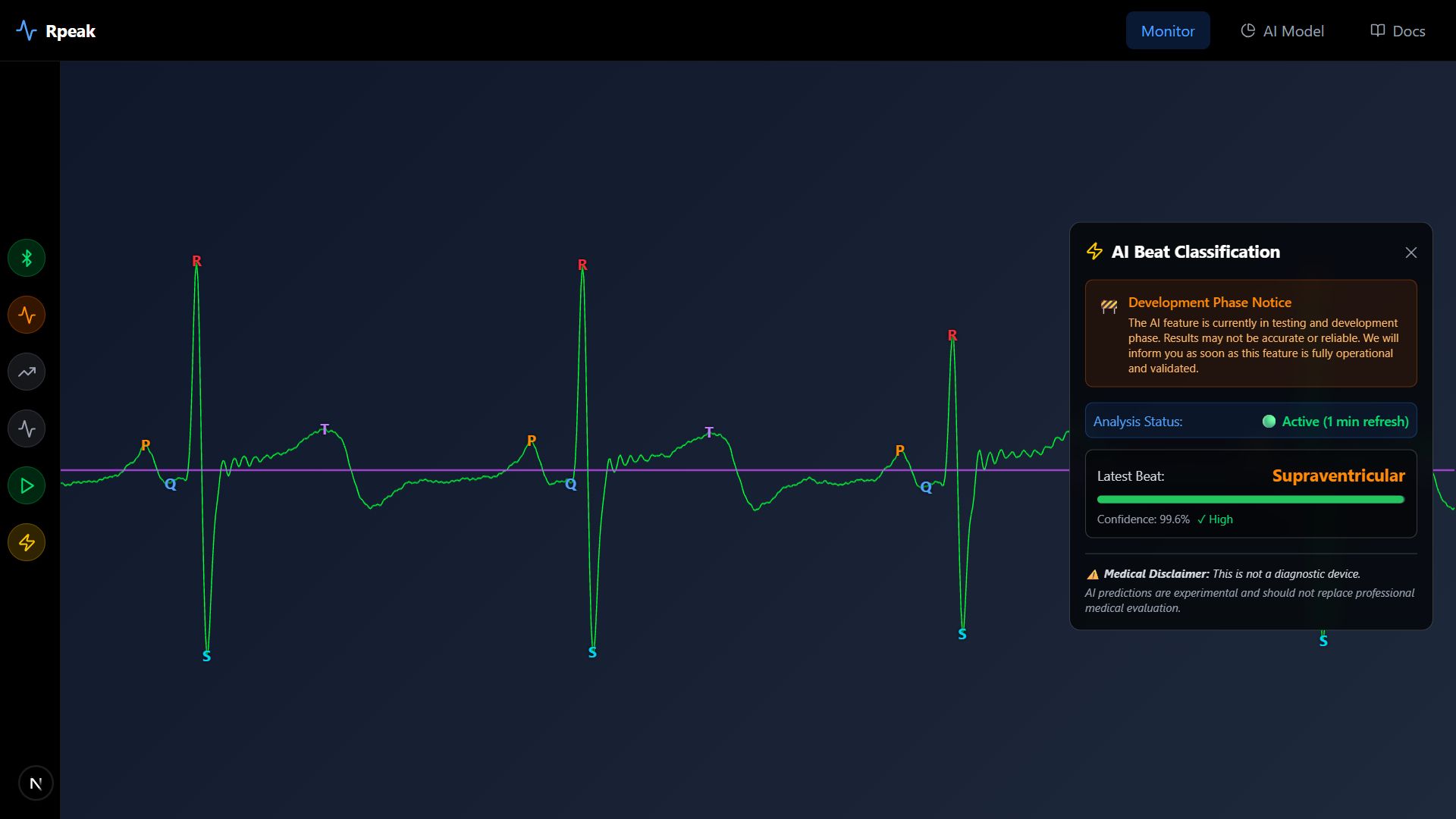
Important: This is not a diagnostic tool. AI classification features are currently experimental and under development. Results should not be used for medical diagnosis or treatment decisions. Always consult qualified healthcare professionals for medical interpretation.
Technical Specifications
- Signal Processing
- Sampling Rate: 360 Hz
- Buffer Size: 1000 samples (~2.78 seconds)
- Peak Detection: Pan-Tompkins algorithm with fallback methods
- Filtering: Bandpass and noise reduction
- AI Model
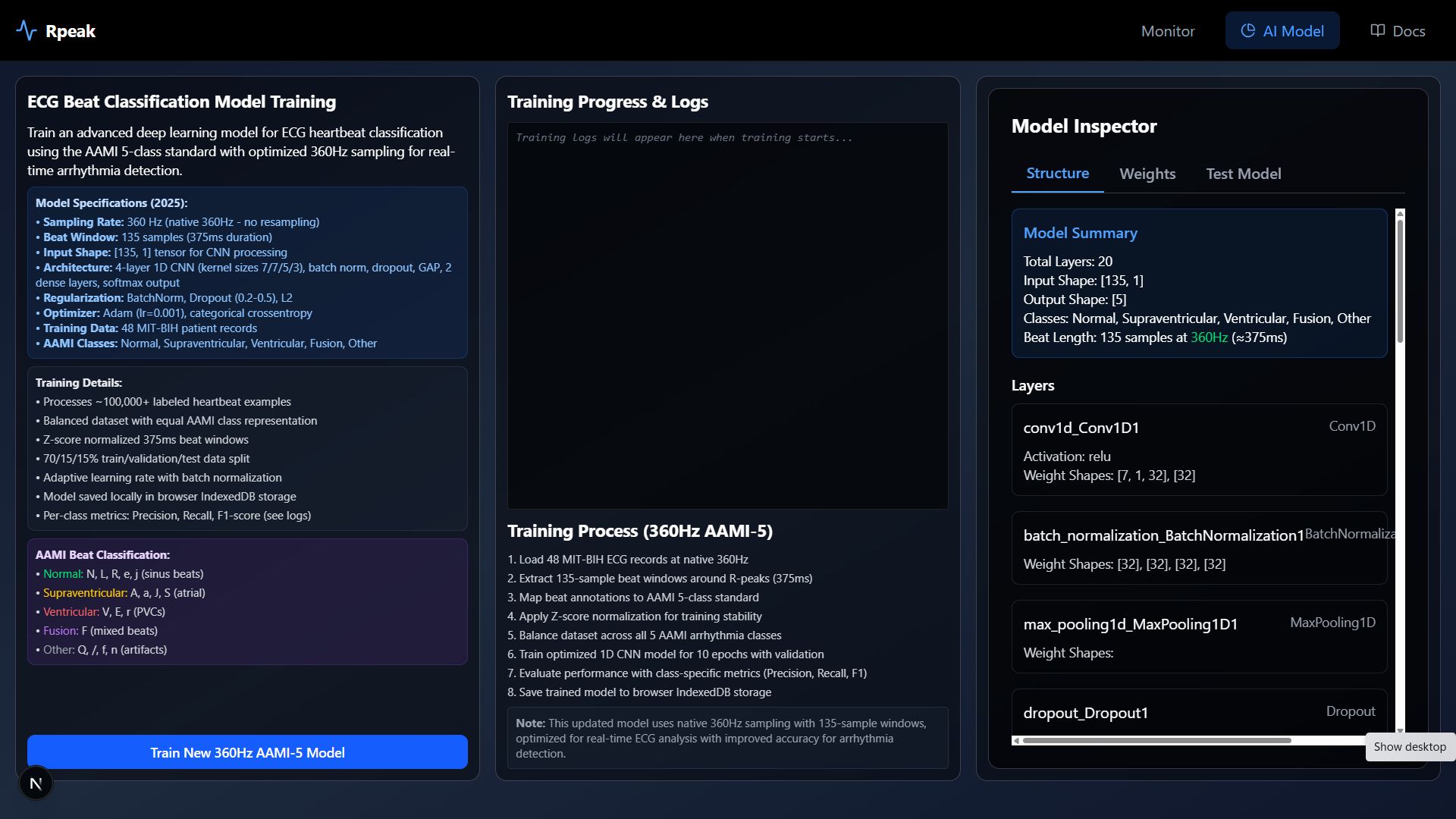
- Architecture: 1D Convolutional Neural Network
- Input: 135 samples (375ms) centered on R-peaks
- Classes: 5 AAMI EC57 standard categories
- Training: Local browser training with built-in datasets
Use Cases
- For Healthcare Professionals
- Research: Rapid prototyping of ECG analysis algorithms
- Education: Teaching ECG interpretation and signal processing
- Screening: Non-diagnostic monitoring and assessment tools
- For Students & Researchers
- Learning: Hands-on ECG signal processing experience
- Experimentation: Testing machine learning approaches
- Visualization: Understanding cardiac electrophysiology
- For Developers
- Integration: Embedding ECG analysis in web applications
- Customization: Extending features for specific use cases
Important Disclaimers
Medical Disclaimer
This application is designed for educational, research, and development purposes only. It is not a medical device and should not be used for:
- Medical diagnosis or treatment decisions
- Emergency medical situations
- Replacing professional medical advice
- Clinical decision-making without physician oversight
Resources
- Documentation: Application User Guide
- ECG Fundamentals: Understanding ECG
- TensorFlow.js: Machine Learning in Browsers
- Web Bluetooth: Connecting Medical Devices
Credits & Tools Used
This project uses the following open-source tools and libraries:
- Next.js – React framework for web apps
- TensorFlow.js – Machine learning in the browser
- Lucide Icons – Beautiful open-source icon library
- WebglPlot – High-performance waveform visualization
- Tailwind CSS – Utility-first CSS framework
- LucideCards – Card-style UI components (if used)
- React – UI library
- TypeScript – Typed JavaScript
Special thanks to the authors and maintainers of these projects for enabling rapid development and beautiful UI/UX.
Support
For technical support, feature requests, or questions:
- Open an issue on GitHub
- Check the documentation at
/docs - Contact the development team