We’re kicking off the week with incredible momentum: we’re 98% funded! We’re just a few backers away from hitting 100%, and we truly couldn’t have done this without you. If you have any channels, groups, or friends who might love this project, please share and help us cross the finish line together!
To celebrate, we wanted to show you exactly what the V2 hardware is capable of.
True 60 FPS High-Speed Imaging
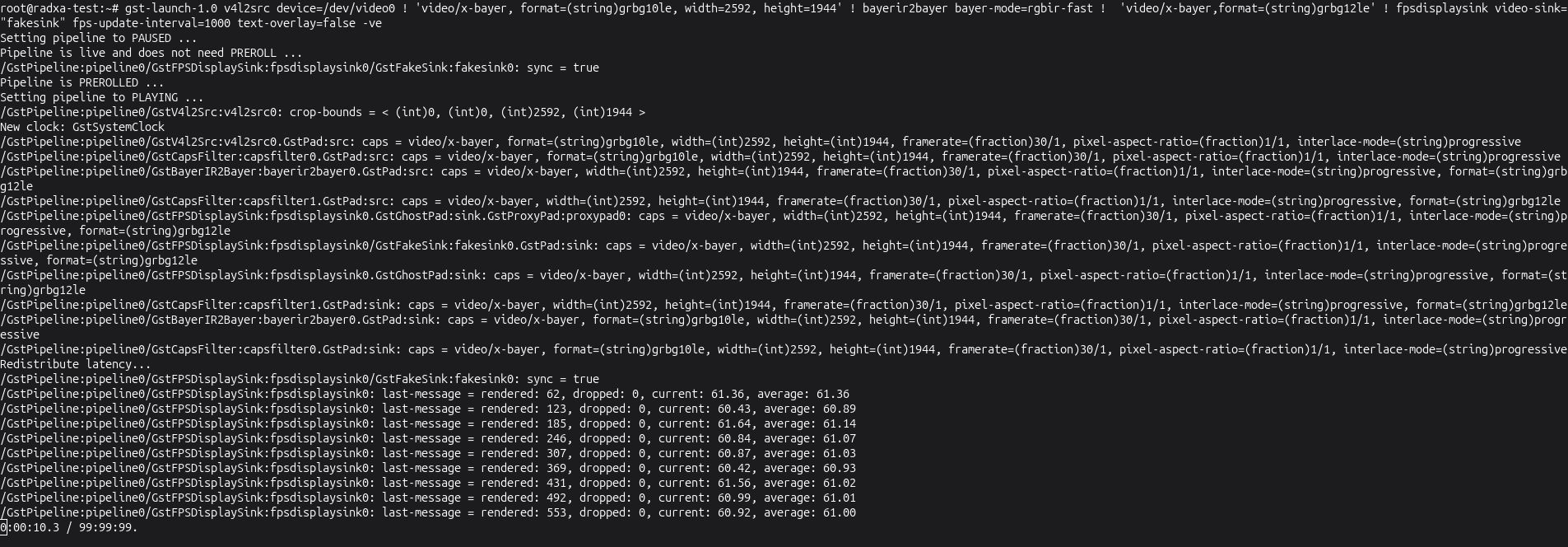
One of the biggest promises of our V2 module was the jump to 60 FPS using the 22-pin MIPI interface. Today, we’re showing the proof.
We’ve successfully benchmarked the camera running at a rock-solid 60 frames per second. This doubled frame rate delivers smoother motion, faster responsiveness, and sharper results when tracking movement in real time.
Efficiency: 60 FPS with Minimal CPU Load
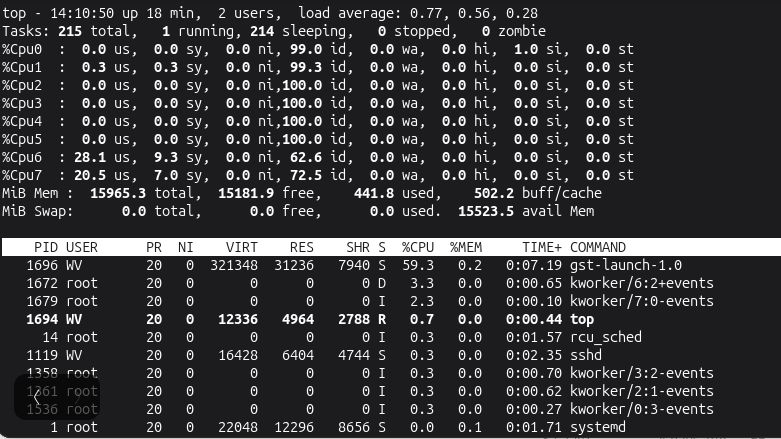
High frame rates usually mean high CPU overhead, but not here. Thanks to our custom hardware-accelerated decoder, much of the processing is reduced for the main processor.
In our tests, even while pushing full resolution 60 FPS, the CPU usage remains below 60% on just a single core (two cores x ~30%). This leaves the rest of your CPU power free to run your actual application, whether that’s an AI model, a web server, or a flight controller.
The "Secret Sauce" Pipeline
Here is the GStreamer pipeline we are using to convert the raw RGB-IR data into a standard Bayer format while maintaining that 60 FPS fluid motion:
bash
gst-launch-1.0 v4l2src device=/dev/video0 ! 'video/x-bayer, format=(string)grbg10le, framerate=1/60, width=2592, height=1944' ! bayerir2bayer bayer-mode=rgbir-fast !  'video/x-bayer,format=(string)grbg12le' ! fpsdisplaysink video-sink="fakesink" fps-update-interval=1000 text-overlay=false -ve