Project update 4 of 7
Seeing the Invisible — Exploring NIR Capabilities
by Waves VisionWelcome to our third weekly update! This week, we are pulling back the curtain on one of the most fascinating features of the Waves Vision 5MP GS Camera: its native support for near-infrared (NIR) imaging.
Because our sensor lacks a permanent IR-cut filter and supports dual-band filtering, it can perceive wavelengths of light that are completely invisible to the human eye. This opens up a world of "superpowers" for scientific, medical, and artistic applications. One of the key reasons we chose the OmniVision OX05B1S sensor is its near-infrared capability; it’s not just about speed, but about capturing details that standard cameras miss.
1. The "Transparent" Effect (Liquids)
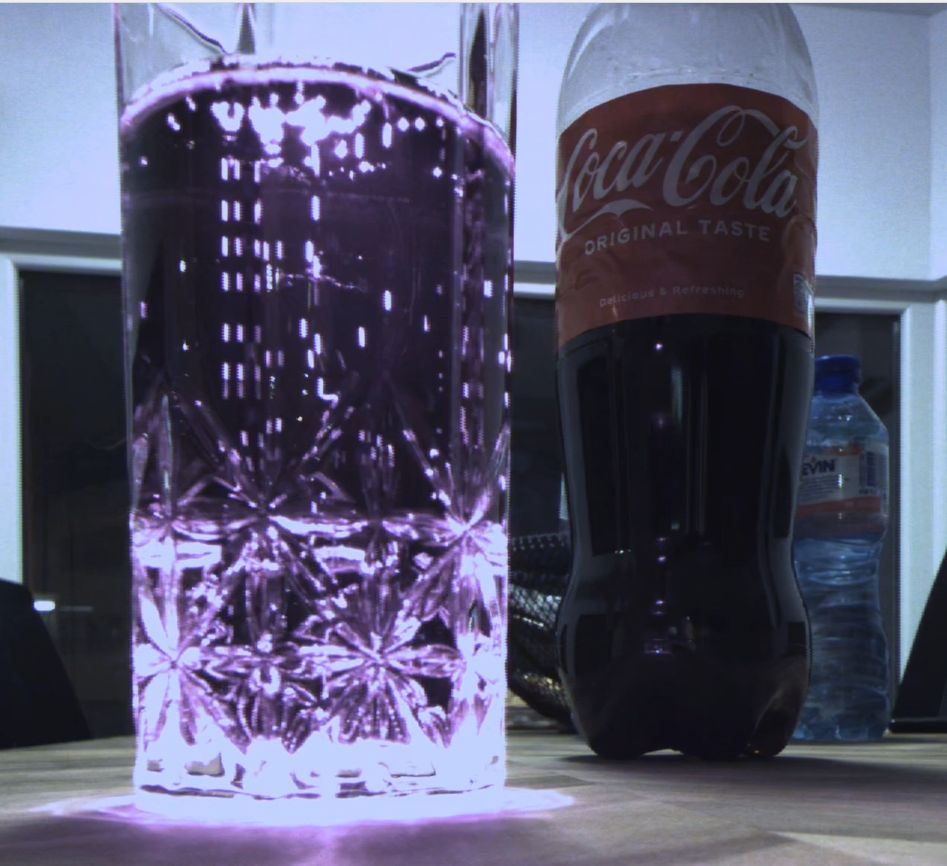
Have you ever wondered what’s inside your favorite drink? In the NIR spectrum, many organic liquids that appear dark or opaque to our eyes, like Coca-Cola or red wine, become almost entirely transparent.
How it Works
The chemical compounds in these liquids absorb visible light but allow NIR light to pass straight through. This is incredibly useful for industrial inspection, such as checking fill levels in dark bottles or detecting contaminants in opaque fluids without opening the seal.
2. Medical & Biological: Seeing Through Skin
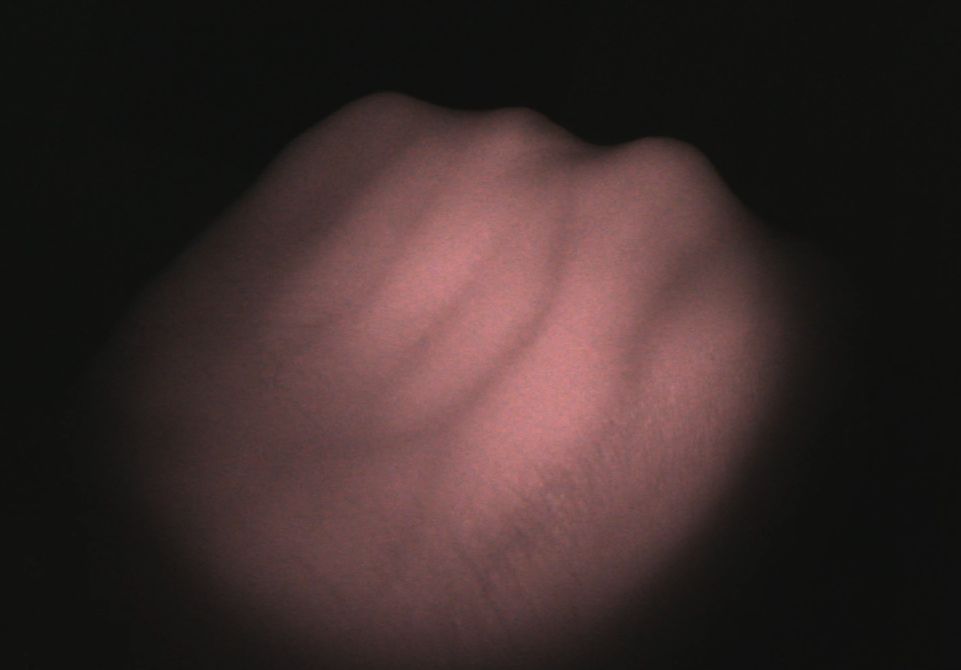
One of the most striking uses of NIR is its ability to penetrate human tissue. In our testing, we captured images where subcutaneous veins were clearly visible through the skin.
The Science
Hemoglobin in our blood has a very specific absorption peak for NIR light. While the surrounding skin scatters the light, the veins absorb it, creating a high-contrast map of the vascular system. This technology is the foundation for professional "vein-finder" medical devices, now accessible on your Raspberry Pi.
3. Day & Night Optimization (Image Fusion)
Our V2 hardware and custom drivers allow for advanced image processing techniques that aren’t possible with standard cameras:
- Night Mode (Boost): By adding IR data back into the frame during low-light conditions, we can generate clear, detailed images even in near-total darkness (using an IR illuminator).
- Day Mode (Subtraction): During the day, NIR light can sometimes cause "noise" or color shifts in standard photos. Our driver can intelligently subtract the NIR data to normalize the image, resulting in crisper daylight colors and better dynamic range.
Technical Tip: Using the NIR Plugin
To make the most of these features, we’ve optimized our GStreamer debayer plugin. It is specifically designed to handle the interleaved data from the NIR-enhanced sensor, allowing you to toggle between "Standard RGB" and "NIR-Enhanced" modes with minimal latency.
You can get more information about our debayer plugin our GitHub repo, but basically we have the following modes:
filter-ir: Apply IR filter to RGB components.
Flags: readable, writable, controllable
Type: GstIRFilter
Default: none (0)
| Value | Name | Description |
|---|---|---|
| 0 | none | IR filter disabled |
| 2 | day | Standard daylight IR filter |
| 1 | night | Standard nighttime IR filter |
| 3 | add | Custom additive IR filter |
| 4 | subtract | Custom subtractive IR filter |
Project Status
We’re making strong progress toward our goal, now over 46% funded! Please consider backing this open source project.
Do you have a question or feedback about our project? You can:
- Ask a Question: Use the link on the campaign page.
- Email us directly: contacts@wavesvision.com
Thank you for supporting innovation in the Pi ecosystem!