Polpotronics LLC
Audio & Music
Networking
PicoIDE
An open source IDE/ATAPI drive emulator for vintage computers

Funding ended on Mar 05, 2026 at 03:59 PM PST.
Polpotronics LLC
Audio & Music
Networking
Funding ended on Mar 05, 2026 at 03:59 PM PST.
PicoIDE is an open-source IDE/ATAPI drive emulator that replaces aging hard drives and CD-ROM drives in vintage computers with solid-state microSD card storage. Simply put your disc/disk images on a microSD card and swap between them as needed. Powered by open-source hardware and software, PicoIDE means you no longer have to deal with burning optical discs, worn out lasers, crashed heads, or bad sectors.
As the vintage computing hobby grows in popularity, the mechanical drives that these systems depend on are increasingly failing while at the same time, replacements are becoming scarcer and more expensive. Optical drives fail as laser assemblies weaken and mechanisms wear out. Spinning hard drives from the 80s and 90s are well past their expected lifespan.
By emulating IDE hard drives and ATAPI CD-ROM drives via images on microSD, PicoIDE solves this problem by providing compatibility with IDE-equipped vintage computers and other devices. Your computer and its operating system sees a real drive, but behind the scenes, everything runs from images stored on a fast microSD card.
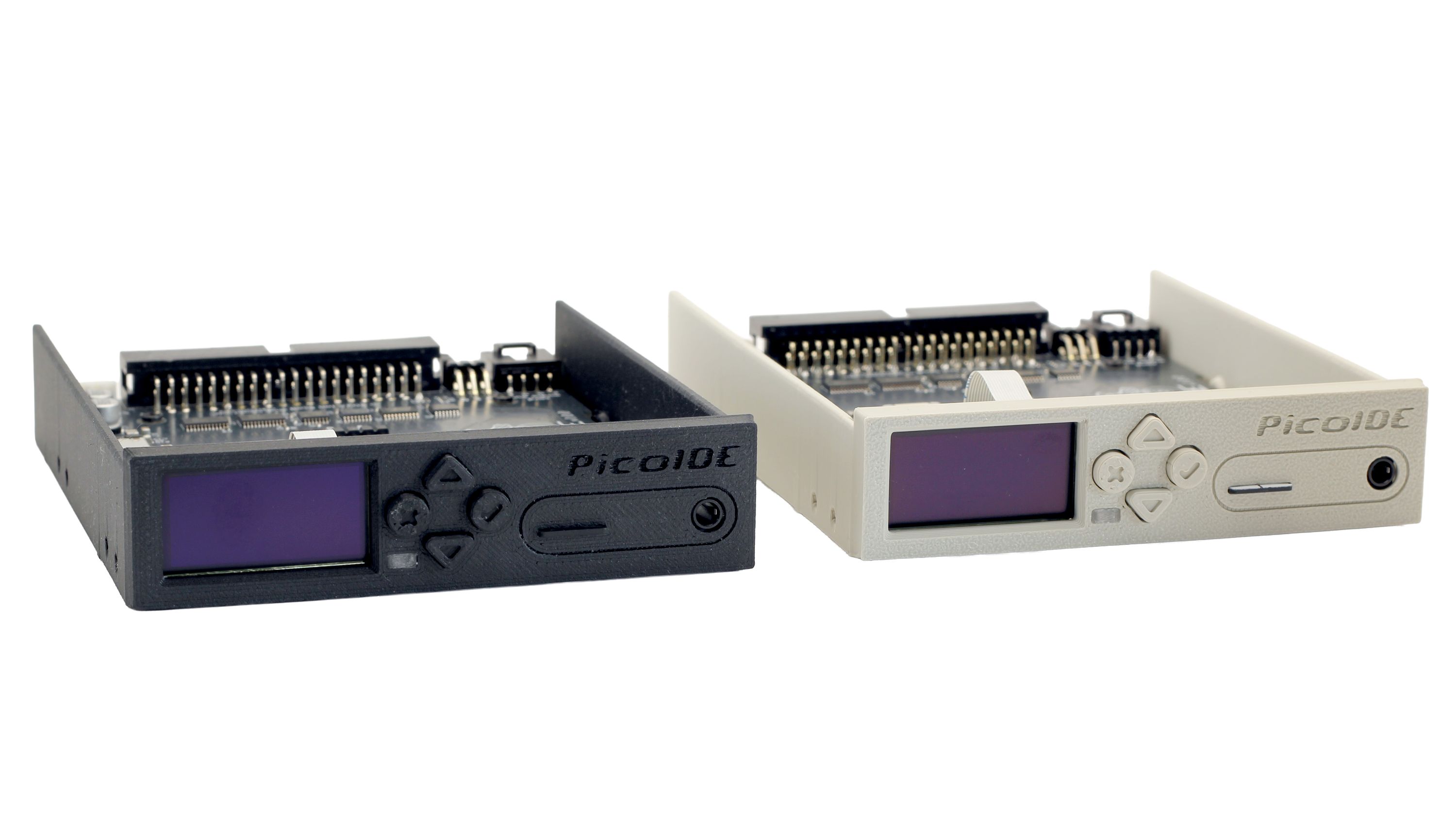
Built around the Raspberry Pi RP2350 microcontroller, PicoIDE offers two versions:
PicoIDE Base: Full IDE/ATAPI emulation in an injection molded 3.5-inch enclosure with microSD storage, CD audio output, and configuration via host utility or config file.

PicoIDE Deluxe (Beige or Black): Everything in Base, plus a front panel with OLED display, navigation buttons, and ESP32-powered Wi-Fi for wireless image management.
The golden age of CD-ROM gaming, roughly 1993 to 2000, produced some of the most memorable PC games ever made. Titles like The 7th Guest, Myst, Wing Commander III, MechWarrior 2, and countless others shipped on CDs that combined data, full-motion video, and in some cases, "redbook" CD audio tracks. These mixed-mode discs relied on real CD-ROM drives with analog audio outputs, something that DOS-based virtual drive solutions cannot replicate.
PicoIDE changes this by allowing you to load your entire CD game library onto a microSD card in .bin/.cue or .iso format. You can organize games into directories and switch between them instantly using the front panel interface, or use the DOS host utility to select the proper disc image in a batch file before launching each game.
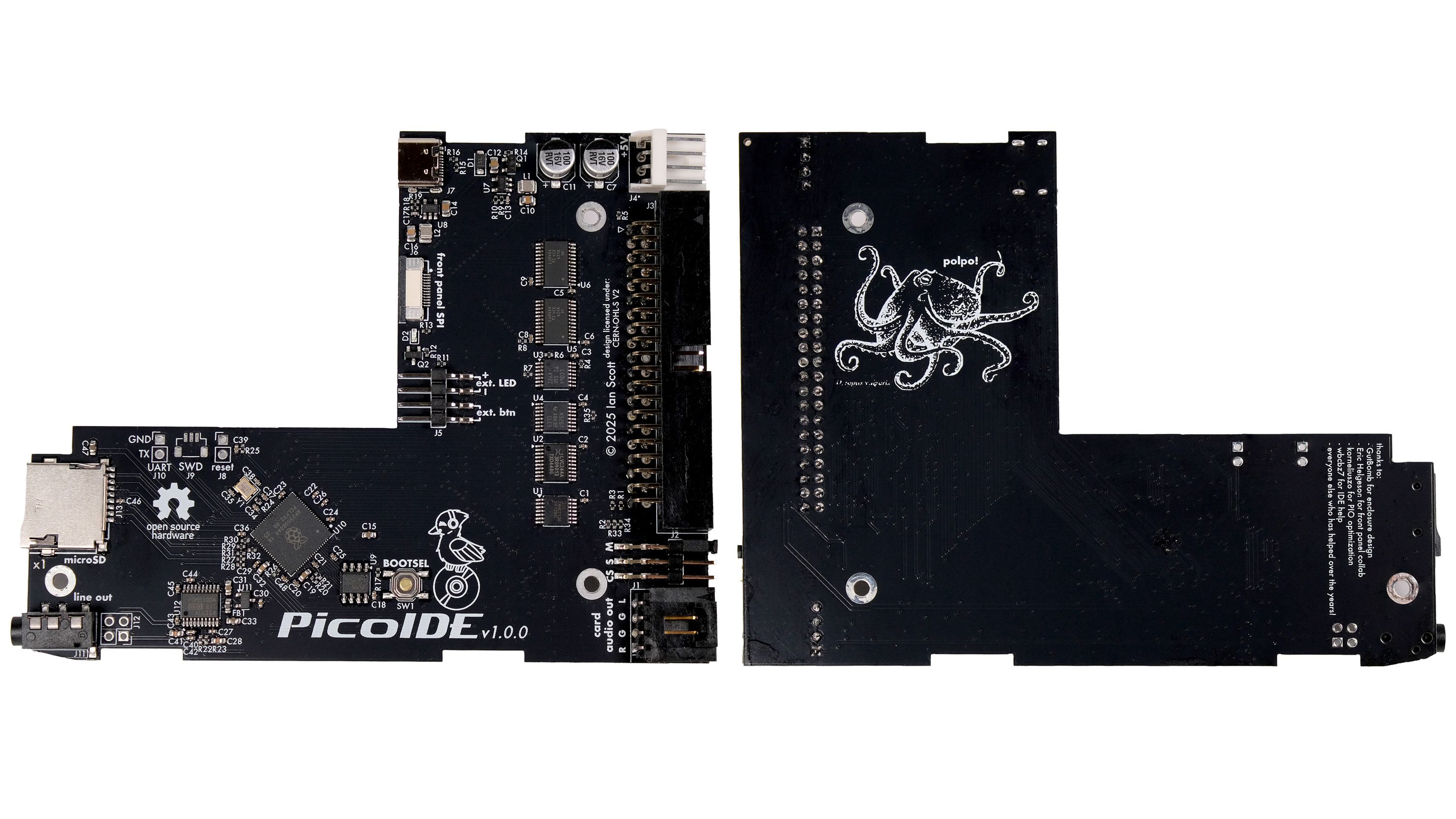
Audio is a first-class feature on PicoIDE, and the built-in TI PCM5100A DAC delivers high-quality analog CD audio through both an MPC-2 header and 3.5mm line-out jack. Connect the MPC-2 header to your sound card’s CD audio input, and you’ll hear your games’ CD audio soundtracks exactly as the original.
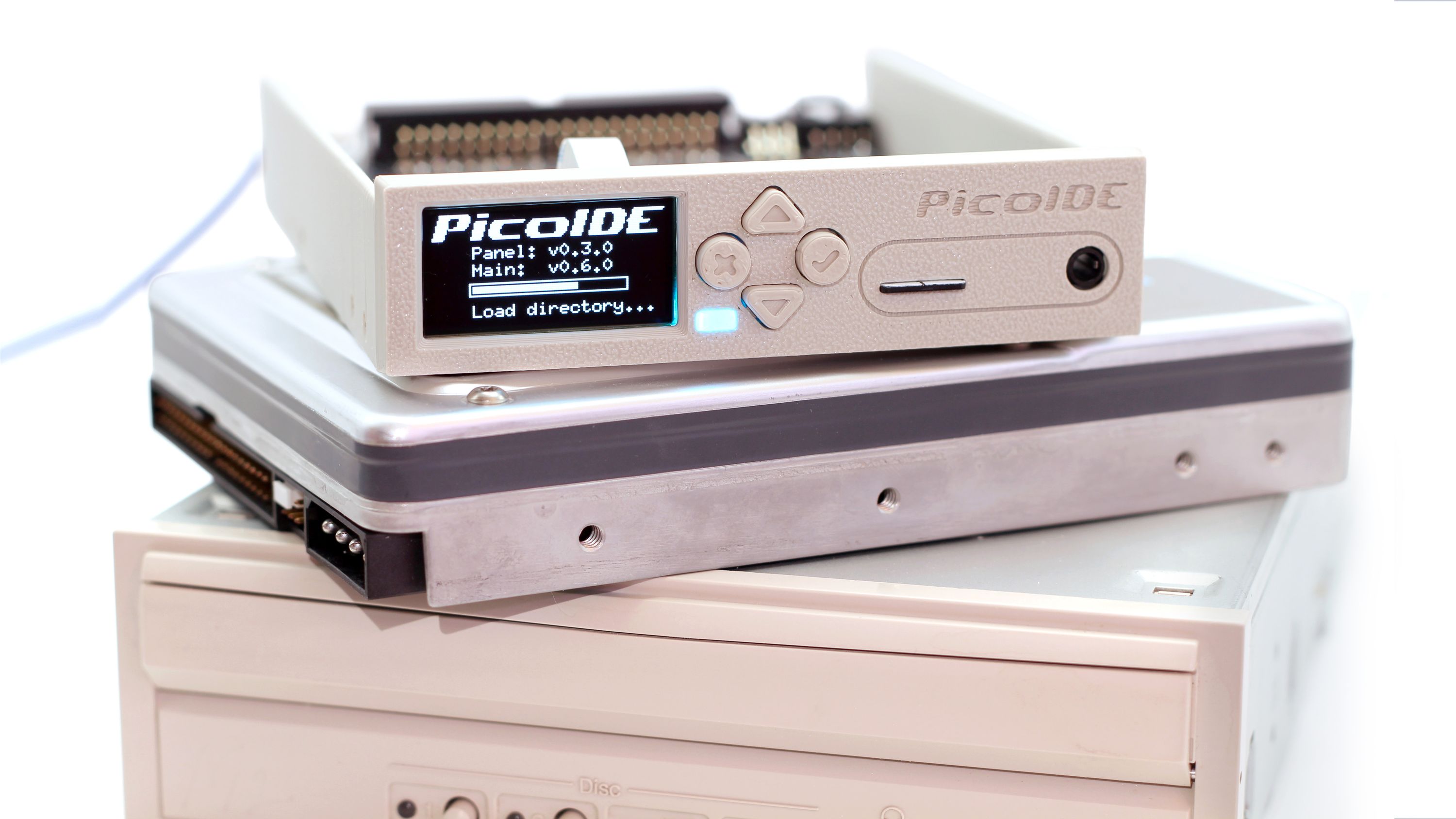
In addition to supporting CD-ROMs, PicoIDE is a complete IDE hard drive replacement.
Early 90s PCs present unique challenges for storage replacement. Many predate LBA support entirely, with BIOS limitations that only recognize specific drive geometries. Finding working replacement drives that match these geometry requirements is becoming nearly impossible, and the drives that remain are living on borrowed time.
PicoIDE emulates drive geometries specified in the .vhd image footer or via configuration file. You can create multiple drive images with different DOS, Windows 3.1, OS/2, or other installations as needed, and on the fly switch the image to load at next boot. Create separate images for different projects, software configurations, or operating systems, all accessible from a single microSD with no need to juggle cards. PicoIDE’s ability to spoof specific vendor/model strings in its configuration means it can work with systems hard-coded to expect certain drives.
The image support means you can create and modify disk images on modern systems using emulators like 86Box or WinUAE, then use them on PicoIDE seamlessly.
PicoIDE is fully open source under licenses designed to protect your freedom to use, modify, and build upon the project:
All design files and source will be available on our GitHub repository before shipping, and the project documentation is currently available.
This openness is a commitment to the vintage computing community. We’ve already received valuable feedback and feature suggestions, including uses we hadn’t considered: hard drive replacement for multi-track recorders and samplers, CD-ROM emulation for arcade cabinets, and more.
By maintaining everything as open source, we enable the community to develop special support for niche applications, fix bugs, add features, and ensure that PicoIDE remains useful for decades to come. Want to adapt PicoIDE’s hardware to a specific form factor or firmware to a special use case? We welcome it!
When I started the project that turned into PicoIDE, I set out to make the IDE emulator that I’d want to have: open source, open hardware, affordable, and a joy to use. The whole time I’ve been in the retrocomputing hobby, I’ve wanted a way to do away with burning optical discs or flaky CF/SD card adapters on systems that don’t tolerate them, and I’ve wanted something with a nicer way to browse images than the tiny screen on other drive emulators like the Gotek. PicoIDE is my dream drive emulator brought to life.
I’m grateful to everyone in the vintage computing and open hardware communities who have tested prototypes, suggested features, and provided inspiration along the way. PicoIDE is better because of you. Being open source will allow PicoIDE to flourish in a way that my previous open hardware project, the PicoGUS has done.
| PicoIDE Base | PicoIDE Deluxe | SD2IDE | IDE Simulator v3 | ZuluIDE v2 | |
|---|---|---|---|---|---|
| Manufacturer | Polpotronics | Polpotronics | Phenom Mod | Tattiebogle | Rabbit Hole Computing |
| Front panel control + OLED | DIY upgradeable | yes, 1.3" OLED | headers for buttons | DIY headers for rotary encoder + OLED | DIY version available |
| Transfer modes | PIO 0-4, MWDMA 0-2 | PIO 0-4, MWDMA 0-2 | PIO 0-4, MWDMA 0-2, UDMA 0-6 | PIO 0-4, MWDMA 0-2 | PIO 0-4, UDMA 0-2 |
| Wi-Fi control | DIY upgradeable | yes, full featured w/ file upload | no | no | $10 addon or DIY + $6 Pico-W + DIY solder or wire |
| CD Audio output | integrated, MPC-2 and 3.5 mm connectors | integrated, MPC-2 and 3.5 mm connectors | integrated, 3.5 mm jack | integrated, pin header | $10 addon, MPC-2 connector |
| Enclosure | full size, injection molded | full size, front panel, injection molded | yes, 3D printed | DIY 3D printed | slim internal, 3D printed |
| Open Source | HW + SW | HW + SW | Planned | No | SW (partial) |
| Availability | Crowdfunding | Crowdfunding | Pre-order | Available | Available |
| Price | $69 | $110 | $139 | $100 | $89 |
The PicoIDE GitHub Repository includes the following:
Complete documentation is available at picoide.com/docs, including:
PicoIDE is part of the Soldered Electronics Inkubator at Crowd Supply, a program designed to help open-source hardware creators bring their projects to market.
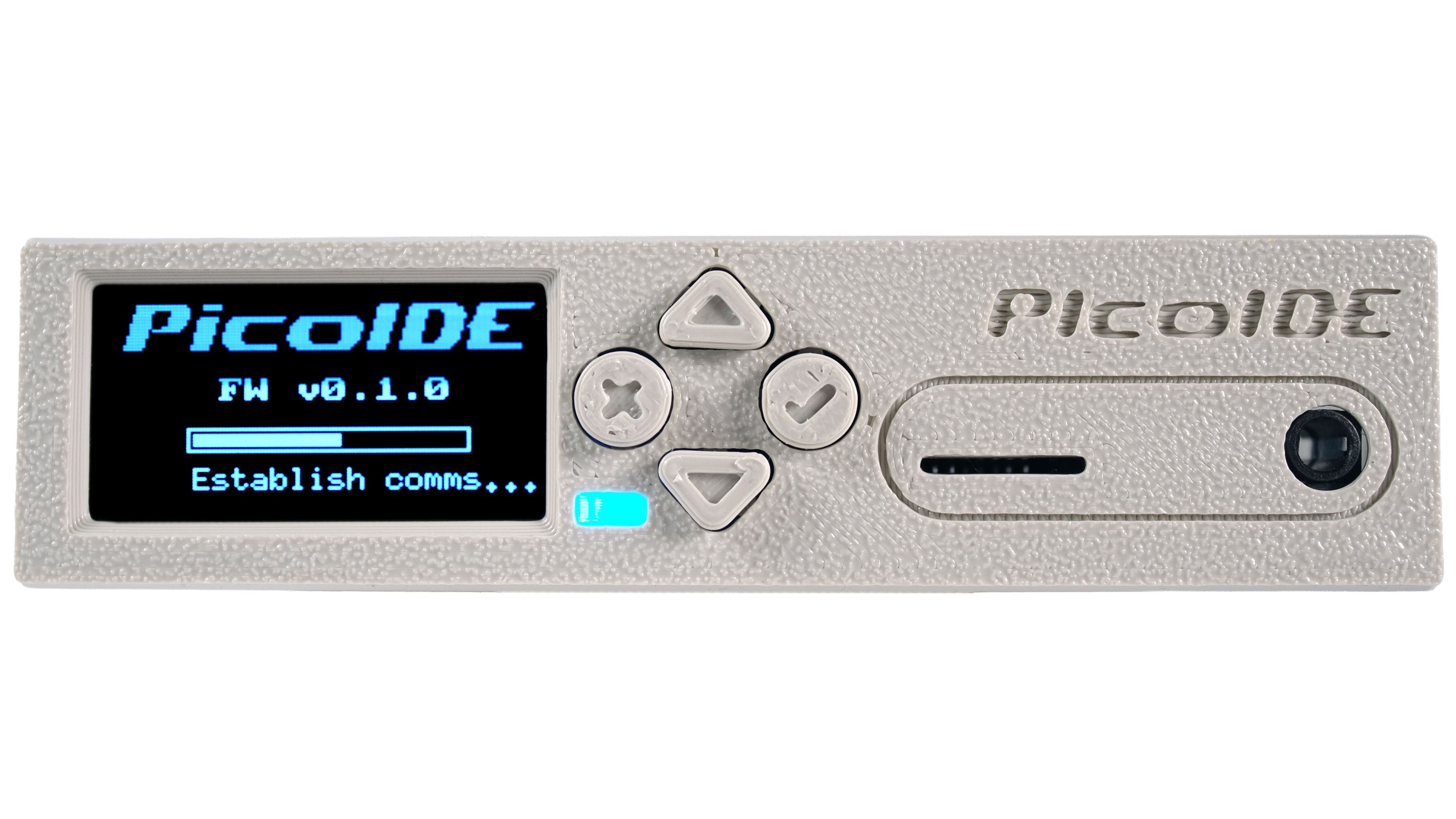
Soldered Electronics will handle all manufacturing of PicoIDE, including PCB fabrication and assembly, enclosure production, final assembly, testing, and kitting. Based in Osijek, Croatia, Soldered has extensive experience manufacturing open-source hardware and has been a part of numerous successfully launched products on Crowd Supply. Their established relationships with component suppliers and proven production processes give us confidence in delivering a quality product on schedule.
All components have been selected for availability and manufacturability. The RP2350 and ESP32-C3 both have stable supply chains with multiple authorized distributors. The injection-molded enclosures will be produced using tooling designed in collaboration with Soldered’s manufacturing team based on our designs.
Each unit will undergo functional testing before kitting, including IDE interface verification, SD card read/write verification, and for the Deluxe version, front panel display and button testing. Firmware will be pre-loaded and verified as part of the testing process.
Orders will ship from the United States via Crowd Supply’s fulfillment service. Crowd Supply handles worldwide shipping, customs documentation, and tracking for all orders.
Each PicoIDE will ship in a retail-ready box containing the fully assembled PicoIDE unit (Base or Deluxe as ordered) and mounting screws.
After the campaign successfully funds, we expect to begin shipping within 1-2 months. We have already completed hardware engineering and design validation (EVT and DVT) and are proceeding with production validation test (PVT) in parallel with the campaign.
Backers will receive regular updates throughout the campaign and fulfillment process. We’ll share progress on manufacturing, any schedule changes, and firmware development milestones.
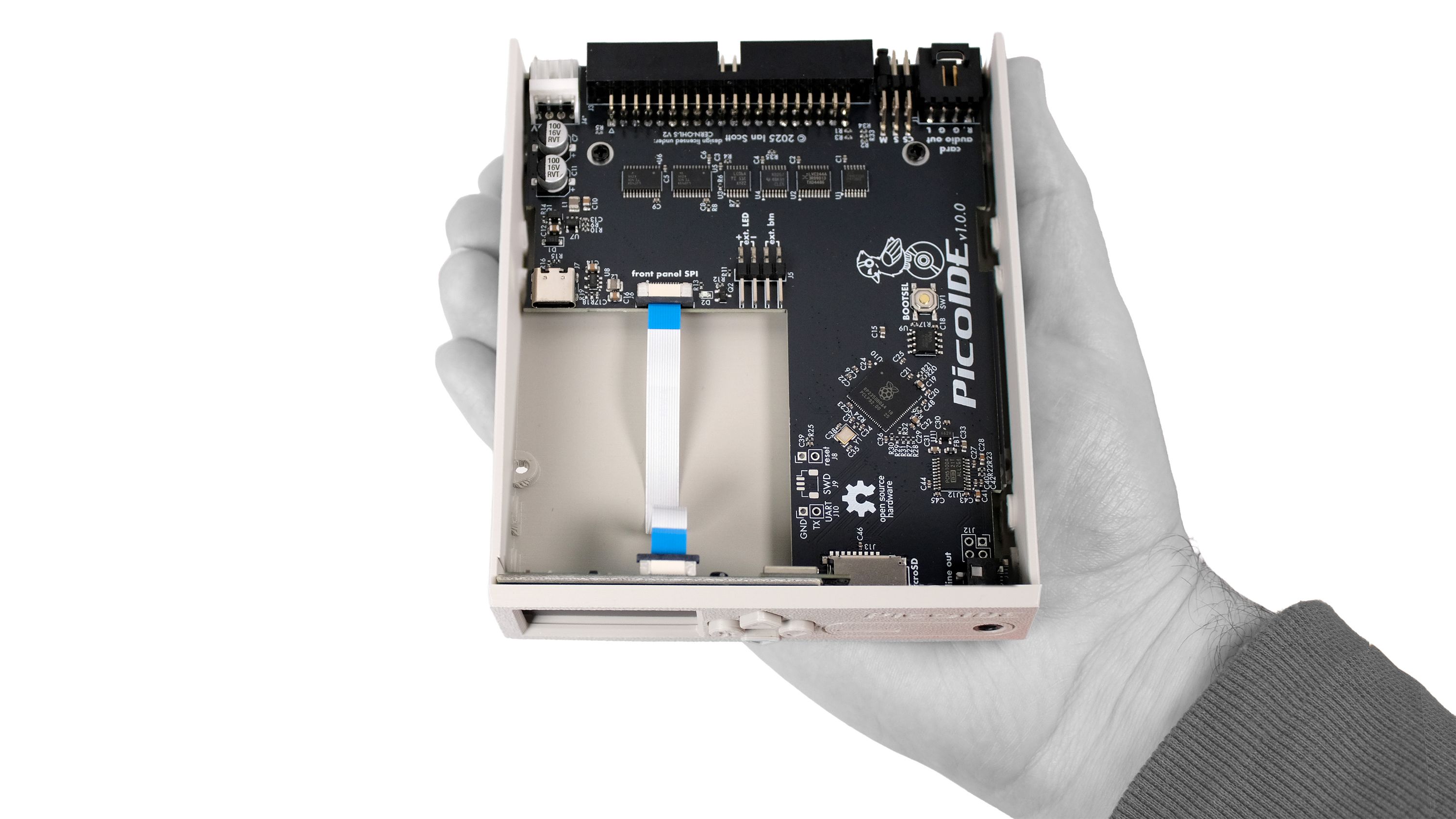
Risk: Semiconductor supply chain disruptions could delay component procurement.
Mitigation: We have selected components with multiple sources and good availability. The RP2350 and ESP32-C3 are both mature products with established supply chains. We will place component orders promptly after funding to lock in lead times.
Risk: PCB assembly or enclosure manufacturing could experience delays. Injection molding in particular can have longer lead times than other parts of the product.
Mitigation: Partnering with Soldered Electronics who have an excellent track record and plenty of experience in device manufacturing will help mitigate these issues, and we have built schedule buffer into our timeline. We will provide transparent updates if any delays occur.
Risk: Injection mold tooling could require revisions, adding time and cost.
Mitigation: We have worked closely with Soldered Electronics during the design phase to ensure the enclosure is suitable for injection molding. Minor adjustments have already been incorporated based on their feedback.
Risk: Edge cases in IDE/ATAPI protocol handling could cause compatibility issues with certain systems.
Mitigation: PicoIDE has been tested extensively with a variety of vintage systems during development. As an open-source project, we welcome community input to help address any issues discovered by backers. Firmware updates can be easily applied with a microSD card.
Risk: Some vintage systems may have unusual IDE implementations that cause compatibility problems.
Mitigation: The firmware supports extensive configuration options including custom vendor/model strings and transfer mode overrides. If specific systems require special handling, we can add support in firmware updates. The open-source nature of the project means the community can also contribute fixes.
We are committed to transparent communication throughout this project. If issues arise, backers will be informed promptly with honest assessments and updated timelines.
PicoIDE is part of Soldered Electronics Inkubator




Produced by Polpotronics LLC in Colorado, USA.
Sold and shipped by Crowd Supply.
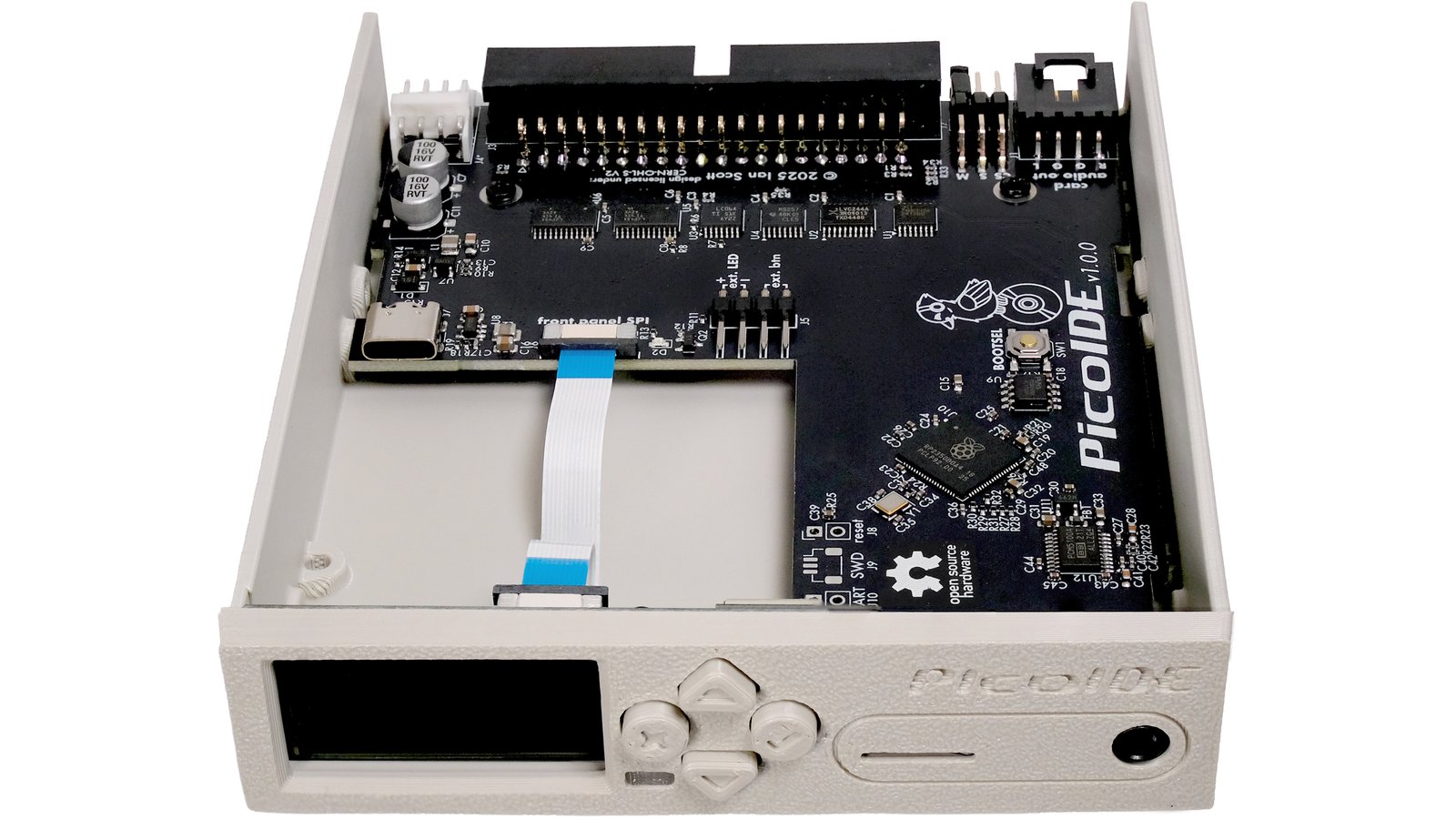
Fully assembled PicoIDE base board, beige ABS injection molded enclosure, front panel with WiFi module, screen and buttons.
Want to buy this item? Check the current project page for the latest information.
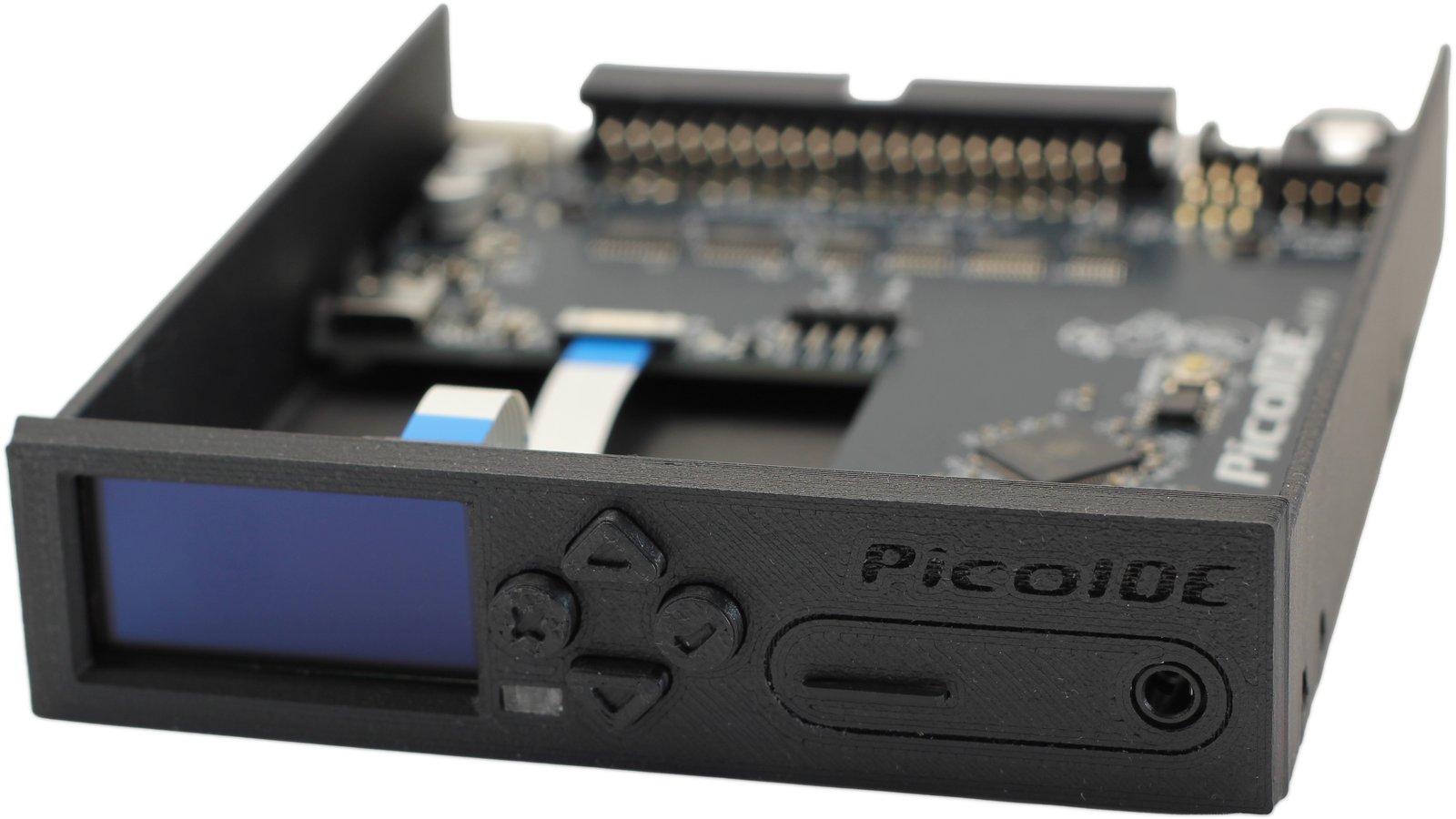
Fully assembled PicoIDE base board, black ABS injection molded enclosure, front panel with Wi-Fi module, screen and buttons.
Want to buy this item? Check the current project page for the latest information.
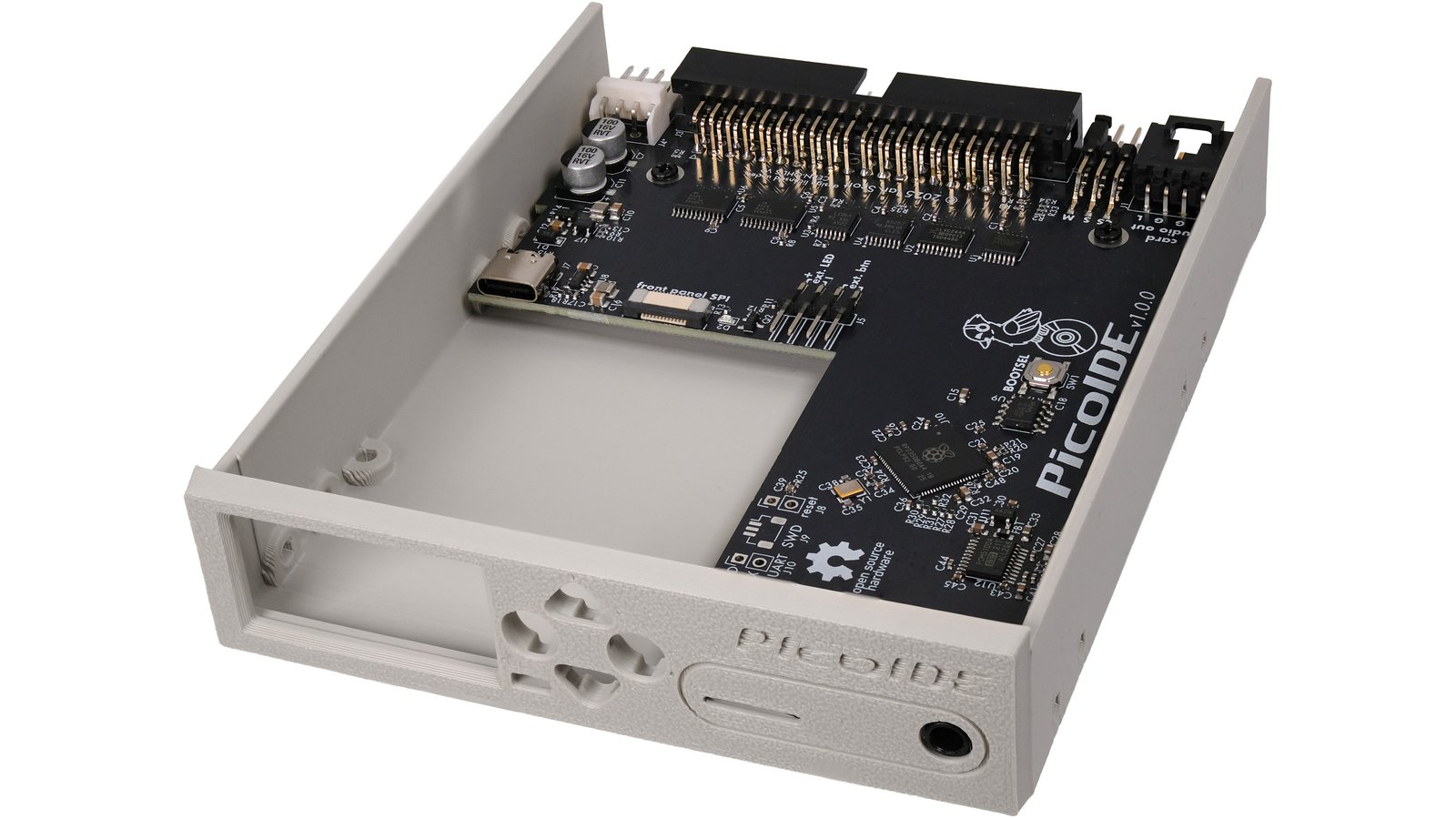
Fully assembled PicoIDE board in an ABS injection molded enclosure, no front panel components included.
Want to buy this item? Check the current project page for the latest information.
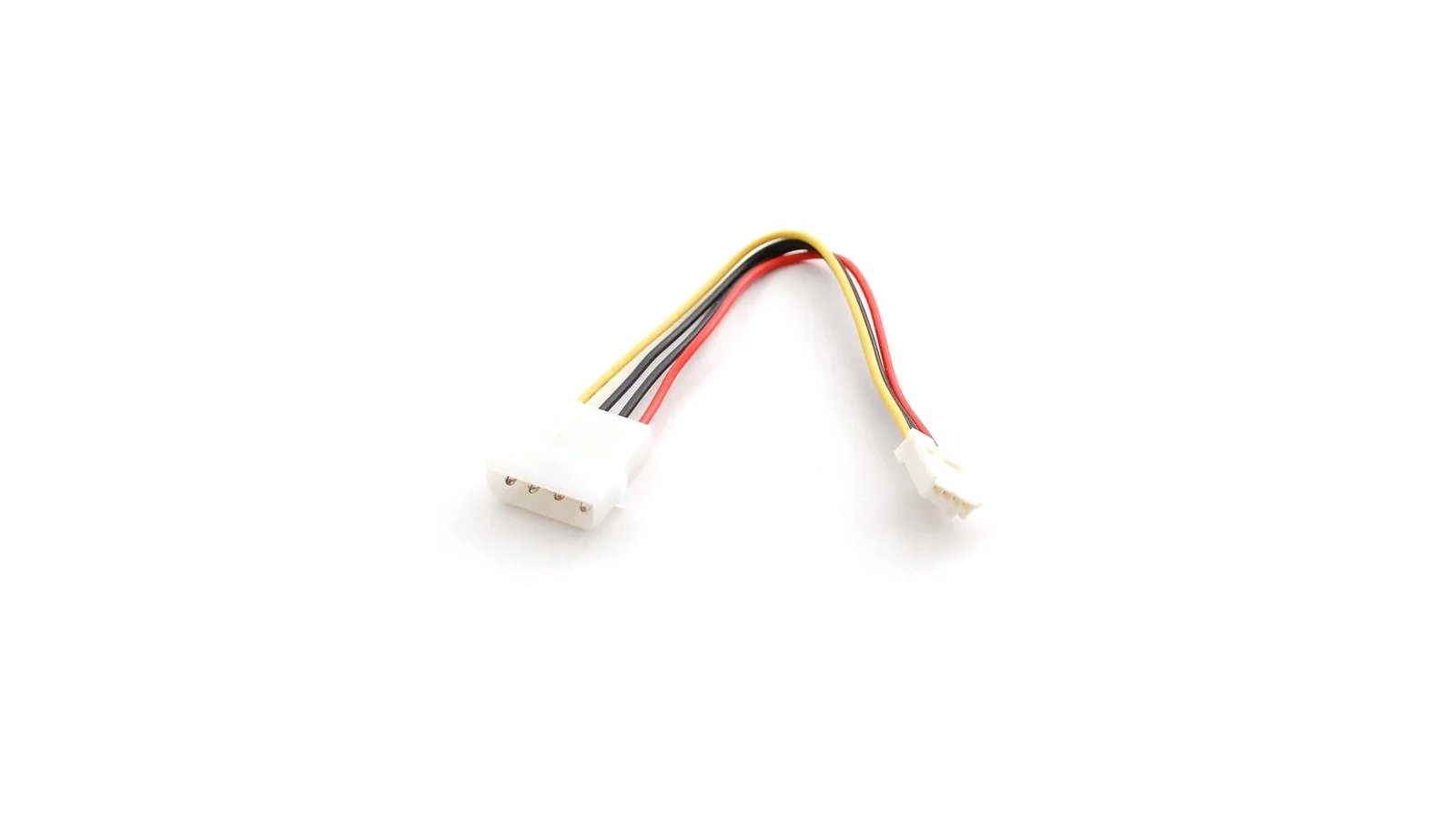
From the Adafruit Cables project.
One 50-mm long, four-wire, 20 AWG cable with Molex connector on one end and a Berg Floppy Drive Power connector on the other for interfacing drives (or other peripherals to standard AT or ATX power supplies.
Want to buy this item? Check the current project page for the latest information.
· polpotronics.com · polpotronics.com
We create fun new open hardware for fun old computers.