bUniProbe
An open source wireless, multi-protocol, multi-voltage tool for hardware debugging
This project is launching soon.
0
updates
updates
This project is launching soon.
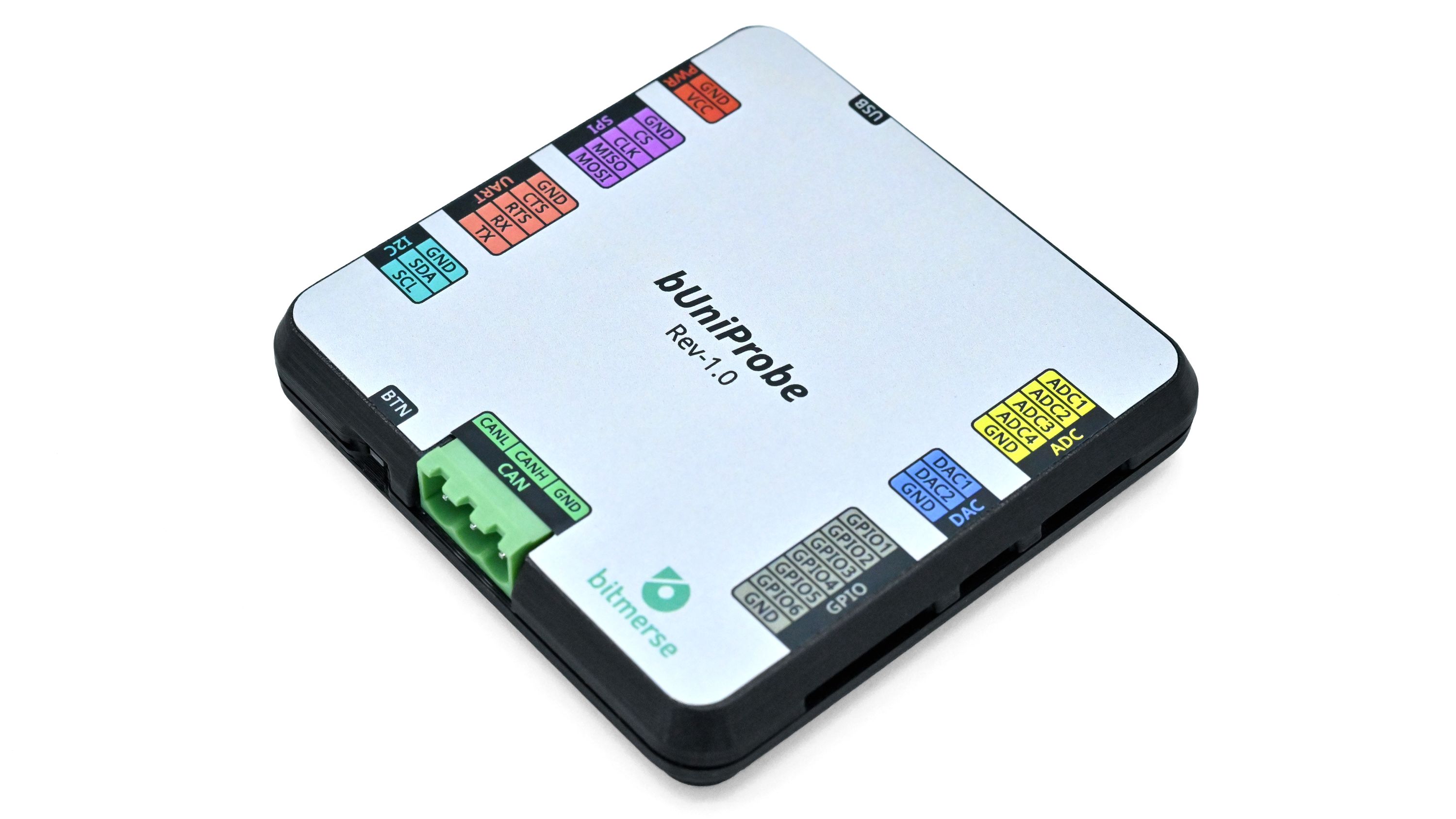
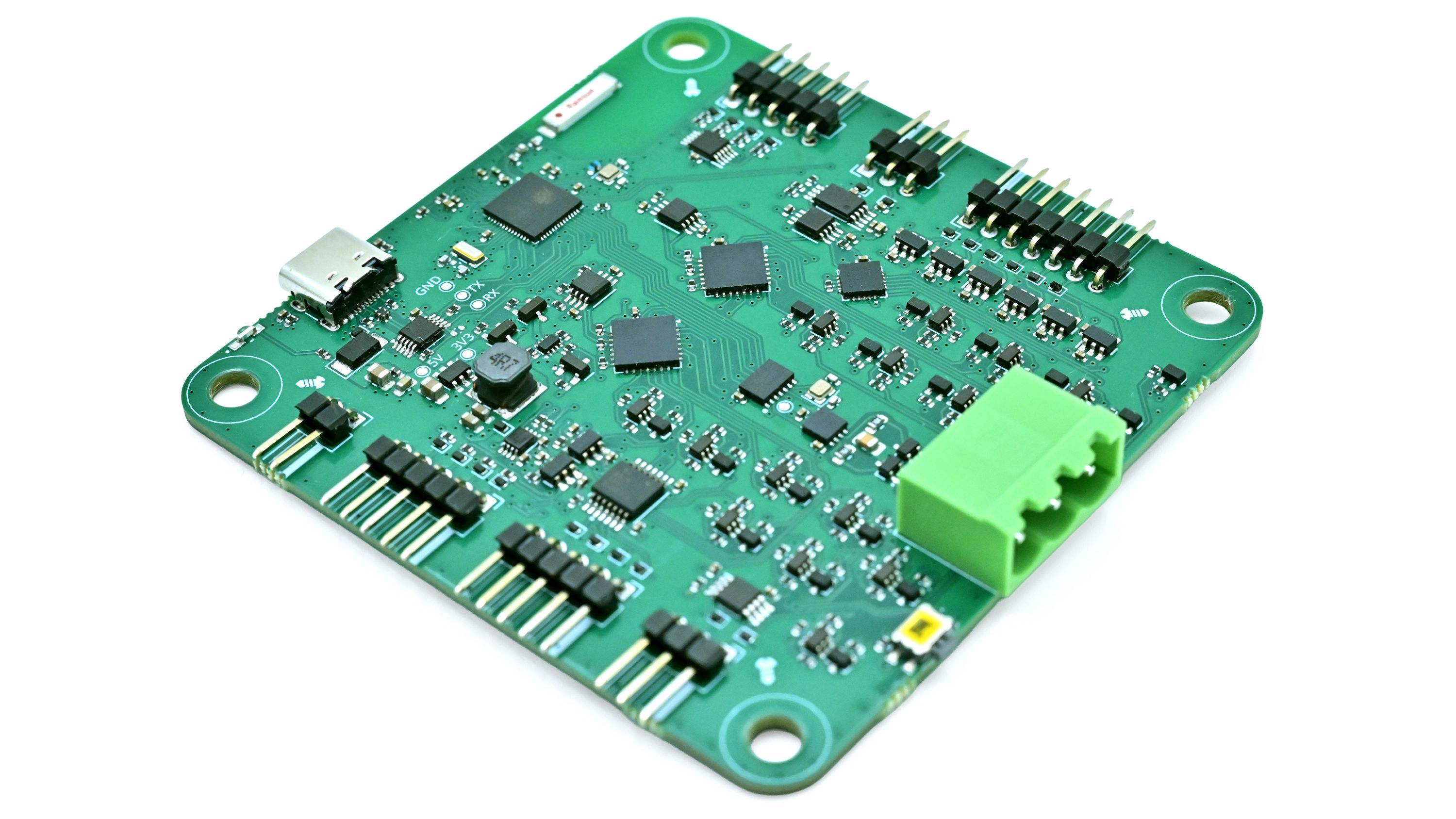
bUniProbe is a compact, wireless tool that brings multiple hardware interfaces into a single, unified platform. It supports SPI, I²C, UART, CAN, GPIO, ADC, and DAC, enabling you to interact with a wide range of devices without switching between tools.
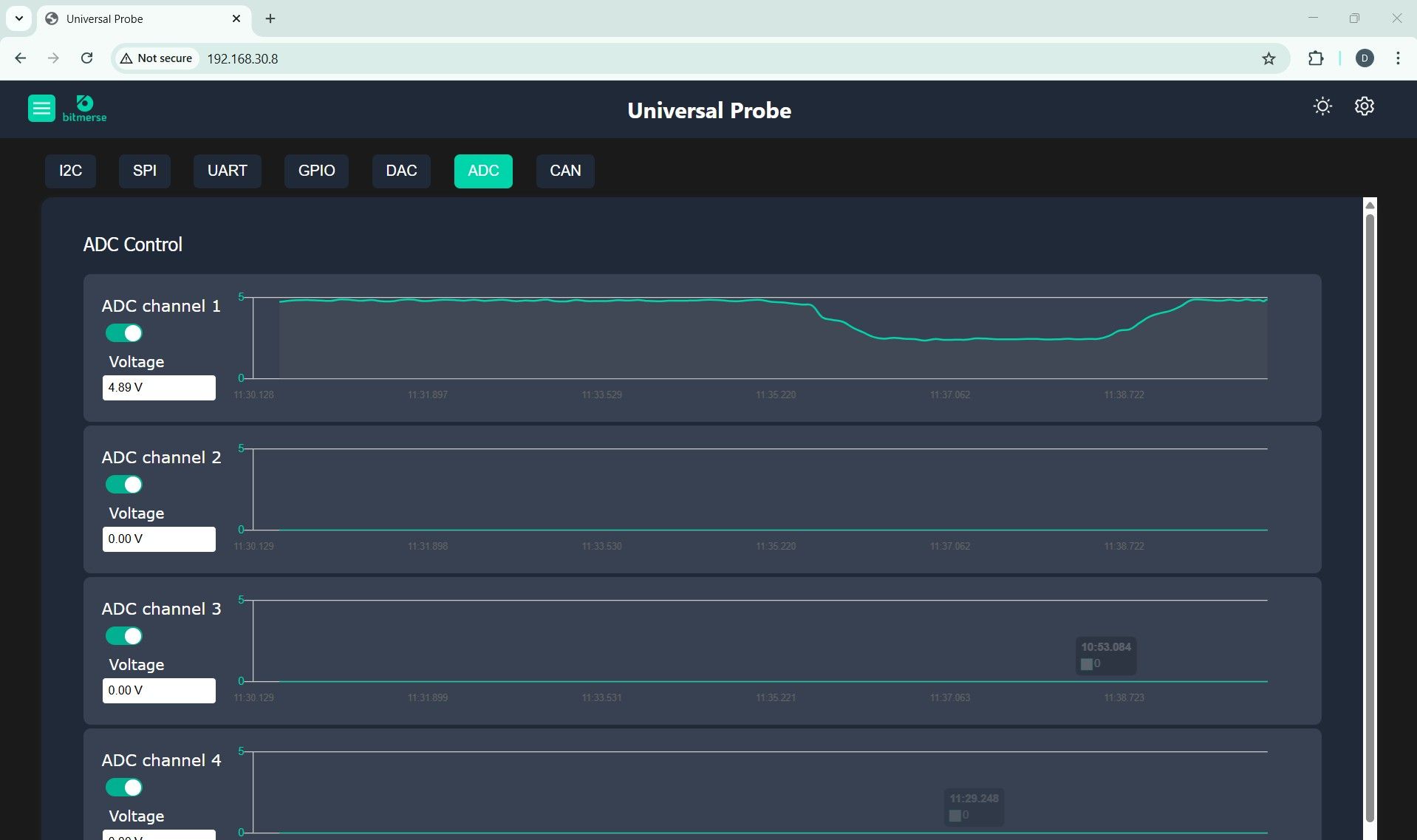
The device hosts its own browser-based interface over Wi-Fi, allowing you to monitor signals, send and receive data, and control hardware in real time from any device - no drivers or software installation required. By bringing communication interfaces and signal monitoring into a single platform, bUniProbe reduces setup complexity and speeds up debugging, testing and development. It also supports multi-user access and REST APIs, making it suitable for both collaborative debugging and automated test environments.
No drivers. No installations. No hassle.
bUniProbe is designed to simplify and accelerate hardware debugging by bringing multiple communication and signal interfaces into a single, unified platform. During hardware bring-up and firmware development, engineers often need to switch between different tools to test SPI, I²C, UART, or CAN devices, while also probing GPIO states or measuring analog signals. bUniProbe eliminates this fragmentation by combining protocol-level interaction with signal-level visibility, allowing users to monitor GPIO, read ADC values, generate DAC outputs, and communicate over buses - all from a single browser-based interface. This makes it easier to validate designs, troubleshoot issues, and iterate quickly without complex setups or additional software.
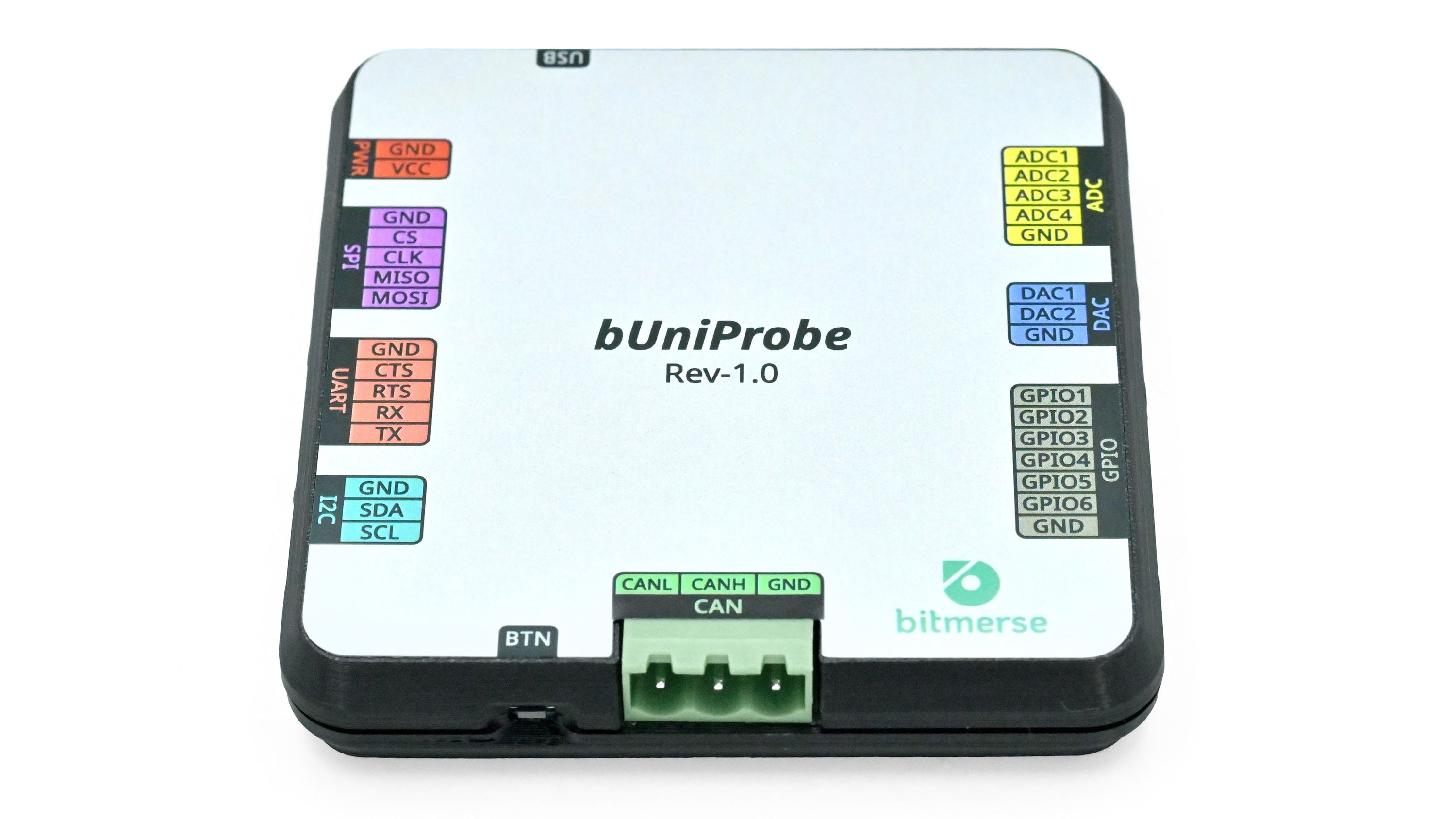
It also addresses several practical challenges that arise in real-world debugging. Issues like voltage mismatches, floating GPIO lines, and unstable analog or digital signals often require external components and manual intervention. With configurable logic levels and per-GPIO pull-up/down control, these problems can be resolved directly from the interface. The ability to observe signals in real time while actively controlling them (via GPIO or DAC) provides deeper insight into system behavior. Additionally, its wireless and multi-user capability enables collaborative debugging, where multiple engineers can monitor and interact with the system simultaneously - something that is difficult with traditional USB-based tools. Combined with REST API support, bUniProbe can be used not only for manual debugging but also for automated testing and custom tool development.
Control and monitor:
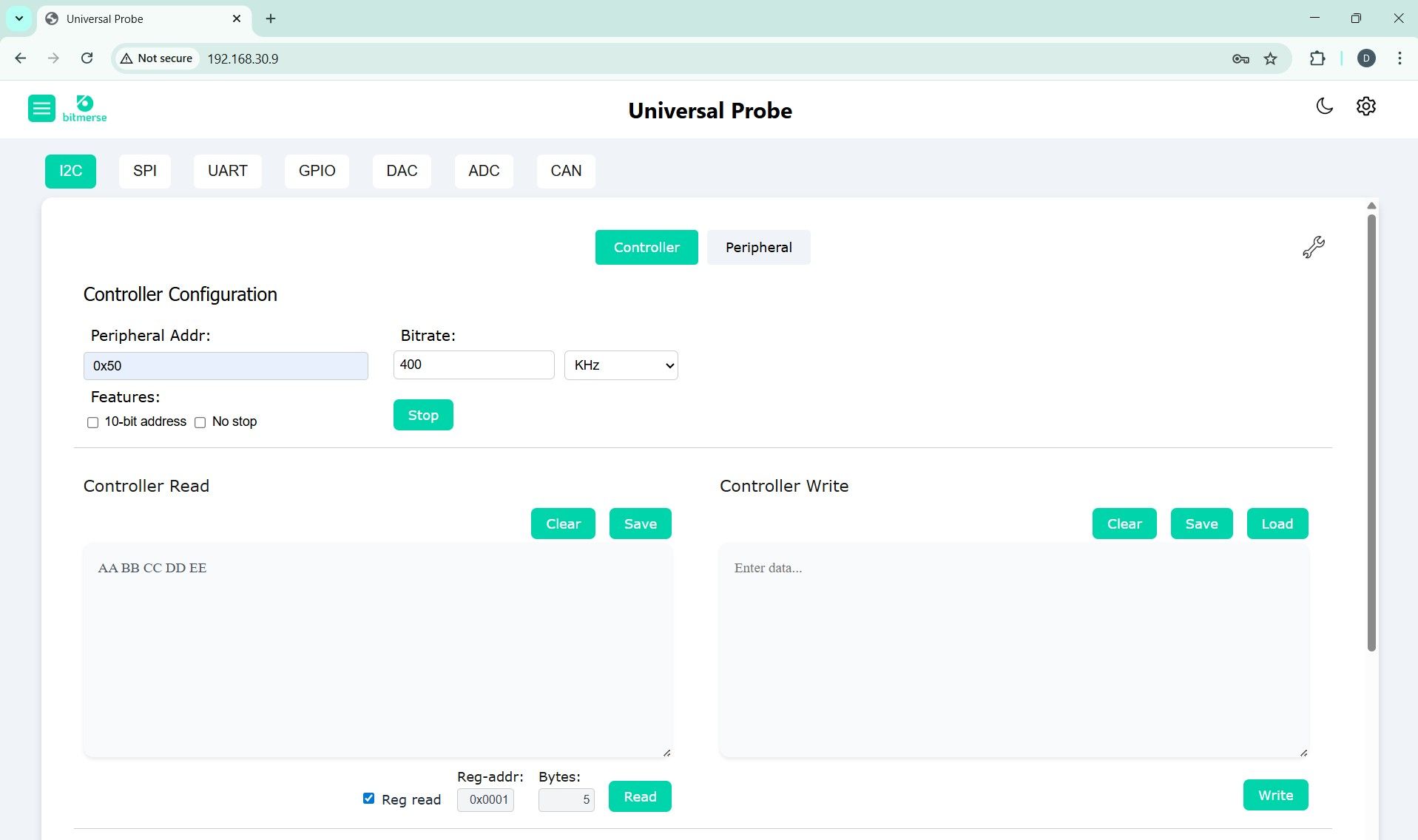
Provides REST APIs for all supported interfaces, allowing developers to:
You can fully control and monitor all interfaces programmatically, beyond the built-in web dashboard.
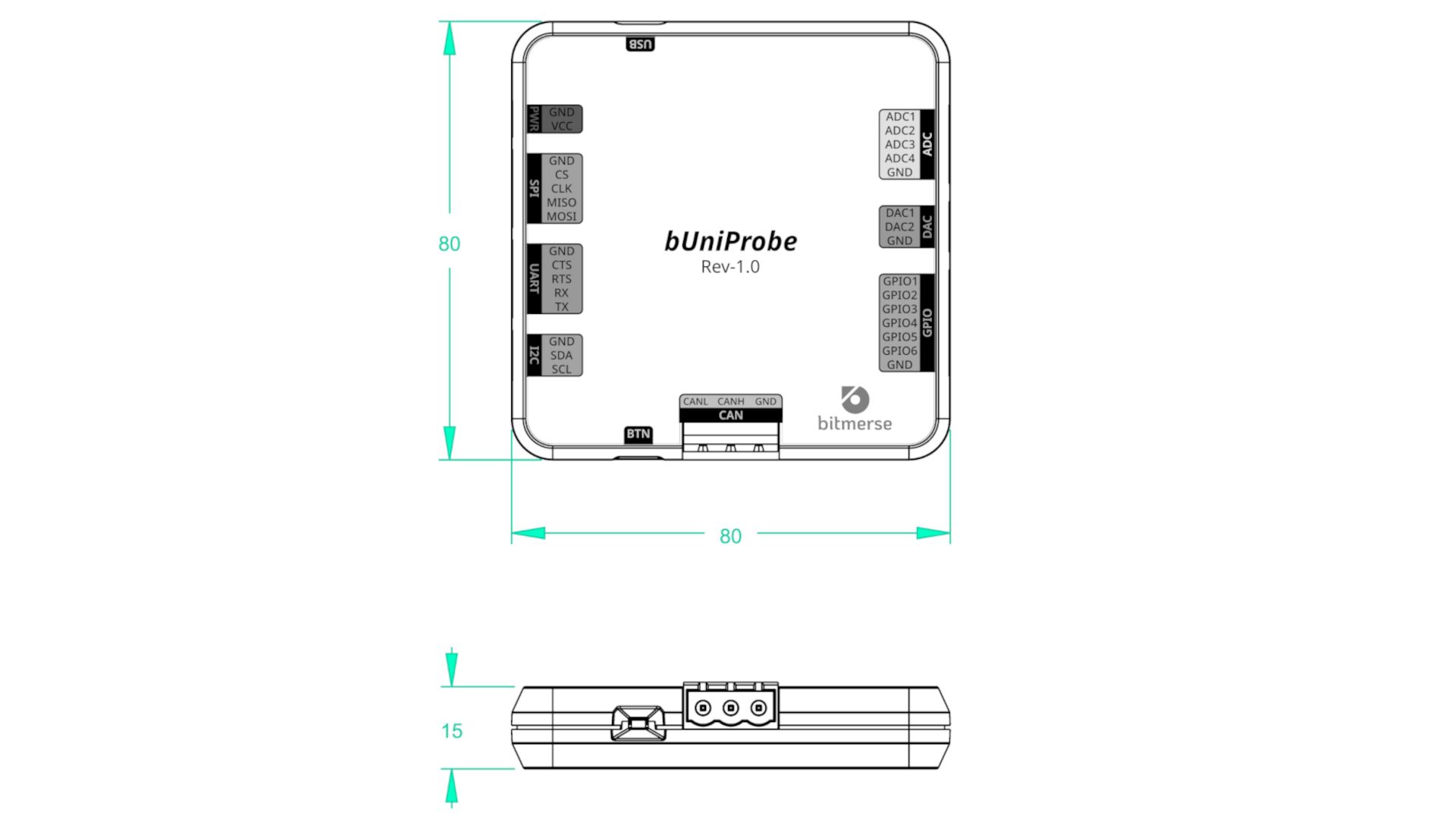
bUniProbe is an open source project. The Firmware and Hardware files will be made available on GitHub, enabling developers, makers, and researchers to explore, modify, and build upon the platform. We will make the files available to everyone under permissible licenses once the project ships to backers.
You can sign up at the top of this page to be notified when the campaign launches and to receive other updates. We only send out relevant content, and you can unsubscribe at any time.

"bUniProbe is an open source universal hardware debugger that handles SPI, I²C, CAN, UART, and more via a web-based UI."
"The bUniProbe multi-protocol and multi-voltage wireless debugger integrates hardware debugging interfaces , signal monitoring, and browser access into a single platform [trans.]."
· BitmerseLLP · bitmerse · bitmerse.com
We offer comprehensive product engineering solutions with a global reach.
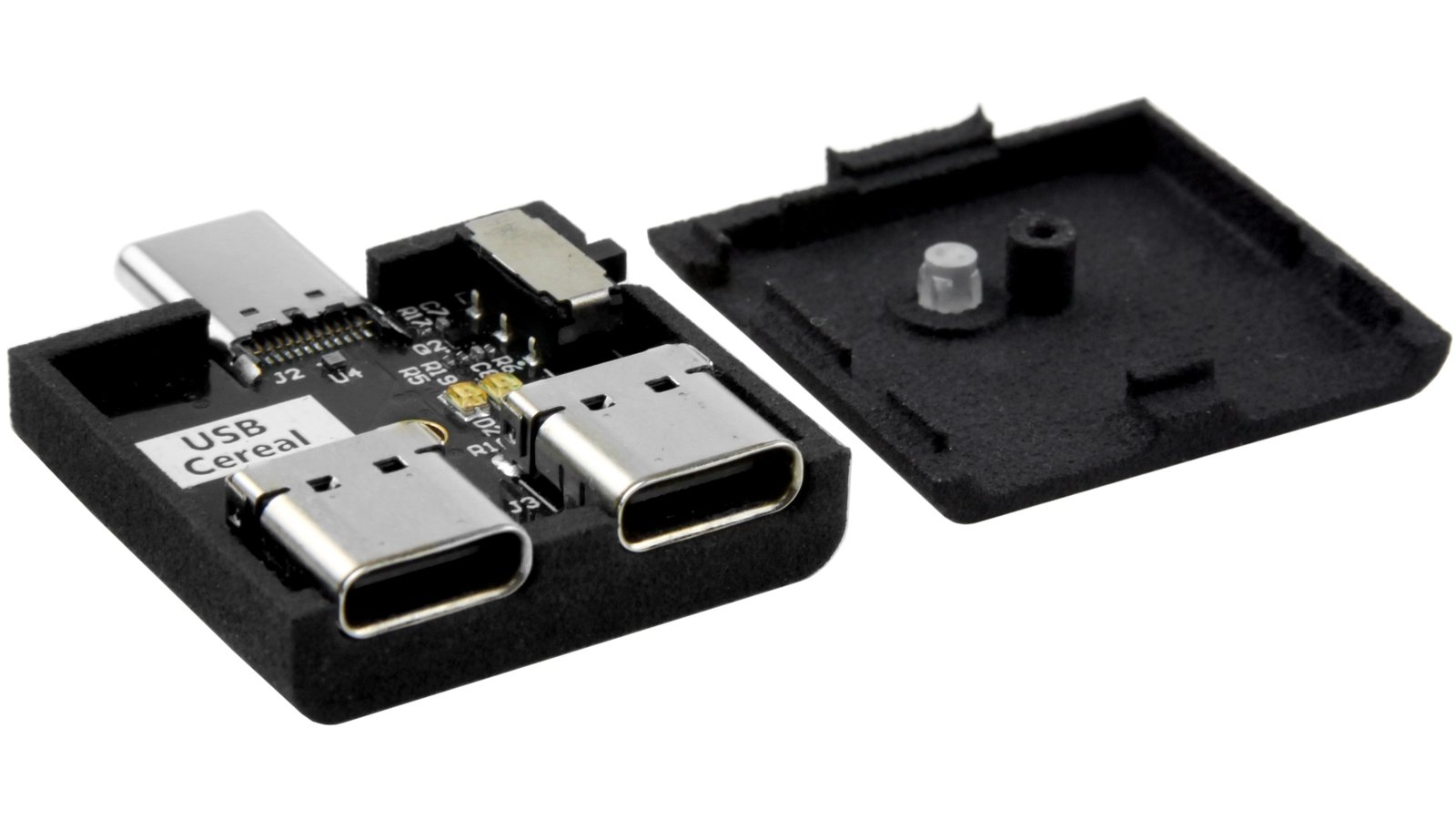
An open source hardware accessory that supports log capture, simplifies CLI interaction, and facilitates firmware updates for USB Type-C devices

An open source FT2232H-based, multi-protocol, multi-voltage tool for hardware hacking
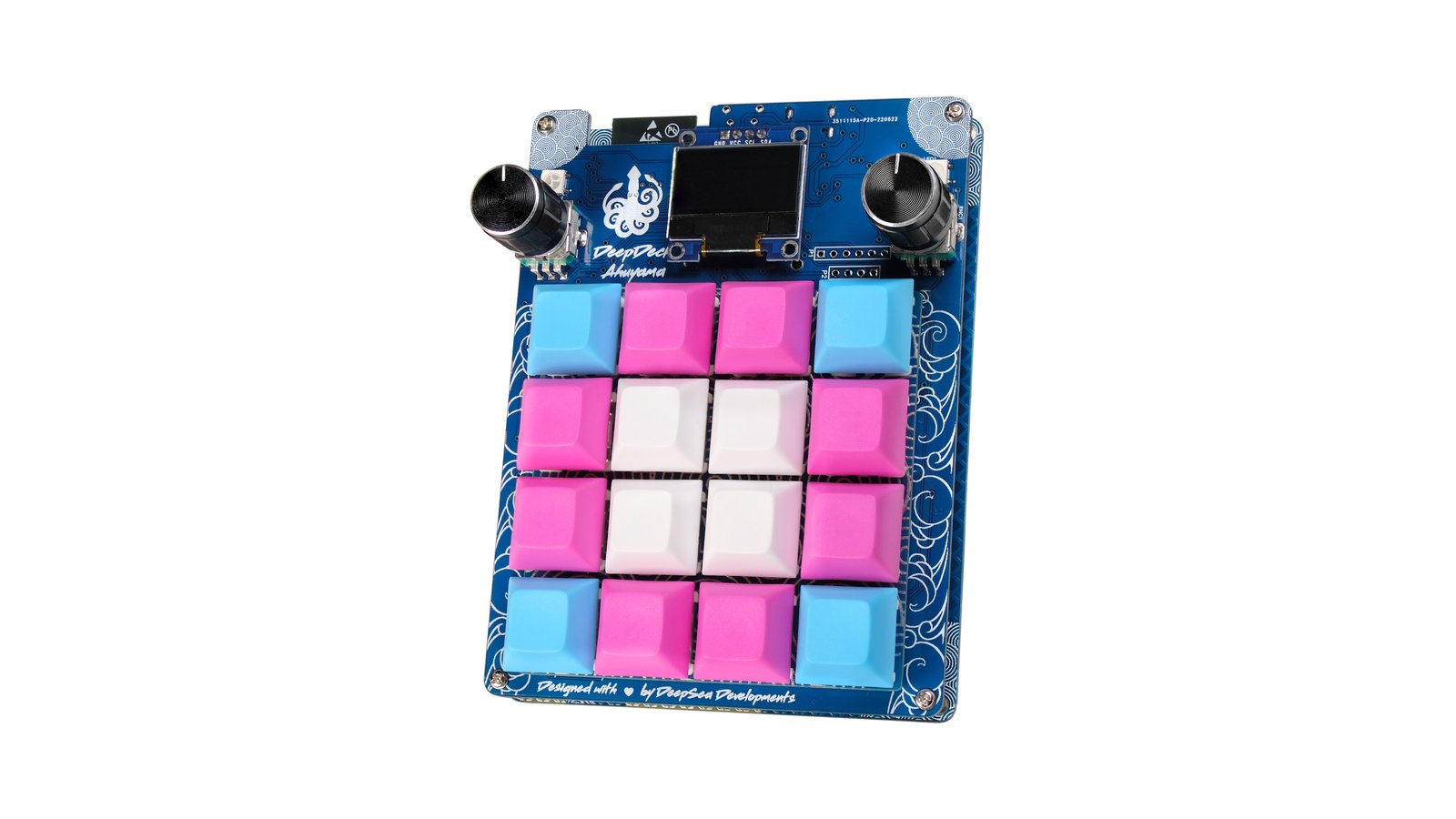
Wireless, fully programmable, open source, ESP32 macropad featuring 16 RGB, mechanical, hot-swappable keys and two RGB rotary encoders