Chipperdoodles Chippydootles
Microcontroller Boards
LEDs
Anwaar (أنوار)
A platform for personalized portable PCB tokens
Funding ended on Oct 23, 2025 at 04:59 PM PDT.
Chipperdoodles Chippydootles
Microcontroller Boards
LEDs
Funding ended on Oct 23, 2025 at 04:59 PM PDT.
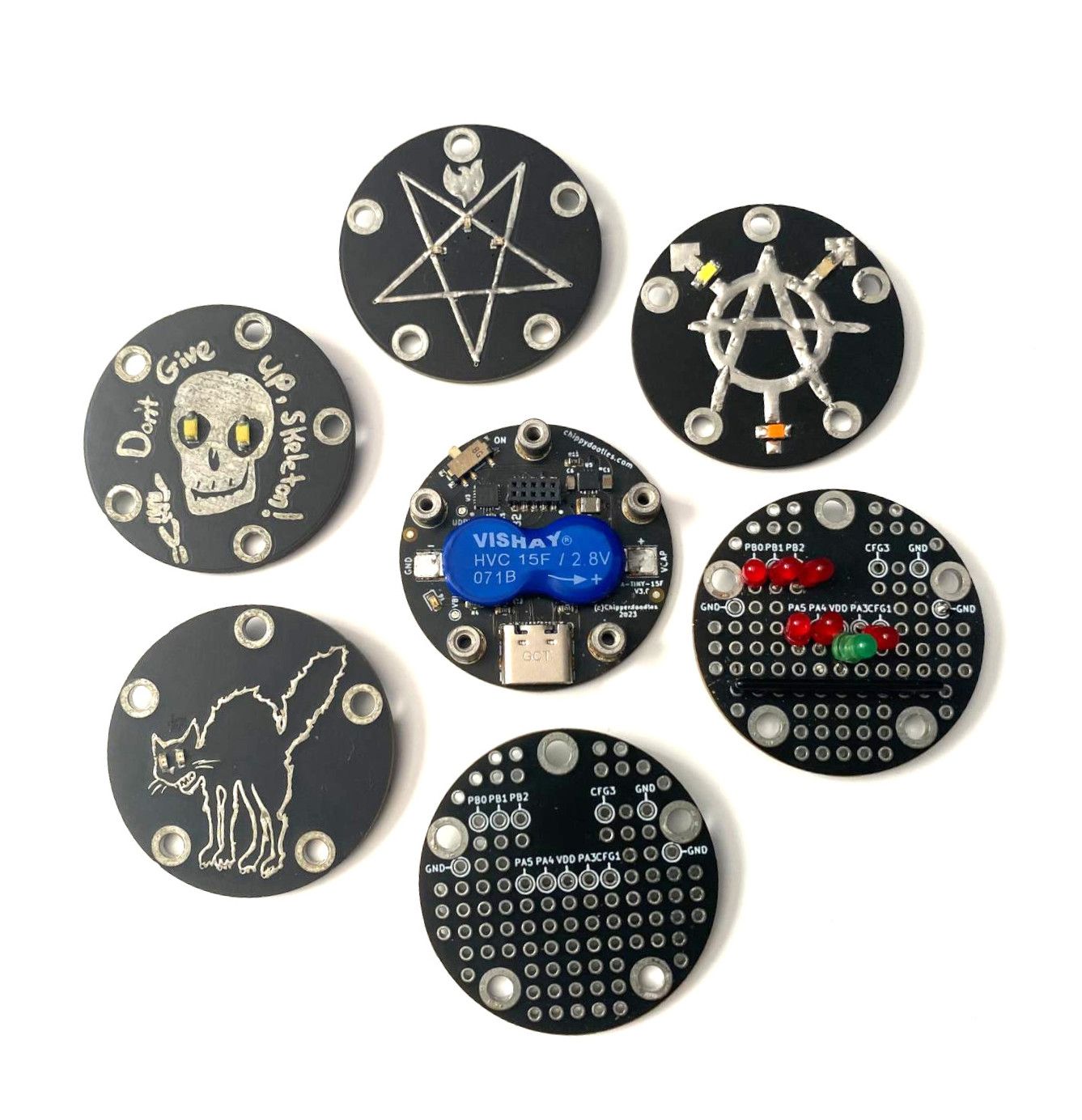
Anwaar, which is Arabic for "a collection of lights," combines art and circuitry into a convenient, attractive, wearable medium of expression. Each of our products includes a microcontroller, power-management circuitry, breakouts, a hybrid supercapacitor, and a beautifully designed faceplate, which is where the magic happens. You can wear your Anwaar as a necklace or brooch, hang it as an ornament, carry it as a pocket token, build it into a product, or put it to use in a million other ways.
The Anwaar collection will include several different families of boards that differ in size, shape, and microcontroller location. All families share certain design principles, however. They are all two-piece products that include a baseboard connected to a faceplate by a low-profile header and M.2 machine screws. faceplates are swappable and used to display circuit art while baseboards handle energy storage and power management.
This campaign will focus on the Amulet family. Our Amulets are small disks, 36 mm in diameter and 7.2 mm thick. They are extremely satisfying to hold in your hand and small enough that you can hang them from or attach them to just about anything.
We built Anwaar so that folks who are just getting started with PCB design can produce their own Anwaar-compatible faceplates. Depending on what components you choose to incorporate into your creation, you may need intermediate soldering skills, but we selected SMD headers with a 1.27 mm pitch because they’re reasonably easy to solder by hand. And all of the components we use to construct Anwaar are available "off the shelf" from semiconductor and component distributors.
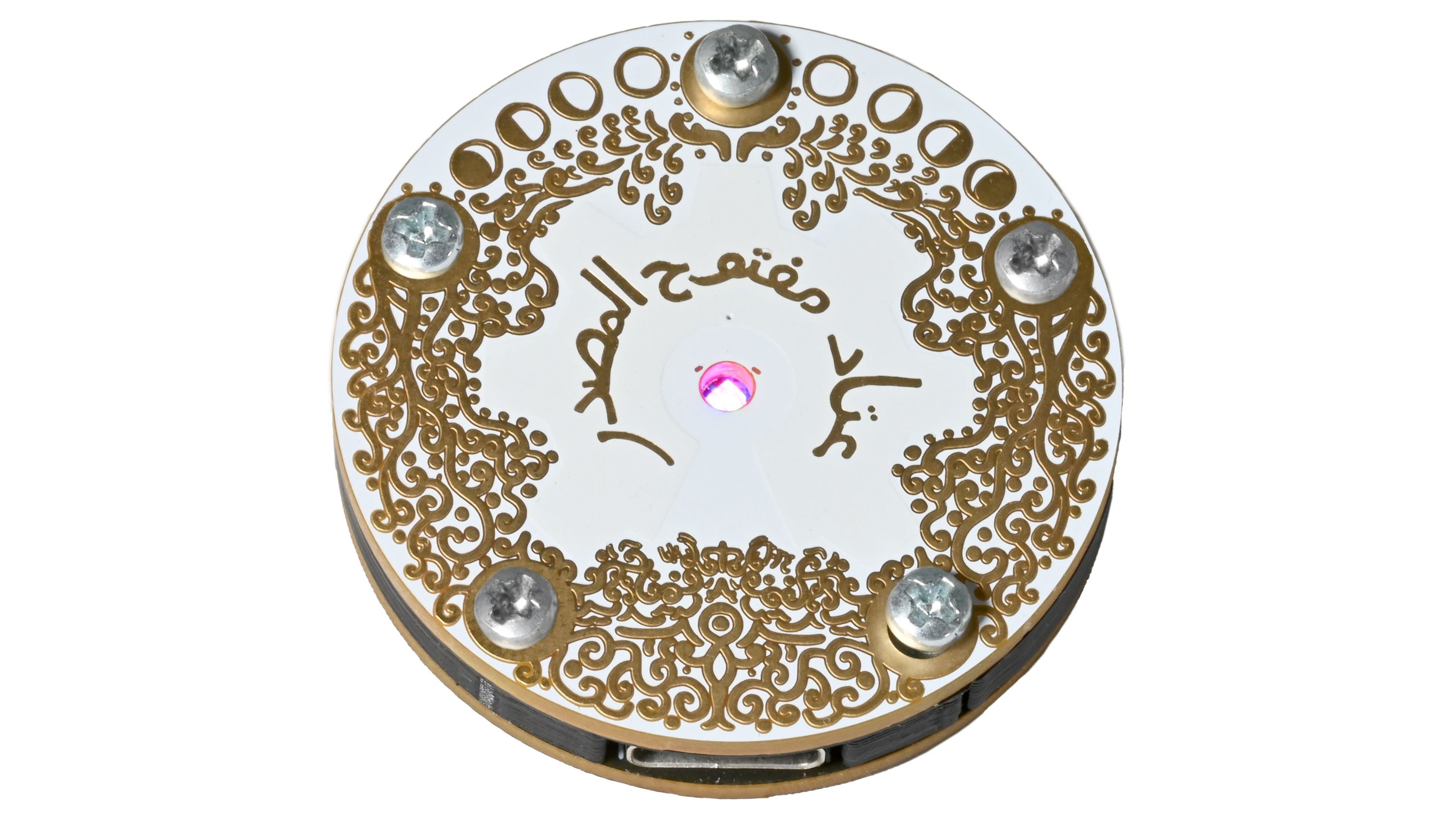
All of the Amulets in this campaign include our A-TINY-15F baseboard and a compatible faceplate. One of the faceplates we’re making available is our A-Proto board, which you can use to prototype your own design.
A-TINY-15F Baseboard
A-Proto Faceplate
| Hybrid Capacitor | EDLC (supercapacitor) | Lithium Ion | Explanation | |
|---|---|---|---|---|
| Volatility | Low | Low | High | Risk of fire and other hazards |
| Charge Cycle | 100,000 cycles | 100,000+ cycles | 500 - 10,000 cycles | A cycle is a full charge and discharge |
| Estimated Lifespan | 10 to 15 years | 15+ years | 3 to 5 years | At 100% rated levels |
| Temperature range | -20 to +85 °C | -40 to +85 °C | -20 to +55 °C | Internal temperature |
| Charge speed | Fast | Very Fast | Slow to medium | |
| Self Discharge | < 5% per month | 0% after 20 days | < 5 % per month | Energy lost when not in use |
| Energy Density | 20 to 200 Wh/kg | 3 to 5 Wh/kg | 80 to 200 Wh/kg | Greater density means longer runtime |
| Power Density | 2,000 to to 5,000 W/kg | 2,000 to 10,000 W/kg | 500 to 1,500 W/kg | A greater number mean higher available current |
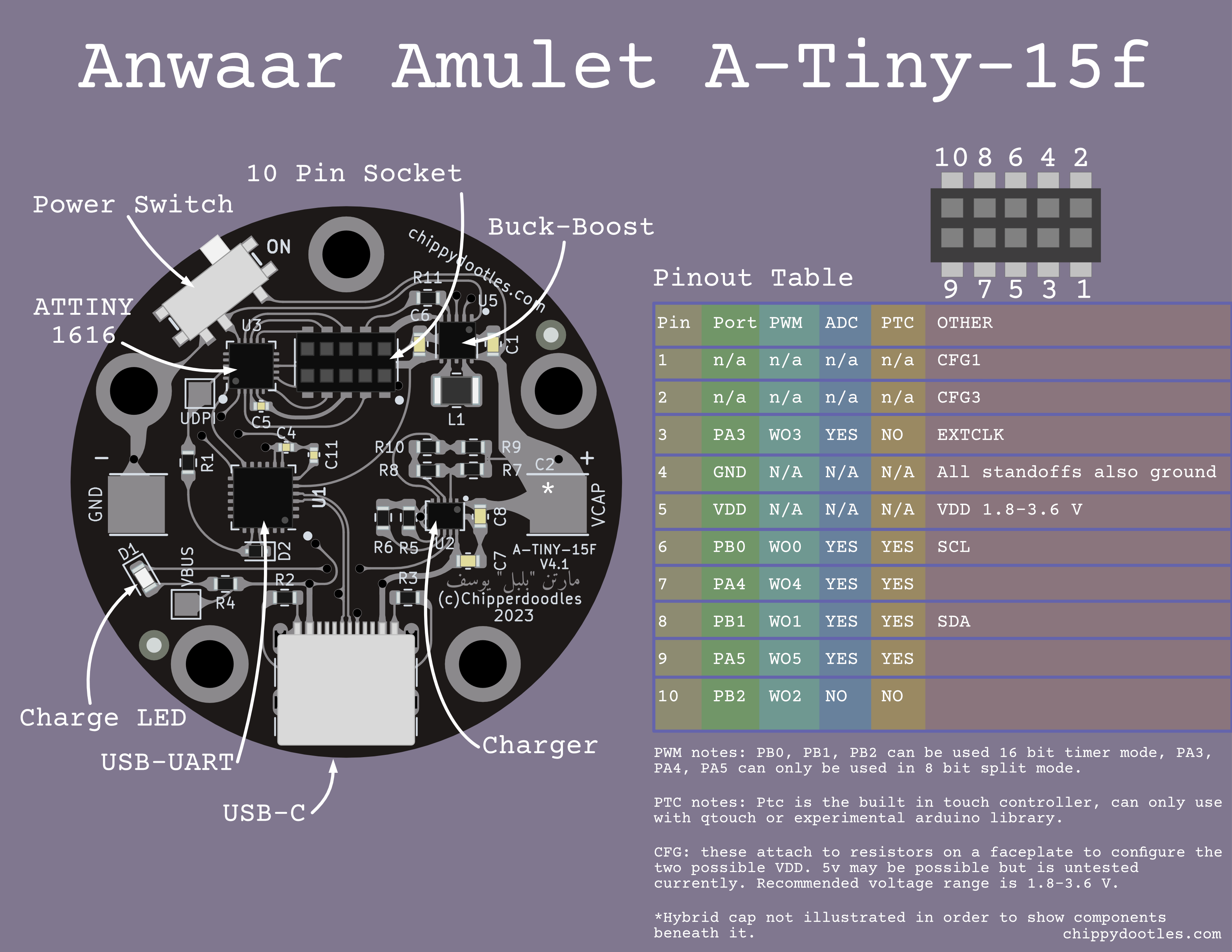
Anwaar is OSHWA-certified open hardware, and our baseboards are licensed under CERN-OHL-S V2.0. We relied on free and open-source tools like KiCad, FreeCad, and Krita to build it, and our design files are available on Gitlab. We also provide KiCad templates to help you with your own faceplate designs. Just add them to your third-party templates folder, and create a new project to get started. Thanks to a wonderful third-party Arduino core, Anwaar boards are easy to program. (Here’s some sample code!) Last but not least, we’re working to improve our documentation and tutorials.
In case it’s not obvious, we’re really excited to see what you all make with Anwaar!
Our plan is to contract manufacture partial assemblies to reduce attrition. We will then complete final assembly, testing, and kitting at home. Due to the ever changing nature of the times, we are also exploring the possibility of doing more assembly at home for the simple boards, depending on total order quantity.
After our production run is complete, we will package everything up and send it along to Crowd Supply’s fulfillment partner, Mouser Electronics, who will handle distribution to backers worldwide. You can learn more about Crowd Supply’s fulfillment service under Ordering, Paying, and Shipping in their guide.
Since we finalized the hardware design, a couple of key components have gone end of life. One is the charging IC, which has plenty of stock at resellers, so we’re not too worried about it. The other is the HVC hybrid capacitor that allows us to keep the back flush and the enclosure slim. This should be a non-issue at the quantities we’re planning for, but it’s still a risk. If necessary, we have a backup design that relies on a different hybrid cap. It would require a small cutout for the cap’s cylindrical packaging and would slightly increase the board’s overall height. Other risks include the volatile nature of component pricing and international shipping, which we’ll just have to navigate as we go.
Anwaar (أنوار) is part of PCBWay Assembly Hub


Produced by Chipperdoodles Chippydootles in Colorado, USA.
Sold and shipped by Crowd Supply.
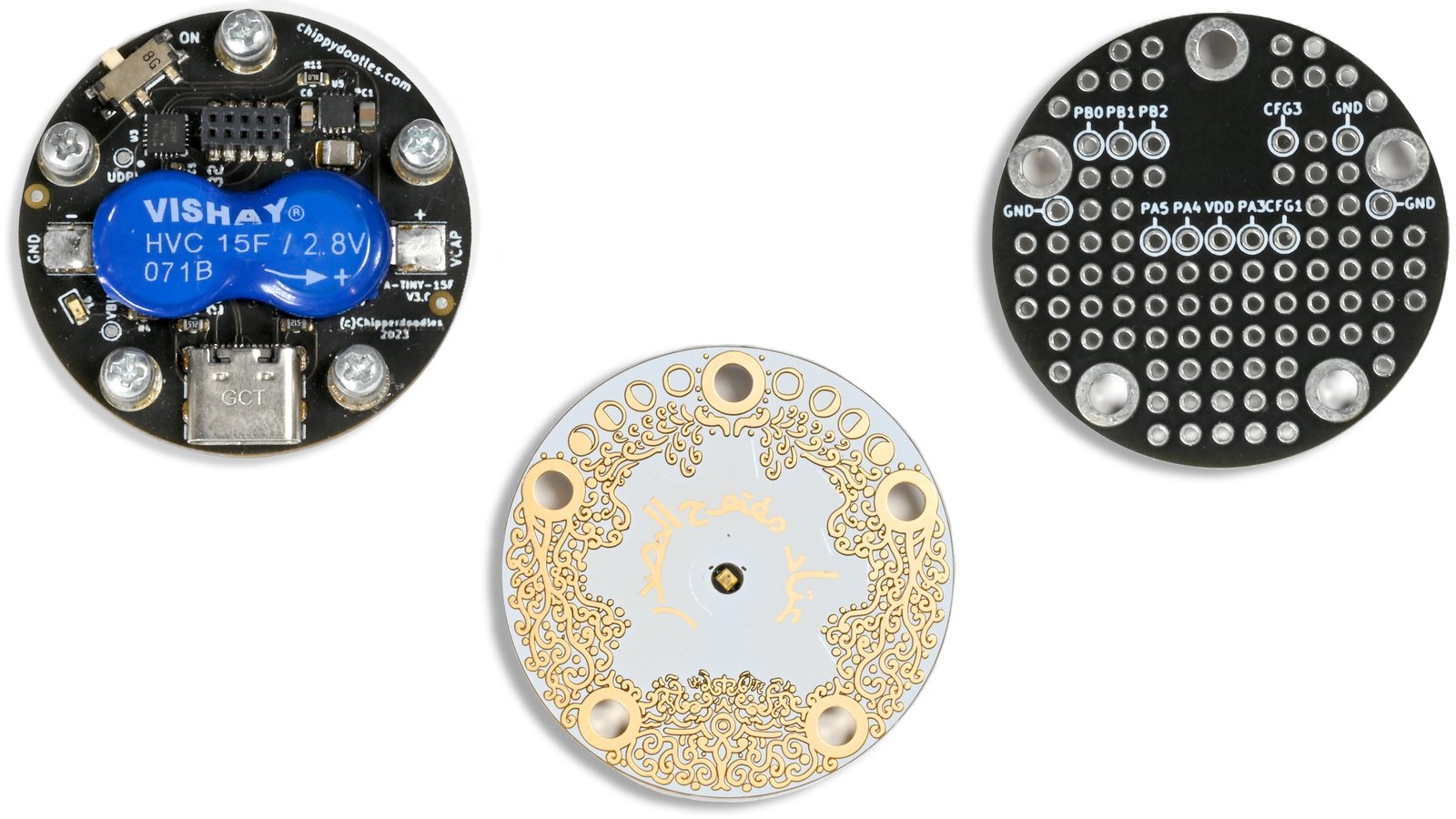
One Anwaar Amulet Baseboard with a 2.8 V hybrid capacitor, one Prototyping Faceplate, and one designed OSHW Faceplate that celebrates open hardware. Comes with a 3D-printed spacer and mounting screws.
Want to buy this item? Check the current project page for the latest information.

Chipperdoodles Chippydootles was started by Bulbul Yousif (aka Chipperdoodles) in order to share some neat electronic things tey make (affectionately referred to as doots) with the world.
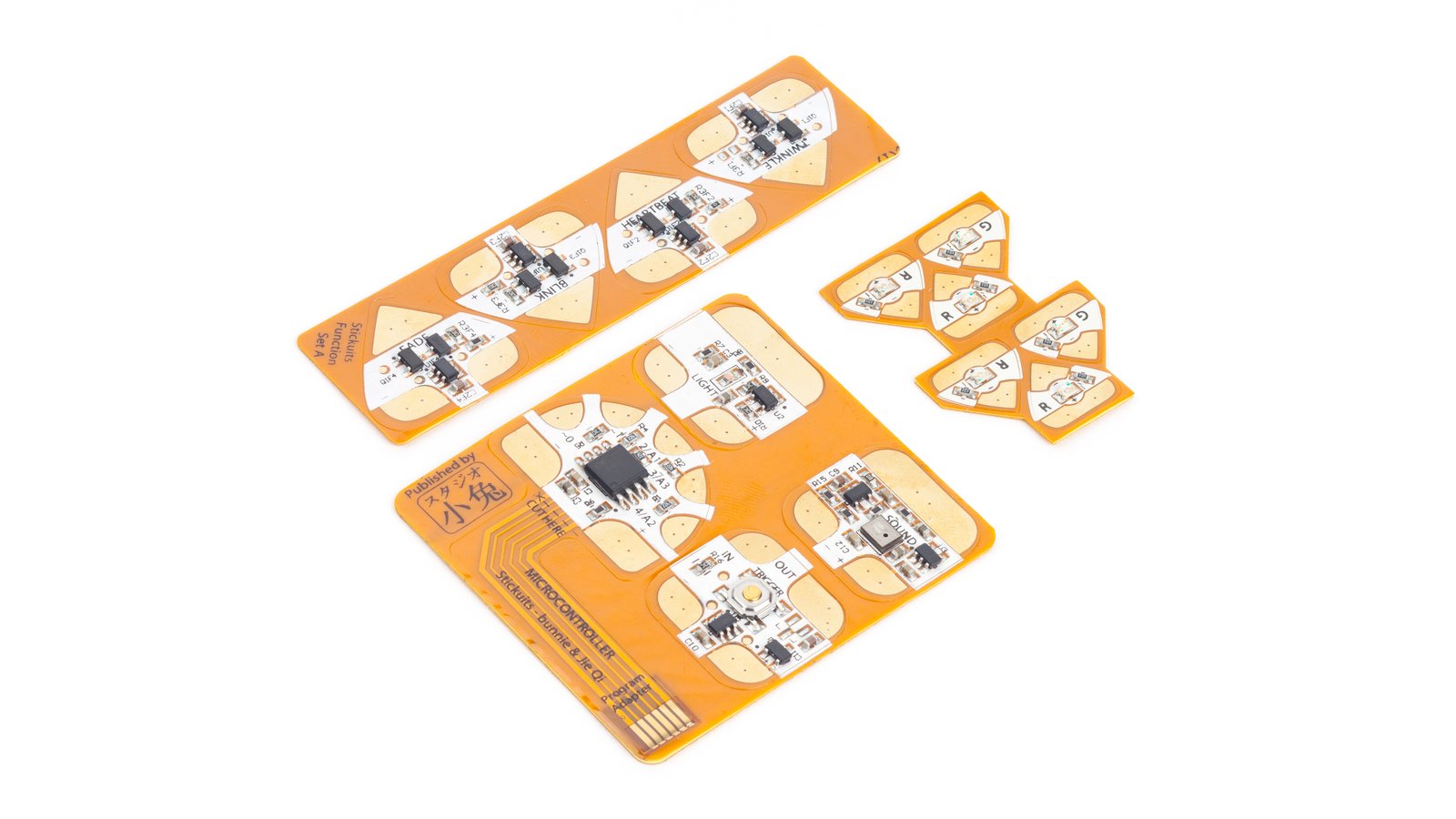
Circuit Stickers are peel-and-stick electronics for crafting circuits. Use them to add electronics to any sticker-friendly surface: paper, fabric, plastic, the sky's the limit!
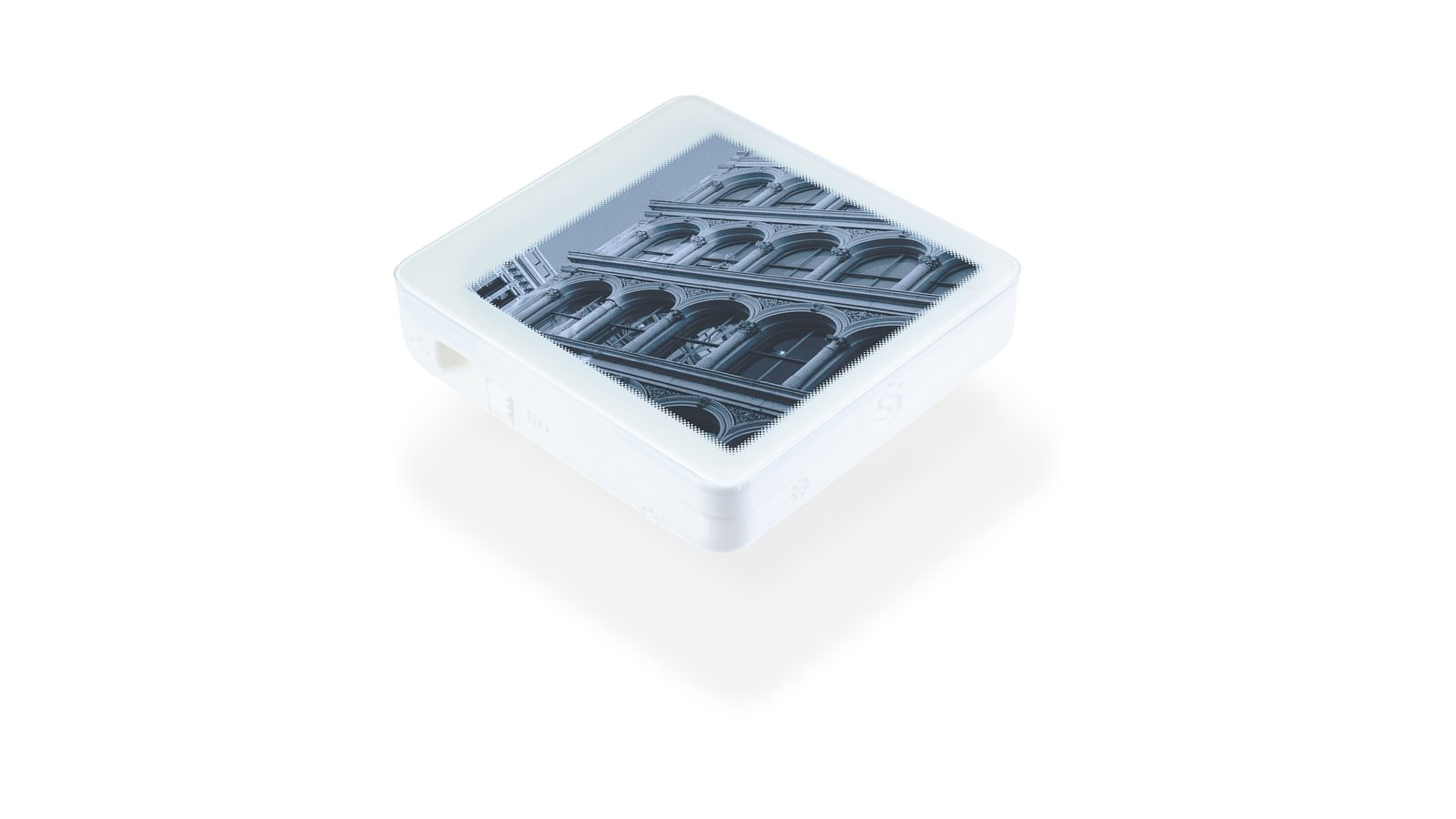
An open, Arduino-compatible, 3.8-inch e-paper device with plenty of peripherals
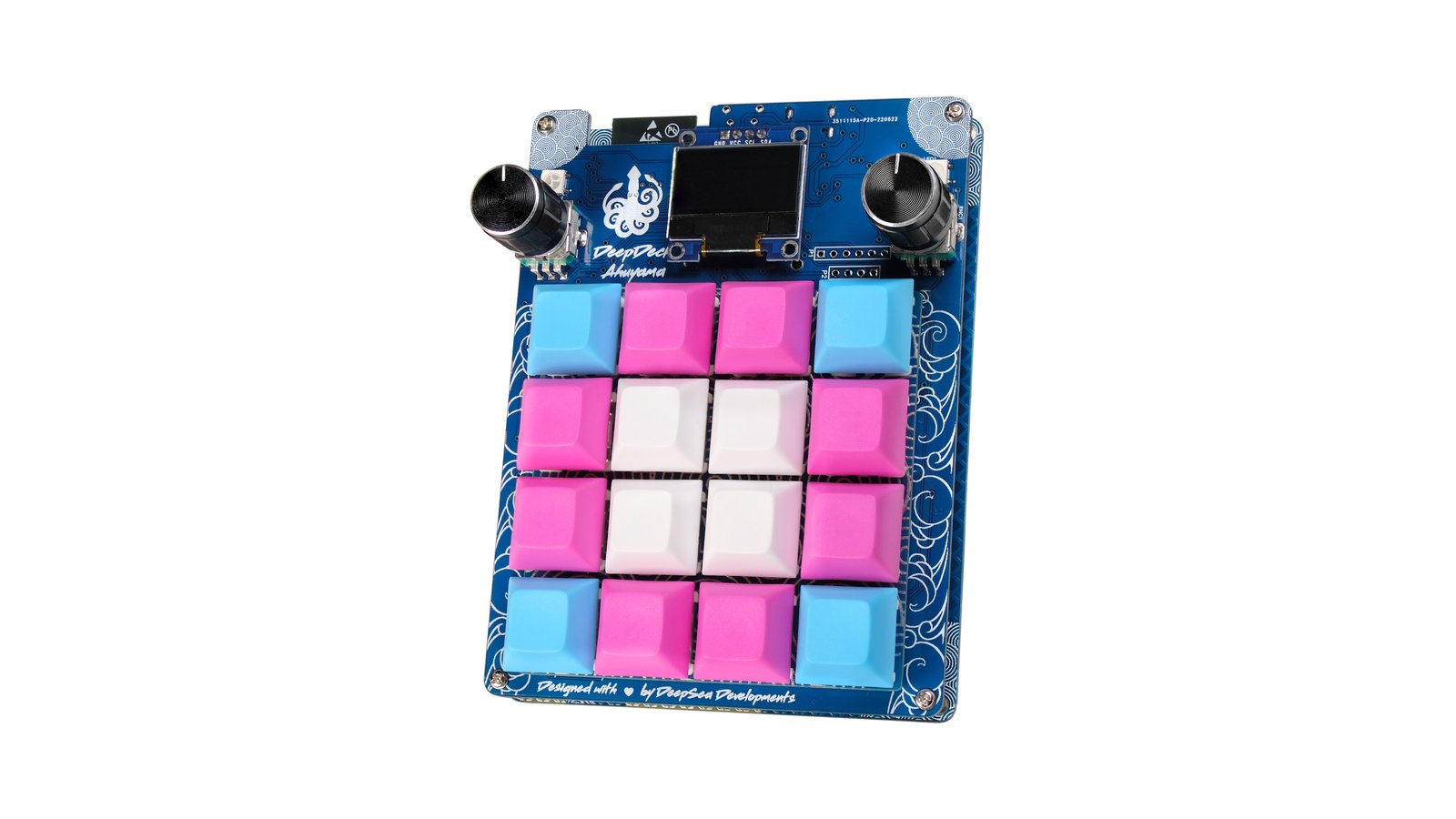
Wireless, fully programmable, open source, ESP32 macropad featuring 16 RGB, mechanical, hot-swappable keys and two RGB rotary encoders