Nessie Circuits
Test Equipment
Power Management
Ampisu
A full-featured, programmable lab power supply you can take anywhere
Nessie Circuits
Test Equipment
Power Management
Ampisu is a full‑featured lab power supply small enough to fit in your pocket, without compromising on precision, safety, or flexibility. Designed for engineers, makers, and educators, Ampisu is portable enough to carry to the field and precise enough to replace a bench supply for low-power embedded work.
With three isolated outputs, fast and precise analog current limiting, and low‑noise linear post‑regulation, Ampisu is equally at home powering a first breadboard experiment, protecting a freshly assembled PCB, or supplying sensitive analog circuitry. USB powered and fully programmable via SCPI, Python, or a built‑in web interface, Ampisu bridges the gap between professional lab equipment and modern, mobile workflows.
Ampisu is designed for everyday electronics work - whether at your desk, in the lab, in the field, or integrated directly into a test setup.
Standard lab power supplies are bulky, expensive, and difficult to move. USB power supplies are portable, but do not offer isolation or precise output control.
Ampisu combines the best of both: It provides a safe, adjustable, fully isolated power supply for:
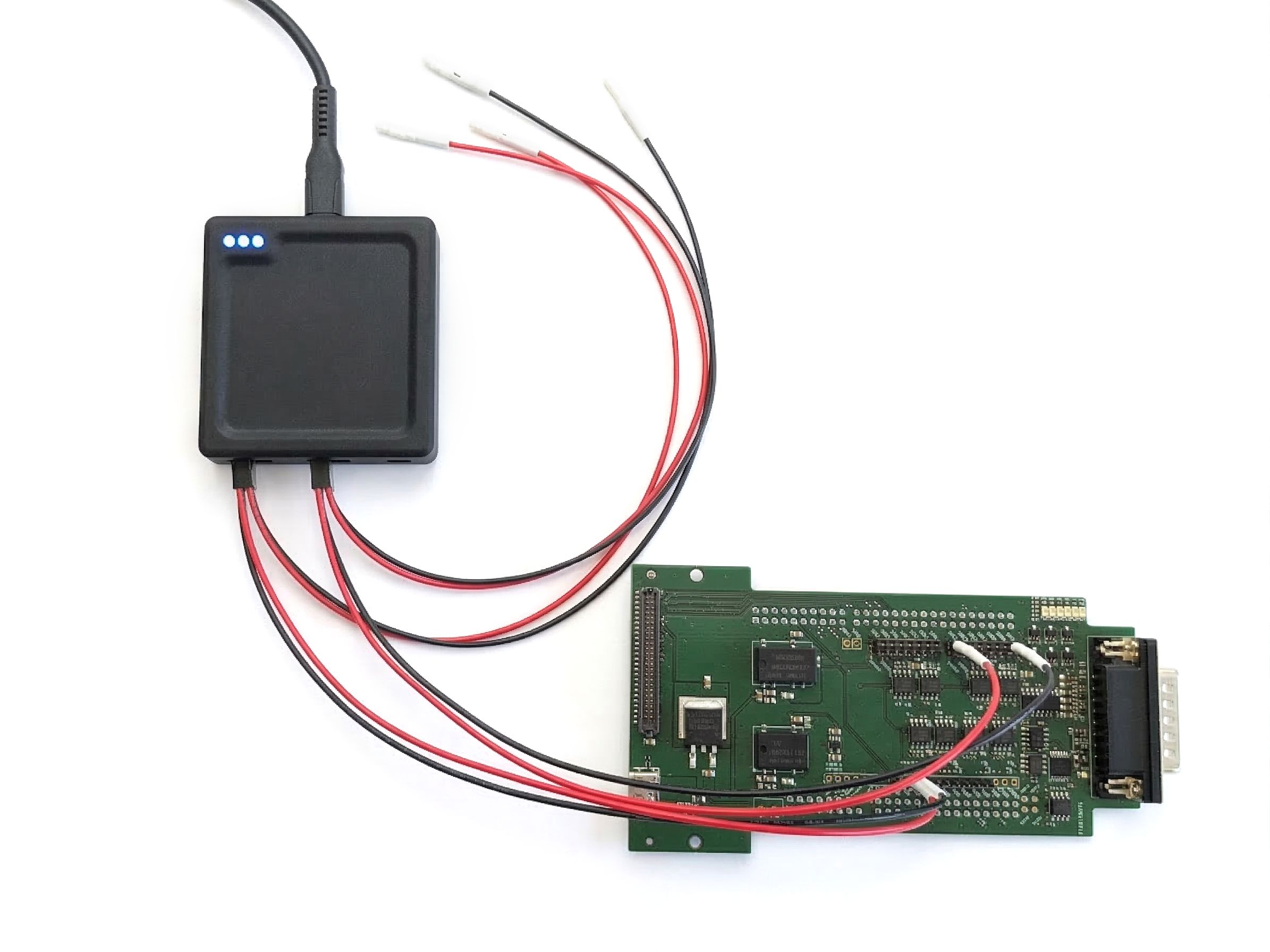
Use it on your desk, at the kitchen table, in the field, or on the road. If your laptop works there, Ampisu works there too.
Isolation is what distinguishes a lab supply from a simple USB charger. Most USB-powered supplies share ground with the host computer, which can cause damage and prevents configurations like split-rail supplies.
Ampisu provides galvanic isolation between all channels and the USB host - a feature normally found only in full-size lab equipment. This protects your computer, and allows you to connect outputs in series to generate higher voltages or split-rail supplies, all in a compact USB-powered device.
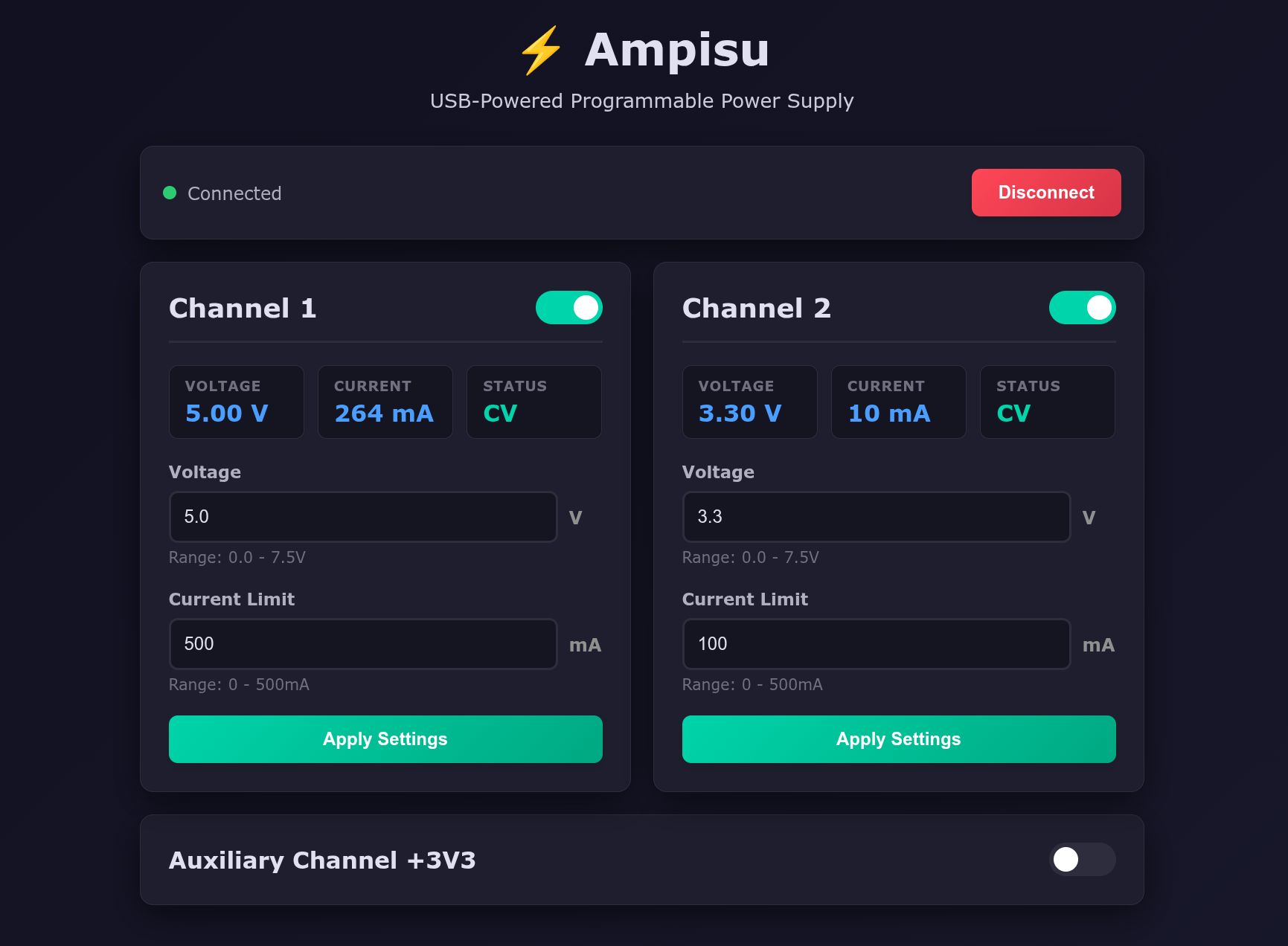
Most lab power supplies use small screens with pushbuttons and rotary encoders, which makes precise adjustments slow.
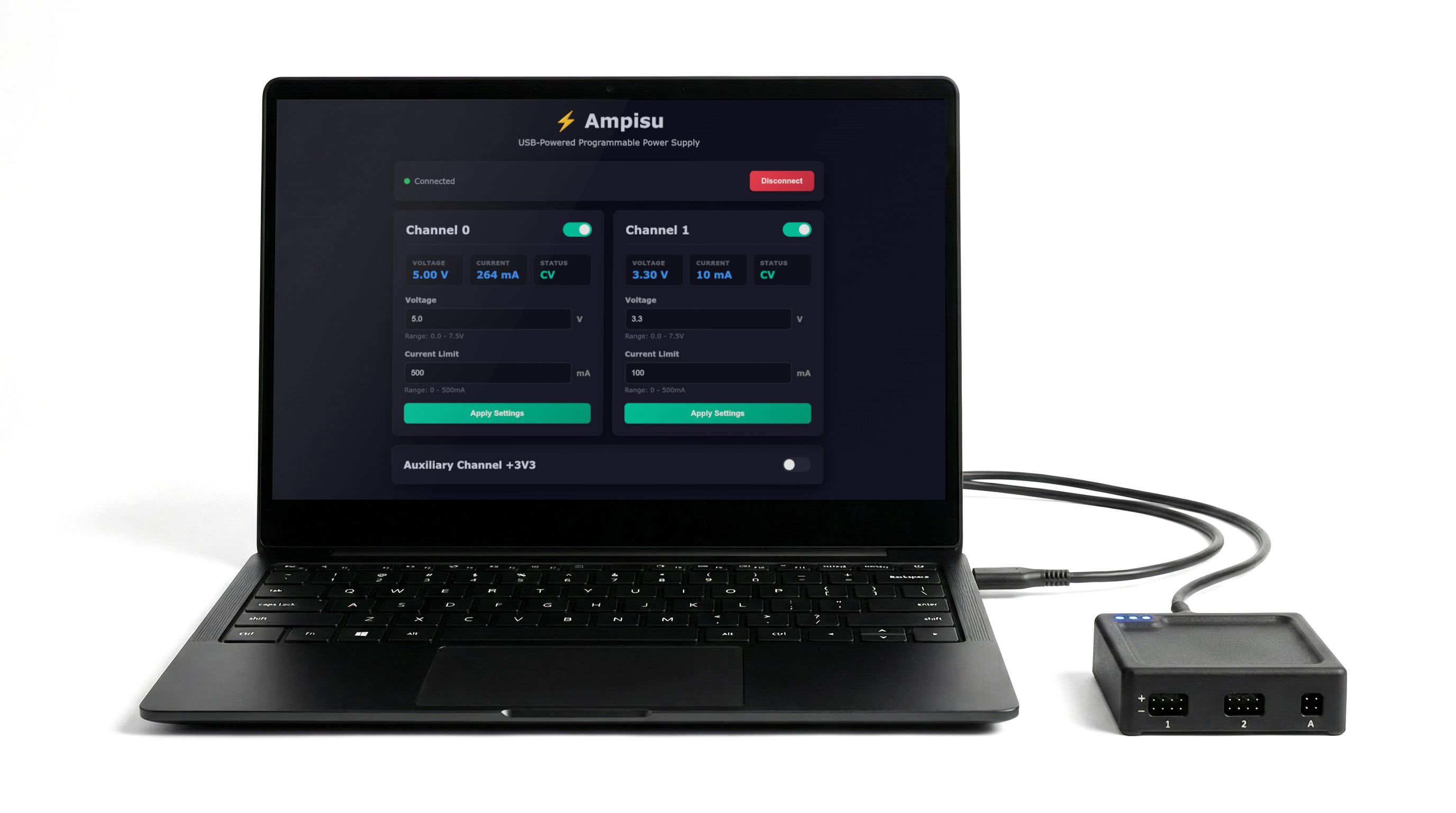
Ampisu replaces this with a fast, modern web interface that works on any operating system without drivers or software installation.
Enter voltages and current limits directly from your keyboard, sweep values with your mouse wheel, and monitor voltage and current on a full-size screen across your desk.
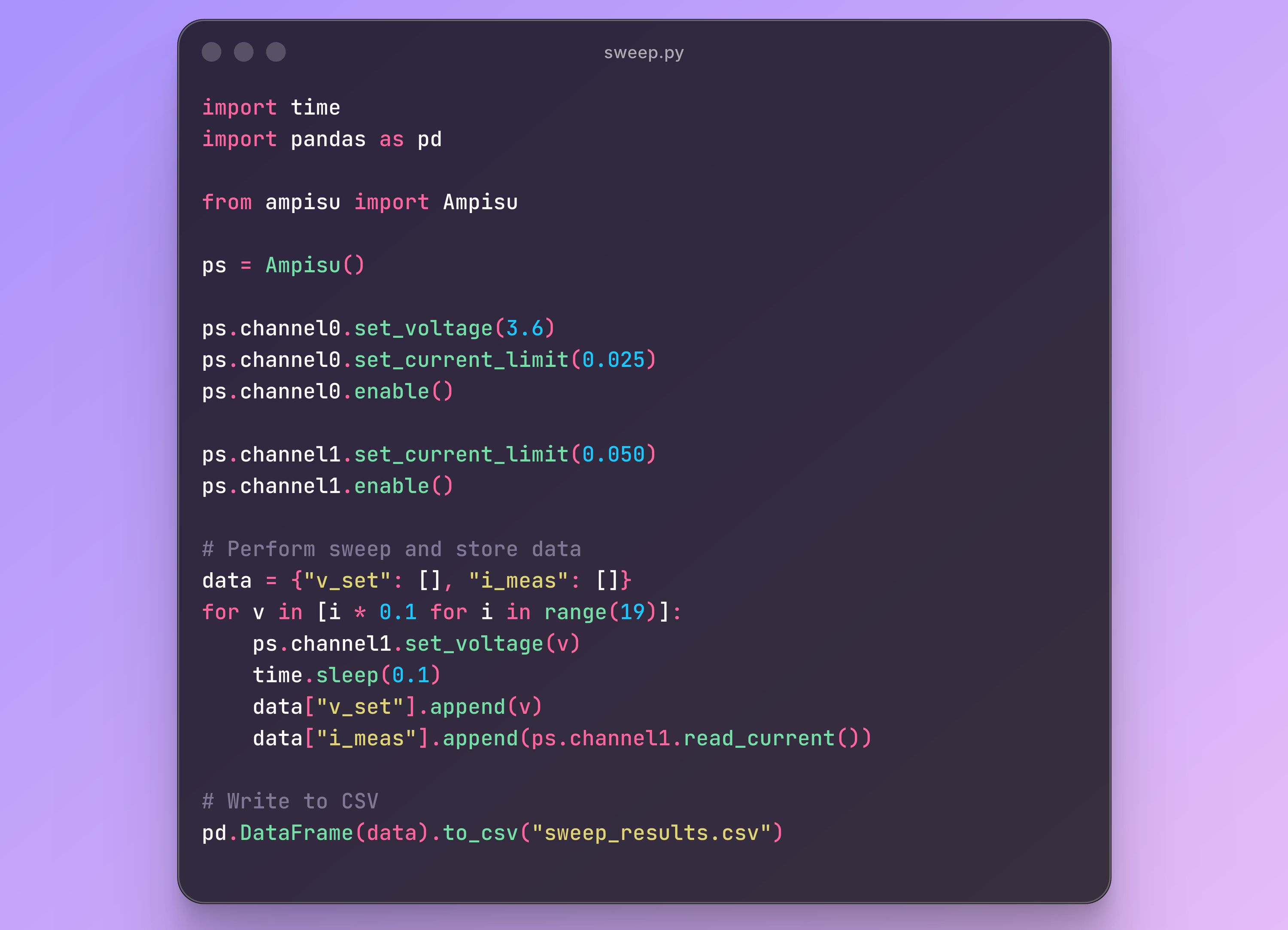
Power control is often part of a test workflow - especially when bringing up new hardware or validating assembled boards.
Ampisu makes this easy. Control it directly from a Raspberry Pi, PC, or any device that can send SCPI commands, or use the Python API to integrate power control into your scripts. You can also upload a CSV file and let Ampisu cycle through operating points autonomously - similar to an arbitrary waveform generator for power.
All settings, including waveform generation, can be stored in non-volatile memory. Once configured, Ampisu can run completely standalone. Powered from a USB power bank, it becomes a compact, programmable power source that can operate without a host computer - perfect for automated setups, dedicated test fixtures, or portable experiments.
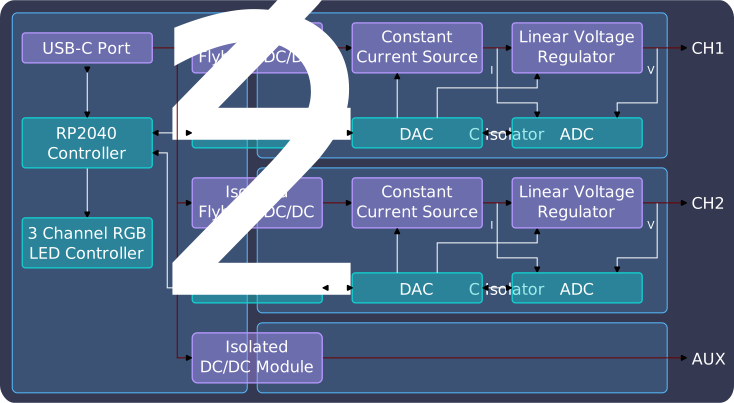
Ampisu runs from any standard USB port and communicates with the host via USB, providing a web interface, SCPI control, and a serial log interface. An onboard microcontroller manages communication, controls the output channels, and continuously measures voltage and current.
The USB host and each output channel are electrically isolated using dedicated transformer-isolated flyback converters, protecting the computer and allowing flexible configurations such as series connections or split-rail supplies while maintaining efficient operation from a USB power source.
Two configurable channels use precision DACs and ADCs to regulate and measure voltage and current, providing accurate and stable output in a compact USB-powered device.
| Ampisu | BenchVolt PD | PocketPD | SPD3303X | |
|---|---|---|---|---|
| Channels | 3 (2 programmable) | 5 (2 programmable) | 1 | 3 (2 programmable) |
| Isolation | Yes | No | No | Yes |
| Voltage range (V) | 0 to 21 (+/−7.5 per channel) | 0.8 to 22 (no 0 V floor) | 3.3 to 21 | −32 to 32 |
| Current range (A) | 0 to 1 (0 to 0.5 per channel) | 0 to 3 | 0 to 3 | 0 to 3.2 |
| Programming interface | Web interface, Python, SCPI | Python, SCPI | None | SCPI |
| Protection | Overcurrent, reverse current | Overcurrent, reverse current | Short circuit | OVP, OCP, OTP* |
| Current limiting | Analog | Digital | Digital | Analog |
| Resolution | 10 mV / 1 mA | 10 mV / 50 mA | 20 mV / 50 mA | 1 mV / 1 mA |
| Output sensing | Voltage and current | Voltage only | Current only | Voltage and current |
| Dimensions (mm) | 62 x 62 x 20 | 160 x 75 x 40 | 86 x 55 x 21 | 225 x 143 x 278 |
| Weight | 100 g | 500 g | 63 g | 8 kg |
| Price (USD) | $179 | $167 | $70 | $591 |
| Best for | Portable, isolated, low-power development (MCU, RF, and sensors) | Multi-rail benchtop work requiring higher current | Single-rail prototyping on a budget | Precision lab or production testing |
*OVP = overvoltage protection; OCP = overcurrent protection; OTP = overtemperature protection.
Ampisu is open-source by design. Transparency, hackability, and long-term maintainability are core goals of the project. After our successful campaign, we will publish the hardware schematics, firmware source code, Python library, and web interface source code to the public under permissive open-source licenses.
The complete project repository will be available before products ship to Crowd Supply for fulfillment, ensuring full transparency well ahead of delivery. We are preparing a documentation site with practical examples and detailed instructions. It will be available before products ship.
Join our Discord community to connect with other Ampisu users and follow development progress.
PCBs are manufactured by an overseas supplier and assembled by a local contractor. The CNC-machined housing and custom cables are produced by specialized manufacturers. Final assembly, testing, and calibration are performed in our lab to ensure every device passes inspection before shipping.
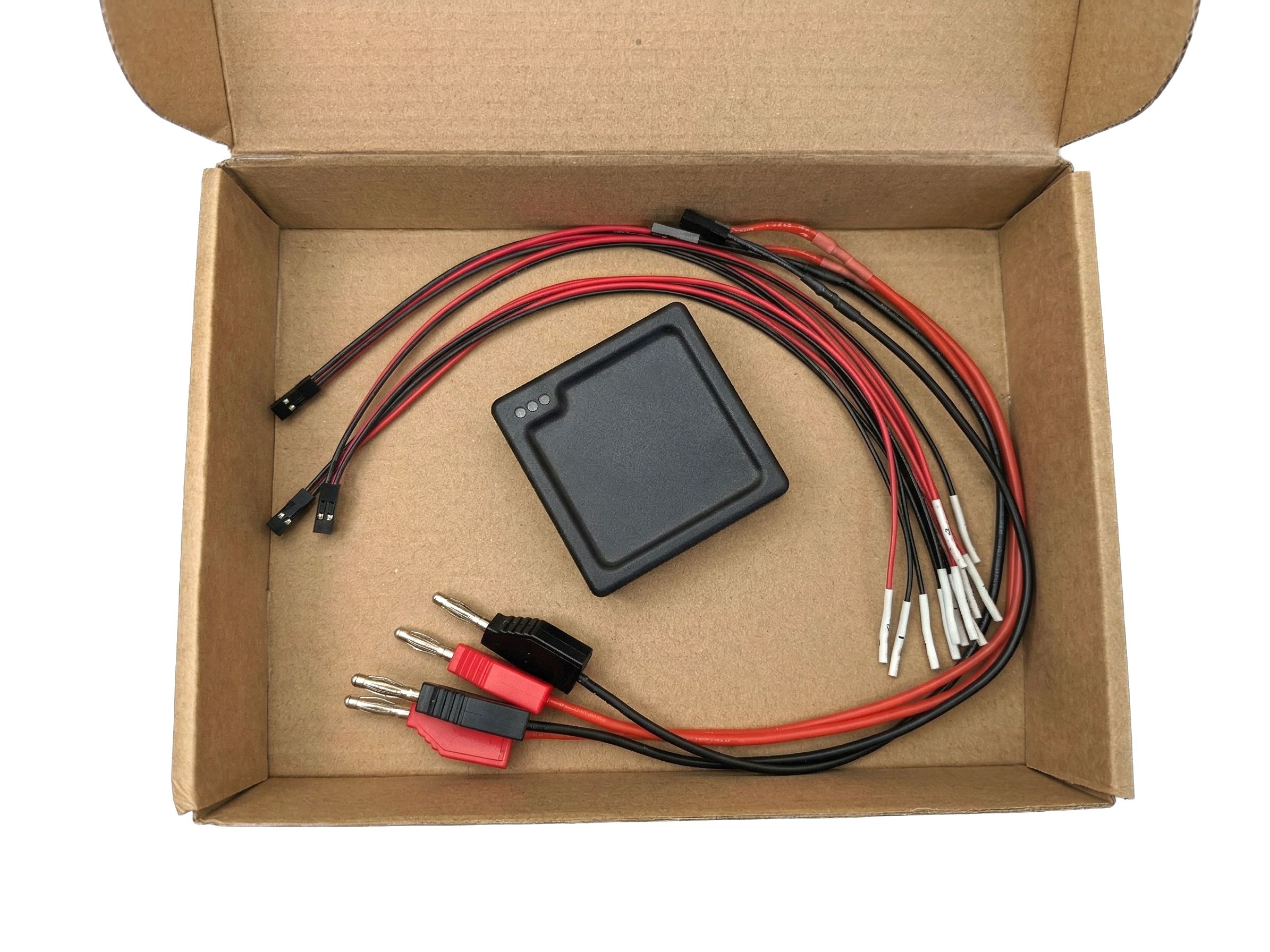
Ampisu ships in a retail-ready box containing the fully assembled device and a set of cables:
After Ampisu is manufactured and inspected, orders will ship via Crowd Supply’s fulfillment partner, Mouser Electronics, who will handle shipping to backers worldwide. You can learn more about Crowd Supply’s fulfillment service under Ordering, Paying, and Shipping in their guide.
Designing and building electronics has been our core business for many years. In 2023, we successfully completed a crowdfunding campaign and delivered all units within four months despite significant supply chain disruptions.
Even with this experience, risks remain in the following areas:
Some components may become unavailable by the end of the campaign. We reduce this risk by selecting widely available mainstream parts that are not affected by current supply constraints. If substitutions become necessary, we can complete a replacement prototype run within 10 days, limiting any schedule impact.
We have extensive experience with both in-house and outsourced PCB assembly. To minimize risk, we validate assembly by producing a pilot batch before placing the full production order. Every device undergoes automated testing and calibration before shipment.
Delays may occur in PCB, housing, or cable production. Our schedule includes more than twice the expected production time to absorb potential delays, and we will provide regular production updates throughout the campaign.


Produced by Nessie Circuits in Berlin, Germany.
Sold and shipped by Crowd Supply.
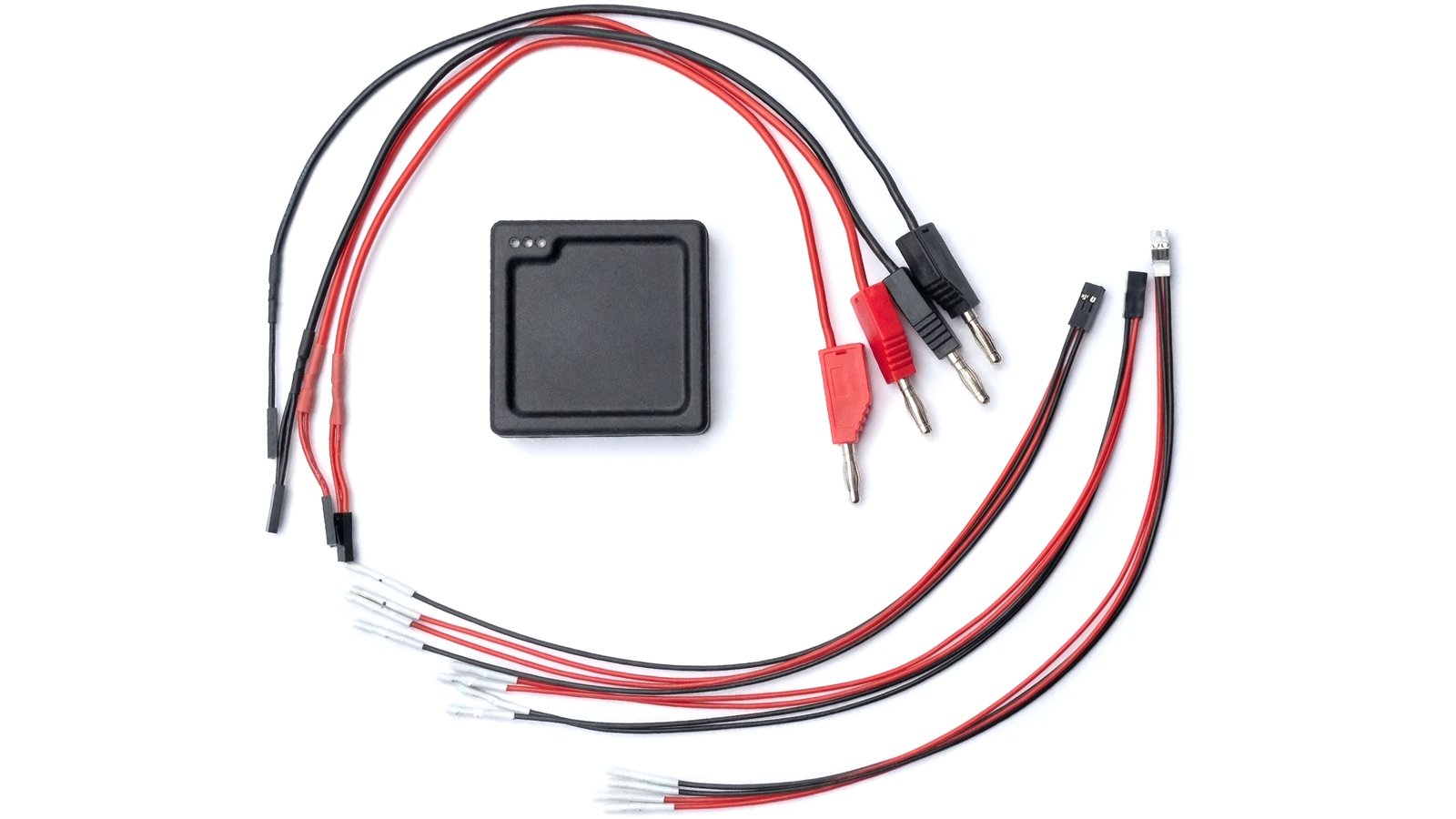
USB Lab power supply with 3 Dupont-style cables and 4 Dupont-Banana cables

· NessieCircuits · NessieCircuits
Nessie Circuits—founded in 2021 in Berlin, Germany—offers embedded hardware and software solutions to customers from academia and industry. Our special focus is on low-power, energy-harvesting devices.